

August 31, 2026
/
A saltwater fiberglass pool is one of the best equipment-and-surface pairings in the industry: the salt chlorinator delivers softer-feeling, steadily sanitized water, and the non-porous gel coat shell simply doesn’t care that salt is in it.
Concrete and gunite pools can run salt systems too, but salt is abrasive to plaster, so those surfaces wear faster and reach their resurfacing cycle sooner.
Salt chlorination has become a popular default choice for new pool buyers, and for good reasons: less chemical handling, more stable water, and a swim that doesn’t smell like a locker room. Everything feels healthier, and even more so when the pool shell is fiberglass.
This guide explains how salt systems actually work, why salt and plaster argue, why gel coat and salt get along, what the setup costs and saves, and how to decide if a salt system fiberglass combination fits your family.
Key Takeaways
- A salt chlorinator generates chlorine from dissolved salt (roughly a tenth of ocean salinity), so a saltwater pool is a chlorine pool with automated, gentler dosing, not a chemical-free pool.
- Salt is abrasive to porous plaster: saltwater vs concrete pool pairings accelerate surface wear, pushing acid washing and resurfacing cycles earlier.
- The non-porous gel coat of a fiberglass shell is unreactive to salt, making fiberglass the surface that lets a salt system do its job for decades.
- Salt systems trade weekly chlorine handling for a salt cell that needs periodic cleaning and eventual replacement, with lower routine chemical purchases.
- Fiberglass already runs roughly $350–$400 a year in maintenance vs. $2,000+ for concrete; adding salt makes the routine simpler still.
How a salt system actually works
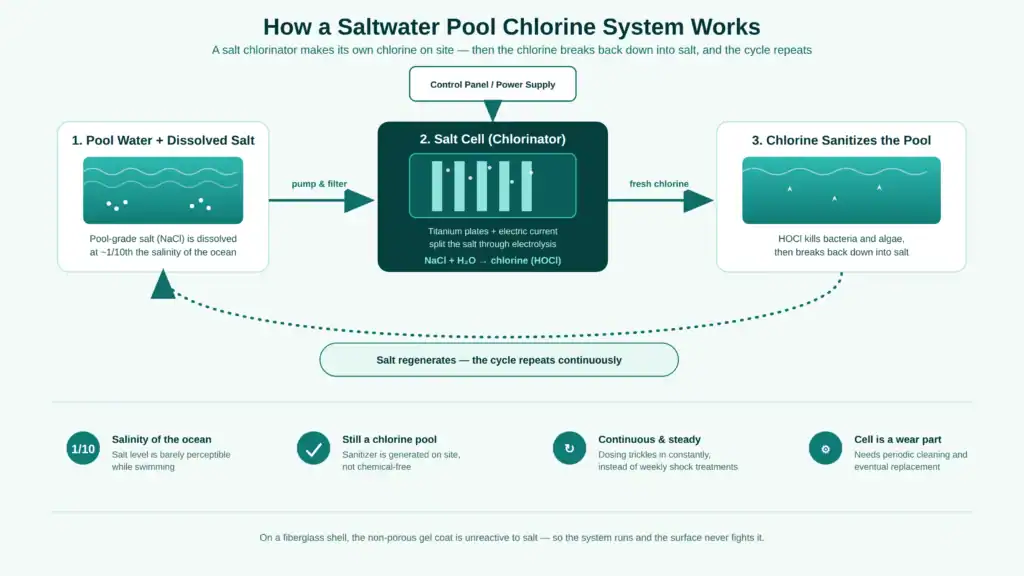
A salt chlorinator, also called a salt cell or salt water generator, makes chlorine on site. You dissolve pool-grade salt in the water at roughly a tenth of the ocean’s salinity, and as water passes through the cell, electrolysis converts that salt into chlorine continuously.
So a saltwater pool is still a chlorine pool. The difference is the delivery: a steady trickle of freshly generated sanitizer instead of weekly jugs and shock treatments. That steadiness is why salt pools are known for stable chemistry and why the harsh chloramine smell, the thing people actually dislike about “chlorine pools,” largely disappears.
2 things you must know about salt systems:
- First, you still test and balance the water – the CDC’s Healthy Swimming guidance applies to every residential pool, salt included.
- Second, the salt cell is a wear part: it needs periodic cleaning and eventual replacement, which belongs in any honest cost picture.
None of that changes the appeal of salt water systems, but it sheds more light on how the process doesn’t go to “no” – it just goes low.
Why salt and plaster don’t get along
Here’s the literal friction in the saltwater vs concrete pool pairing: plaster is porous and mineral-based, and salt works on it the way road salt works on a sidewalk.
Salt crystals are abrasive. On a rough, porous plaster or exposed-aggregate surface, dissolved salt accelerates etching, scaling, and surface degradation, especially at the waterline and on stone coping where splash-out dries and crystallizes. Concrete pools already need acid washing and resurfacing roughly every decade; running salt tends to move that appointment earlier and make the waterline care fussier.
It’s not that concrete pools can’t run salt systems. Plenty do! Owners just pay for the combination in surface wear, and many builders quietly steer concrete buyers back to traditional chlorine for exactly this reason.
To be fair to concrete: it remains the right call for fully custom geometry, grottos, and vanishing edges, and nothing about salt changes that. The full surface-by-surface breakdown lives in this fiberglass vs. concrete pool comparison.
The gel coat advantage: built for salt
Now put the same salt in a fiberglass shell.
The gel coat surface of a fiberglass pool is non-porous and chemically unreactive to dissolved salt. There’s no plaster to etch, no aggregate to expose, no mineral surface for crystals to chew on. Salt circulates, the cell generates chlorine, and the surface simply doesn’t participate in the argument.
That’s why a salt system fiberglass pairing is the combination pool techs rarely get called about. The gel coat that already resists algae, the reason fiberglass maintenance runs roughly $350–$400 a year vs. $1,000+ for vinyl and $2,000+ for concrete, is the same surface that shrugs at salinity.
One practical note for any saltwater pool, fiberglass included: metal components matter. Quality salt-ready equipment packages use corrosion-resistant hardware, and fresh-water rinsing of surrounding stone and metal fixtures is smart practice. Your shell won’t mind the salt, but cheap ladder bolts might.
Add it all up: the shell built for 25+ years (with many pools lasting 30–50 with proper care) is also the shell best suited to the sanitation system most buyers want. That’s a rare case of the easy answer and the right answer being the same answer.
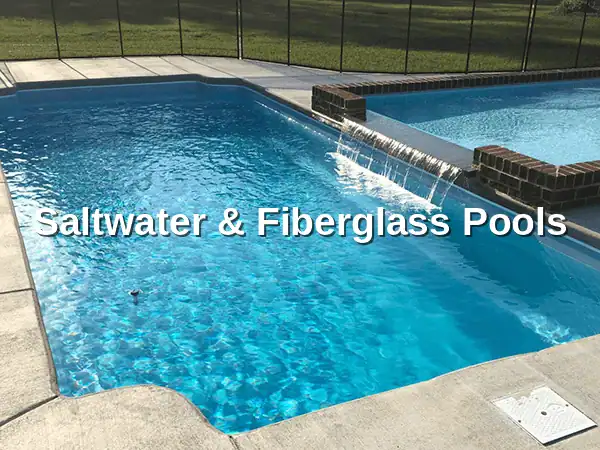
Browse salt-friendly fiberglass pool models across small, medium, and large sizes.
What saltwater ownership costs and saves
Salt changes where your pool money goes more than how much goes out, and honesty about both sides beats a sales pitch.
What you’ll spend:
- The salt chlorinator system upfront, typically a modest add-on within a new pool’s equipment package
- Pool-grade salt a few times a season, cheap and easy to store
- Periodic salt cell cleaning, and a replacement cell every several years
What you’ll stop spending:
- Weekly chlorine purchases, and the hauling and storage that come with them
- Most shock treatments, since generated chlorine keeps levels steady
- The time cost of chasing chemistry swings
For most families, the costs even out eventually and the convenience is felt immediately. On a fiberglass shell, there’s no hidden surface tax pulling the math backward, which is exactly the problem the saltwater + concrete/gunite pairing can’t escape.
The bigger budget picture stays the same as any fiberglass project: shells start at $12,500, and total owner-builder projects typically run $30,000–$50,000 depending on size, site, and add-ons like the salt system itself, saving $10,000–$20,000+ vs. full-service.
Softer water, simpler summers
The reason people who swim in salt pools rarely go back has nothing to do with equipment specs.
The water feels different: silkier on skin, easier on eyes, gentler on swimsuits and hair. Kids can spend a whole Saturday in it without coming out smelling like a chemistry set. For families with sensitive skin or worried about the impact of chlorine on dyed hair, tattoos, and other parts of the body – saltwater is a clear winner over chemicals.
There’s also the eco savings: generating sanitizer on site means fewer plastic jugs, less chemical transport, and steadier dosing with less waste. Pair the salt system with a thermal blanket and an efficient pump and a fiberglass pool becomes a genuinely low-impact way to own the backyard gathering spot.
And salt scales up nicely: spillover spas and hot tubs plumbed into the pool loop enjoy the same soft water. If a spa is part of your backyard plan, the spas and accessories lineup shows what pairs well.
Is a saltwater fiberglass pool right for you?
A saltwater fiberglass pool is right for you if:
- You want stable, softer-feeling water with minimal chemical handling
- Your surface priority is decades of service without resurfacing
- Sensitive skin or chlorine-smell complaints are real in your household
- You like the simplest possible weekly routine
A traditionally chlorinated pool (any surface) is right for you if:
- You’d rather avoid the salt cell’s upfront cost and replacement cycle
- Your equipment or nearby stonework isn’t salt-friendly and won’t be upgraded
A concrete pool with salt is right for you if:
- Fully custom geometry is non-negotiable, and you accept faster surface wear and earlier resurfacing as the price of the combination
Frequently asked questions
Can you use a salt system with a fiberglass pool?
Yes, and it’s arguably the best pairing available. The non-porous gel coat of a fiberglass shell is unreactive to dissolved salt, so the salt chlorinator delivers its softer, steadily sanitized water without the surface wear that salt causes on porous plaster finishes.
Is a saltwater pool chlorine-free?
No. A salt chlorinator generates chlorine from dissolved salt through electrolysis, so the water is sanitized with chlorine, just dosed steadily and gently. You’ll still test and balance water chemistry; you’ll mostly stop buying and hauling chlorine.
Does salt damage concrete or gunite pools?
Salt accelerates wear on porous plaster and aggregate surfaces, especially at the waterline, and can be hard on stone coping where splash-out dries. Concrete pools can run salt systems, but owners typically reach acid washing and resurfacing sooner for it.
How much salt does a saltwater pool need?
Roughly a tenth of the ocean’s salinity, using pool-grade salt added a few times a season. Most swimmers describe the level as barely perceptible, closer to a teardrop than a wave, which is why the water reads as “soft” rather than “salty.”
What maintenance does a salt cell need?
Periodic inspection and cleaning to remove scale buildup, plus replacement every several years as the cell wears. In exchange, you skip most weekly chlorine purchases and shock treatments, and water chemistry holds steadier between checks.
The bottom line on saltwater fiberglass pools
A saltwater fiberglass pool pairs the sanitation system most buyers want with the one surface that’s genuinely indifferent to salt. Concrete can host a salt system but pays in plaster wear and earlier resurfacing; fiberglass just swims. Add the shell’s 25+ year typical lifespan, roughly $350–$400 a year in upkeep, and softer water the whole family feels, and the combination mostly sells itself, honestly.
If soft water in a salt-ready shell sounds like your backyard, request a free quote and ask about salt-ready shells and equipment packages. We’ll walk you through models, salt system options, and honest total project numbers for your area.
Latest Posts
15 Questions to Ask Before You Buy a Fiberglass Pool
Fiberglass vs. Above-Ground Pools: Which Adds Real Long-Term Value?
How to Get a Swimming Pool Permit in Virginia: Fiberglass Homeowner’s Guide
Does a Pool Add Value at Resale? What Appraisals and Buyers Say
The Fiberglass Pool Installation Process, Step by Step
Budgeting for a Fiberglass Pool: Every Cost Beyond the Shell
Saltwater Pools: Why Fiberglass Handles Salt Better Than Concrete
Delivery Day Checklist: How to Inspect Your Fiberglass Pool Shell
How Much Time Does Pool Maintenance Really Take?
Shipping Container Pools or Fiberglass: Which Is Better?
Visit Our Blog
Share This Post
(opens in a new tab)
(opens in a new tab)
(opens in a new tab)