

November 5, 2026
/
The best time to add a pool to a new-construction home is during the build, not after it. Plan the pool at the design stage, excavate while heavy equipment is already on site, and finish the shell before final grading and landscaping. Sequenced that way, a pool with a new construction home costs less to install, avoids tearing up a finished yard, and can fold into your mortgage instead of a second loan.
Most families discover this too late. They close on the house, catch their breath for a year, then pay someone to cut a construction entrance through the lawn they just paid to sod.
You’re reading this early enough to do it the smart way. This guide walks through the timing windows that matter, how to coordinate with your builder, how financing a pool with a mortgage actually works, and what the project really costs when a fiberglass shell arrives factory-direct.
Key Takeaways
- Adding a pool during new-home construction saves on site access, mobilization, and yard repair, because the excavator, open ground, and construction entrance already exist.
- The pool should enter the plan at the design stage, so permits, utilities, setbacks, and drainage are engineered once instead of retrofitted.
- The excavation window is the money window: dig while heavy equipment is on site and before final grading, landscaping, and fencing.
- Financing a pool with a mortgage or construction loan spreads the cost over decades at home-loan rates; a pool added later usually means a separate, shorter loan.
- Fiberglass shells start at $12,500, and total owner-builder projects typically run $30,000–$50,000, numbers your builder and lender both need early.
Why timing a pool with your new build pays off
A pool installed into a finished yard fights the yard the whole way. The excavator needs a path wide enough for machinery, the spoil pile needs somewhere to sit, and everything it crosses, sod, irrigation, the corner of the driveway apron, gets repaired on your invoice afterward.
A new build pool skips that entire fight. During construction, the lot is already open ground. Heavy equipment is already mobilized. The construction entrance already exists, and there’s no landscaping to protect because it hasn’t been installed yet.
Pool permits, utility routing, and drainage plans slot neatly into a project that’s already in front of the building department. And because a fiberglass shell arrives from the factory as a finished pool, weeks of on-site construction become days of installation, a schedule a builder can absorb without drama.
Not sure what the pool side of that schedule looks like? See how your pool comes together, from model selection to delivery day, so you can hand your builder a real timeline instead of a guess.
The four timing windows, from blueprint to backfill
Here’s where the pool fits at each stage of home construction, and what it costs to miss the window.
| Window | Home-build stage | Pool task | What missing it costs |
|---|---|---|---|
| 1 | Design and permitting | Pool on the site plan; permits filed together | Second permit package, duplicate design work |
| 2 | Excavation and rough site work | Dig, spoil handling, trenching | Separate mobilization, retrofit trenching |
| 3 | Framing through interior | Shell set, plumbing, electrical | Trades return trips at standalone rates |
| 4 | Before final grading and landscaping | Decking, coping, fencing | Tearing up finished yard and sod |
Window 1: Design and permitting
This is where the pool should first appear, on paper, before ground breaks. Getting the pool into the site plan means setbacks, easements, septic clearances, and drainage get engineered once. Your electrical panel gets sized for pool equipment from the start instead of upgraded later. Skip this window and nothing is ruined; you’ll simply file a second permit package and pay for design work twice.
Learn more about permits through all of our state-by-state guides.
Window 2: Excavation and rough site work
The money window. While the foundation crew’s equipment is on site, the pool hole is an add-on task instead of a separate mobilization. The dig, the spoil handling, and the crushed-stone base all cost less when the machines and operators are already there. This is also when trenching for pool plumbing and electrical conduit is nearly free compared to cutting trenches through a finished lot.
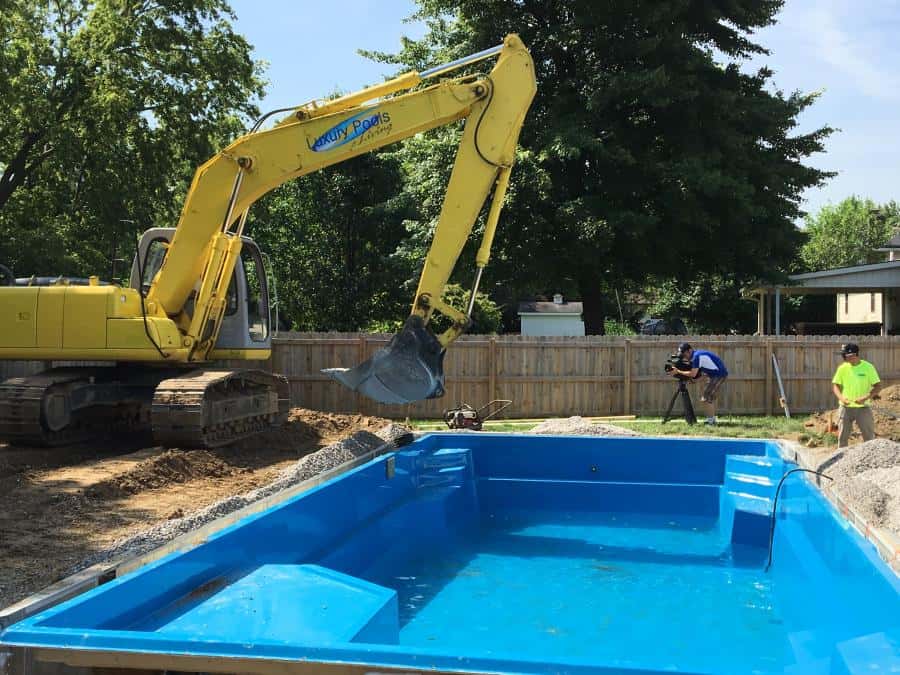
Window 3: Shell set and utilities
The fiberglass shell is delivered, set, plumbed, and wired while the house moves through its own interior phases. Electrical and any gas lines must be done by licensed trades, like any pool project, but these trades may already be working on your house.
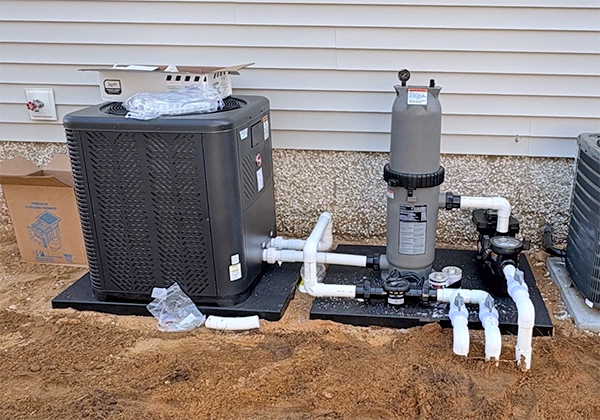
Window 4: Before final grading, landscaping, and fencing
This is your last chance to add the pool before the yard is finished. Decking, coping, and safety fencing go in, then the lot gets its final grade and the landscaping is planned around the pool. Miss this window and you’ll be digging up a lawn and landscaping you’ve already paid for.

Imagine a family building on a half-acre lot who decides on a pool at the drywall stage. It’s not too late, but the easy savings are gone. The excavator comes back for a second dig, the trenches cross freshly graded ground, and the landscaping contract gets rewritten. Had they decided four months earlier, at the site-plan stage, the dig would have fit into work already scheduled. The pool itself would cost the same, but the second dig, extra trenching, and landscaping changes would add to the bill.
Financing a pool with your mortgage
Adding the pool during construction also means you can include it in your home loan, which usually isn’t possible once the house is finished.
When the pool is part of the build, its cost can be included in the construction loan or the final mortgage. The pool is then financed over 15–30 years at mortgage rates, in one payment, with one closing.
The Consumer Financial Protection Bureau’s guide to construction loans explains how these loans convert to a standard mortgage when the home is complete.
There are two catches:
- The pool must be in the plans and the appraisal for the lender to count it, and adding one mid-build may require a loan modification.
- Also, rolling any cost into a 30-year loan means paying interest on it for 30 years, so a lower monthly payment can still mean paying more in total.
If the mortgage window has closed, or you’d rather keep the pool separate, you can still use a home equity loan (once you’ve built equity), a personal loan, or dealer financing through partners like VistaFi and HFS Financial.
Explore flexible financing options to compare what fits your project and timeline.
Coordinating with your builder (and what it costs)
A pool during home construction has one more moving part: the builder. Some builders welcome the coordination; some would rather the pool happen after closing so it never touches their schedule or their liability. Ask directly, and early.
What the pool actually adds to their world is modest. Pool Brokers USA is a manufacturer-direct broker, not an installer: we supply the shell, the specs, and the documentation, and we support installation through a vetted installer network or through you acting as owner-builder. Your builder’s job is sequencing, not pool construction. Many builders already work with us through our builder program, which handles pool sales, client education, and installation coordination so the builder’s crews never leave their lane.
Now the numbers your builder and lender both need:
- Fiberglass shells start at $12,500.
- Total owner-builder projects typically run $30,000–$50,000 once excavation, plumbing, electrical, decking, fencing, and permits are counted, and coordinating with new construction tends to push you toward the friendlier end of that range because the dig and trenching piggyback on work already happening.
Either way you’re saving $10,000–$20,000+ vs. a full-service pool build, and the savings stack with the sequencing.
One rule of thumb ties this section together: decide on the pool before the site plan is final.
Every window after that one is still workable, and every one of them is a little more expensive than the one before.
Frequently asked questions
Should I install a pool during or after building my house?
During, if you can. The lot is already open, heavy equipment is already mobilized, and permits can ride the same approval process, so the pool avoids the access damage, remobilization, and yard-repair costs of a retrofit. It can also be financed inside the mortgage rather than as a separate loan.
Can you include a pool in a new-construction mortgage?
Often, yes. If the pool is in the plans and the appraisal, its cost can be part of the construction loan that converts to your mortgage, spreading it over 15–30 years at home-loan rates. Confirm with your lender early; adding a pool mid-build may require a loan modification.
When during construction should the pool be excavated?
During rough site work, while excavation equipment is already on site and before final grading. That’s when the dig, spoil handling, and utility trenching cost the least. The firm deadline is before landscaping and fencing; after that, you’re paying retrofit prices.
How much does a fiberglass pool add to a new-construction project?
Fiberglass shells start at $12,500, and total owner-builder projects typically run $30,000–$50,000 including excavation, plumbing, electrical, decking, and permits. New-construction timing tends to trim the sitework portion, since the machines and open ground are already there.
Will my home builder handle the pool installation?
Usually not directly, and they don’t need to. The builder handles sequencing while the pool arrives as its own coordinated project: a factory-direct fiberglass shell with installation support through a vetted installer network, or you managing it as owner-builder. Many builders formalize this through a referral-based builder program.
The bottom line on pools and new construction
A pool with a new construction home is a sequencing decision disguised as a purchase. Put it in the site plan, dig while the machines are there, set the shell before the landscaping, and let the mortgage carry the cost, and the same $30,000–$50,000 project lands easier on both your yard and your budget than it ever could after closing.
The first step is putting real numbers next to your build schedule. Request your free, no-obligation quote and we’ll price your shell, map the delivery timing to your builder’s calendar, and lay out both purchase paths before your site plan is final.
Latest Posts
How Much Does an In-Ground Pool Cost in Maryland? Your Affordable Family Guide
Georgia Pool Costs: Your Guide to Affordable Inground Fiberglass Pools
Delaware Pool Costs: Get Your Backyard Oasis Sooner and for Less
What Does a Pool Cost in South Carolina? A Family-Friendly Price Breakdown
Adding a Pool to a New-Construction Home: How to Time It Right
How to Choose a Fiberglass Pool Manufacturer You Can Trust
Installing a Fiberglass Pool on a Slope: Retaining Walls and Grading
High Water Table? How to Install a Fiberglass Pool Safely
From Order to First Swim: A Realistic Fiberglass Pool Timeline
Does a Pool Raise Your Homeowners Insurance? What to Expect
Visit Our Blog
Share This Post
(opens in a new tab)
(opens in a new tab)
(opens in a new tab)