

November 24, 2026
/
For the average American family, a swimming pool is about building a summer full of memories right outside the back door. It is the sound of kids splashing after dinner, Saturday cookouts with friends, and quiet evenings relaxing by the water. When planning that dream, Georgia homeowners should know all their options and their ultimate pricing.
The cost to install an in-ground pool in Georgia varies widely depending on pool type, site conditions, and how you manage the build. Knowing how project costs break down allows you to protect your household budget while getting the exact pool your family wants.
What Factors Influence In-ground Pool Costs in Georgia?
Installing an in-ground pool in Georgia involves several location-specific factors that impact the bottom line. While surface pricing gives a rough baseline, actual site conditions across the state play a massive role in final labor and equipment costs.
- Soil and ground conditions: Georgia geology varies drastically from region to region. Northern Georgia and the metro Atlanta area frequently feature heavy red clay and underground granite shelves. Digging through solid rock requires heavy breaker attachments, which increases excavation costs. In contrast, coastal regions near Savannah often deal with high water tables and sandy soil. These sites require dewatering systems and careful gravel packing during backfill.
- Yard slope and grading: Many Georgia properties feature sloping backyards. Slopes demand extensive retaining walls and extra grading to prevent soil erosion and keep stormwater runoff out of the pool basin.
- Access to the backyard: Bringing in heavy machinery like excavators and cranes becomes more complex and labor-intensive if your property line has mature trees, steep drop-offs, or narrow gaps between houses.
- Permit fees and municipal inspections: Permitting requirements change depending on your specific county or municipality. Local building departments dictate mandatory fencing heights, pool alarms, and setbacks from property lines.
- Electrical and plumbing runs: The distance from your home’s main breaker panel to the pool equipment pad dictates wire gauge and trenching length. Older homes may also need electrical panel upgrades to support filtration pumps and heat systems.
Understanding these site conditions early helps prevent surprises on your balance sheet. The good news is most of these attributes are going to be able to be assessed by you, the homeowner, because they are apparent from just walking around your property.

Fiberglass vs. Concrete vs. Vinyl: Comparing Pool Costs in Georgia
Choosing the right pool material shapes both upfront installation expenses and long-term ownership costs. Georgia homeowners generally weigh three distinct options: fiberglass, concrete (gunite), and vinyl liner.
Fiberglass Pools
A fiberglass pool arrives at your property as a single, factory-engineered structure. Because the smooth gelcoat interior resists algae buildup and chemical degradation, day-to-day upkeep requires less effort and fewer balancing chemicals. The structure is naturally flexible, allowing it to withstand shifting soil without cracking.

Installation moves quickly. The process typically takes weeks from excavation to swimming, rather than months. While the upfront investment is higher than vinyl, the lifetime value is unmatched because there is no porous plaster to resurface and no liner to puncture or replace.
Concrete (Gunite) Pools
Concrete offers total freedom of custom design, but it is typically the most expensive pool installation cost. The construction process is extended and frequently takes four to six months or longer.

Georgia heat and organic debris cause algae to anchor into the porous concrete surface, demanding aggressive chemical treatments and regular acid washing. Homeowners must also budget for major replastering and tile work every decade or so.
Vinyl Liner Pools
Vinyl liner pools are the lowest entry-level price point, making them appealing to strict initial budgets.
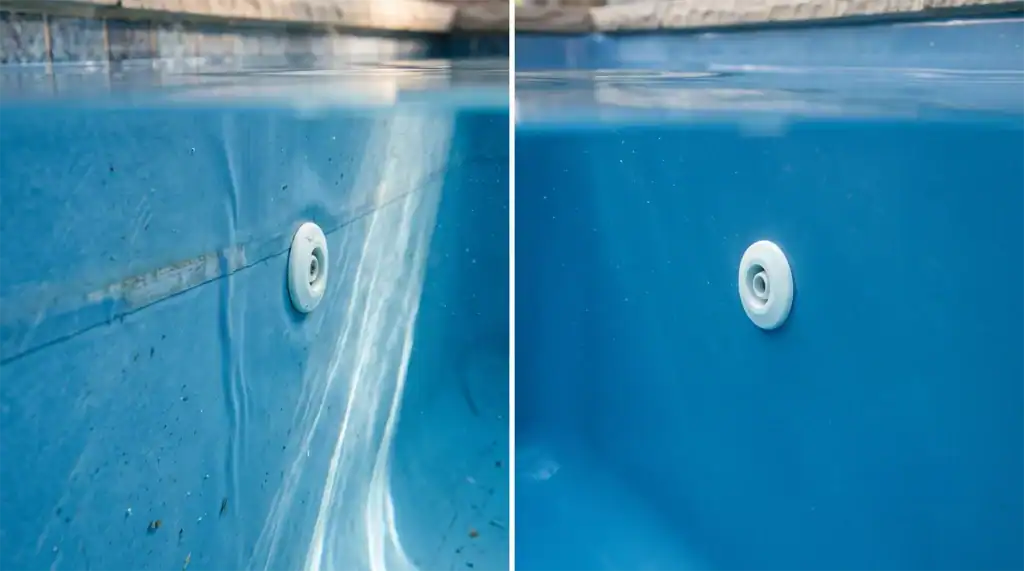
However, vinyl liners carry significant recurring costs. In the hot Georgia sun, ultraviolet rays and pool water chemicals break down the vinyl material. This leads to tears, fading, and wrinkles. Liners typically require total replacement periodically, which adds substantial expense over the pool’s lifespan.
When comparing long-term value, durability, and low maintenance, fiberglass consistently delivers the most practical balance for family living.
How Much Does an In-Ground Fiberglass Pool Shell Cost in Georgia?
When budgeting for a fiberglass pool, separating the pool shell from the installation work brings complete transparency to your planning.
Pool Brokers USA has delivered more than 1,500 American-made fiberglass pools across 17 states. We provide clear and direct pricing rather than hiding numbers behind vague contractor estimates. Our American-made shells start at $12,500, with total owner-builder projects typically running $30,000 to $50,000. This approach saves $10,000 to $20,000 or more compared with full-service installation.
The price of a fiberglass shell depends primarily on size, structural design, and integrated elements:
- Small fiberglass pools: Compact models and plunge pools provide an accessible entry point. Designed for smaller yards or intimate patio spaces, these models fit neatly into tighter spaces while providing built-in bench seating and relaxation depth.
- Medium fiberglass pools: Mid-sized pools represent the sweet spot for the average American family. These designs balance ample swim room for kids with built-in tanning ledges and steps for lounging.
- Large fiberglass pools: Expansive shells cater to larger properties and families that love to host neighborhood gatherings. These models accommodate active games, deep-end features, and broad social ledges.
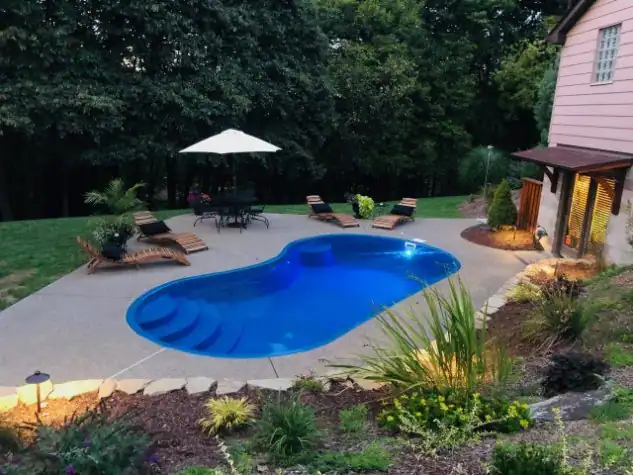
The Pool Brokers USA lineup spans roughly 40 fiberglass models across three size classes in six gelcoat colors. Having clear options makes it simple to match your budget with your backyard layout.
Because upfront costs represent a substantial commitment, flexible financing options are readily available to turn project figures into predictable monthly investments.
Beyond the Shell: Understanding Total Project Costs for Georgia Pool Owners
The pool shell is the core of the project, but completing a finished pool requires several complementary trades. To calculate the realistic cost to build a pool Georgia homeowners must plan for each phase of construction.
- Excavation and dirt removal: Digging the pool hole requires heavy machinery. In areas with high clay or rock, excavation costs rise. You must also decide whether extra soil can be graded on-site or must be hauled away.
- Base aggregate and backfill: Fiberglass pools require clean, crushed stone beneath the floor and around the perimeter walls. This aggregate base locks the pool securely in place and prevents shifting. It also promotes self-draining ground stability.
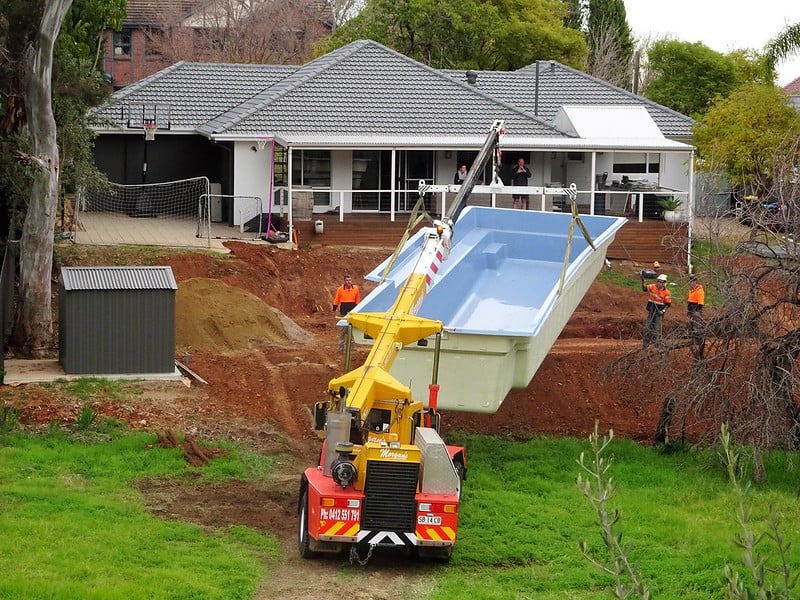
- Crane delivery and setting: A crane lifts the fiberglass shell off the transport flatbed and lowers it into the prepared excavation pit with precise laser leveling.
- Plumbing and filtration equipment: Connecting the skimmers, return jets, main drains, high-efficiency pump, and filter system forms the mechanical heart of your pool.
- Electrical hookups and bonding: Georgia building codes mandate perimeter equipotential bonding to ground the pool structure safely. A licensed electrician must wire the pump, timers, control panels, and ground-fault circuit interrupter outlets.
- Concrete decking and patio coping: You need walking and lounging space around the pool perimeter. Poured concrete, textured pavers, or stone coping finish the pool edges and create functional outdoor living space.
- Safety fencing and gates: State and local codes mandate an approved safety barrier surrounding the pool area to protect children and pets.
Accounting for these stages ahead of time ensures you stay firmly in control of your overall budget.
Saving Money on Your Georgia Pool: Owner-Builder vs. Coordinated Installation
Homeowners seeking an affordable in-ground pool in Georgia have two primary paths to complete their project: managing the build as an owner-builder or opting for coordinated installation.
The Owner-Builder Path
Acting as your own general contractor is the most effective way to eliminate builder markups. When you take the owner-builder route, you purchase the factory-direct fiberglass shell and hire local trade professionals directly for excavation, plumbing, and electrical work.
Because you oversee scheduling and pay subcontractors without a middleman taking a profit margin on every service, total project budgets typically run between $30,000 and $50,000. This strategy regularly puts $10,000 to $20,000 or more back into your pocket.
However, you are responsible for pulling permits, organizing site inspections, and managing subcontractor schedules. It requires active communication and time, but it provides complete financial control.
Coordinated Installation
If you prefer not to manage subcontractors yourself, coordinated installation through an experienced, vetted installer network is an excellent alternative. An established coordinator handles site preparation, delivery, plumbing lines, backfilling, and equipment hookups under a unified plan.
While this path carries higher total costs due to project oversight, it offers convenience for busy homeowners who want professional project management from day one.
Choosing between the two paths comes down to your personal schedule, budget priorities, and comfort level with managing home improvement projects.
Installing an inground swimming pool in Georgia requires compliance with state, county, and municipal building codes. Regulations exist to protect safety, prevent structural failure, and protect local drainage systems.
Before breaking ground, always contact your local county or city building department to determine their exact permitting process. Typical requirements include:
- Zoning and property setbacks: Building plans must show the pool position relative to property lines, easements, existing home foundations, and septic tanks or drain fields.
- Pool barrier laws: Georgia adheres to residential pool safety codes requiring an approved barrier around the water. Fences typically must stand at a designated minimum height with self-closing, self-latching gates that open outward.
- Safety alarms and covers: Depending on your jurisdiction, doors leading directly from the home to the pool area may require audible safety alarms. You may also be required to install an approved safety cover.
- Sediment and erosion control: Silt fences and runoff protection are mandatory during excavation to prevent red clay from washing into municipal storm drains or neighboring yards.
Navigating permits requires submitting a clear site plan and completing scheduled milestone inspections for bonding, plumbing, and final barrier installation. Direct coordination with your local building office ensures smooth approvals without costly project delays.
Financing Your Georgia Pool: Making Your Backyard Oasis a Reality
A swimming pool represents an investment in family wellness, relaxation, and everyday fun. Rather than depleting family savings, many homeowners choose dedicated pool financing to spread the cost into manageable monthly payments.
Specialized swimming pool lenders understand outdoor living projects and offer unsecured loan programs designed specifically for pool construction. Lending partners like VistaFi and HFS Financial provide transparent loan structures tailored to residential builds.
Benefits of dedicated pool financing include:
- Fixed monthly payments: Predictable loan terms allow you to budget accurately without unexpected interest rate spikes.
- No equity requirements: Unsecured pool loans evaluate creditworthiness and income rather than requiring you to borrow against the equity in your home.
- Flexible loan amounts: Financing can cover the fiberglass shell alone or encompass the entire project scope, including excavation, concrete decking, electrical work, and safety fencing.
- Quick approval decisions: Fast pre-qualification and simple online applications help keep your construction timeline moving without unnecessary bank delays.
Reviewing financing programs early gives you a clear monthly target, making it easier to select the right pool design and accessories for your budget.
Is a Fiberglass Pool a Worthwhile Investment for Georgia Homeowners?
Evaluating a pool purchase requires looking at both lifestyle payoff and long-term financial return.
On the financial side, adding a well-built fiberglass pool to a Georgia property typically increases overall home value in the 5-8% range. The actual return on investment depends on your regional real estate market, neighborhood expectations, and the quality of the surrounding landscaping and hardscape. In warm climates like Georgia, where swim seasons stretch across multiple months, outdoor living amenities carry substantial appeal for future home buyers.
Beyond property value, the true return on investment is measured in lifestyle and connection. A swimming pool creates an inviting backyard center where your children spend their summers outdoors, friends gather for weekend barbecues, and daily stress melts away in the water.
Because durable fiberglass shells resist staining, hold heat efficiently, and require far less upkeep than concrete or vinyl alternatives, your time is spent making memories rather than scrubbing walls. For families seeking lasting value and reliable fun, an in-ground fiberglass pool is a sound, rewarding choice for your home.
When you are ready to evaluate real numbers for your property, take the next step and Request Your Free, No-Obligation Quote.
Frequently Asked Questions About Georgia Pool Costs
How much does it cost to install an in-ground pool in Georgia?
Total costs depend heavily on the pool material and installation path you choose. For an inground fiberglass pool, published direct pricing starts at $12,500 for the shell, with total owner-builder projects typically running $30,000 to $50,000 once excavation, plumbing, electrical, and concrete work are completed. Full-service builder installations for concrete or custom pools often run higher.
Can I save money by acting as an owner-builder in Georgia?
Yes, managing your own project allows you to hire local subcontractors directly for excavation, plumbing, and concrete work. By removing general contractor markups on labor and materials, owner-builders typically save $10,000 to $20,000 or more compared with full-service turn-key installation packages.
Common site expenses include digging through hard rock or dense red clay, grading sloped yards, adding retaining walls, and hauling away excess excavation dirt. Additionally, you should budget for mandatory safety fencing, electrical panel upgrades, municipal permit fees, and concrete patio decking around the water.
Are fiberglass pools better suited for Georgia soil than concrete?
Fiberglass pools perform exceptionally well in Georgia because the flexible composite shell can adapt to shifting ground without cracking. Rigid concrete structures are prone to surface fissures when heavy red clay expands and contracts during wet and dry weather cycles.
Can I finance the entire cost of a fiberglass pool in Georgia?
Yes, dedicated pool financing partners such as VistaFi and HFS Financial offer unsecured loan options that cover the entire project budget. Homeowners can finance the pool shell, site excavation, electrical hookups, surrounding hardscapes, and safety equipment with structured monthly payments.
Latest Posts
How Much Does an In-Ground Pool Cost in Maryland? Your Affordable Family Guide
Georgia Pool Costs: Your Guide to Affordable Inground Fiberglass Pools
Delaware Pool Costs: Get Your Backyard Oasis Sooner and for Less
What Does a Pool Cost in South Carolina? A Family-Friendly Price Breakdown
Adding a Pool to a New-Construction Home: How to Time It Right
How to Choose a Fiberglass Pool Manufacturer You Can Trust
Installing a Fiberglass Pool on a Slope: Retaining Walls and Grading
High Water Table? How to Install a Fiberglass Pool Safely
From Order to First Swim: A Realistic Fiberglass Pool Timeline
Does a Pool Raise Your Homeowners Insurance? What to Expect
Visit Our Blog
Share This Post
(opens in a new tab)
(opens in a new tab)
(opens in a new tab)