
August 25, 2026
/
In the fiberglass vs gunite pool decision, the construction method is incredibly important. A fiberglass pool arrives as a one-piece molded shell with a smooth, non-porous gel coat, flexes with ground movement, and typically lasts 25+ years – with many fiberglass pools lasting 30 to 50 years with proper care.
A gunite pool is concrete sprayed in place on site, and its porous plaster surface needs acid washing and resurfacing roughly every decade to stay swimmable.
Here’s the part that surprises most shoppers: the pool that costs more to build can also cost more to keep. “Concrete” sounds permanent, so buyers assume it’s the low-worry choice. The truth is more interesting, and it comes down to how each pool is actually made.
This guide walks through what gunite and shotcrete really are, how each construction method holds up over decades, what maintenance genuinely costs, and which pool fits which family. By the end, you’ll know exactly what to ask before you sign anything.
Key Takeaways
- Gunite and shotcrete are sprayed-concrete construction methods, not separate pool types; both produce a rigid, porous shell finished with plaster.
- Fiberglass shells flex with freeze–thaw ground movement, while rigid concrete can crack under the same conditions; construction method drives winter durability.
- Fiberglass pools typically last 25+ years, with many lasting 30–50 years with proper care, and the gel coat never needs replastering.
- Gunite pools need acid washing and resurfacing roughly every decade, a recurring renovation that fiberglass owners simply never schedule.
- Annual upkeep runs roughly $350–$400 for fiberglass vs. $2,000+ for concrete, mostly because porous surfaces demand more chemicals and scrubbing.
What are gunite and shotcrete, really?
Many buyers hear “concrete pool” and picture a poured foundation. That’s not how it actually works.
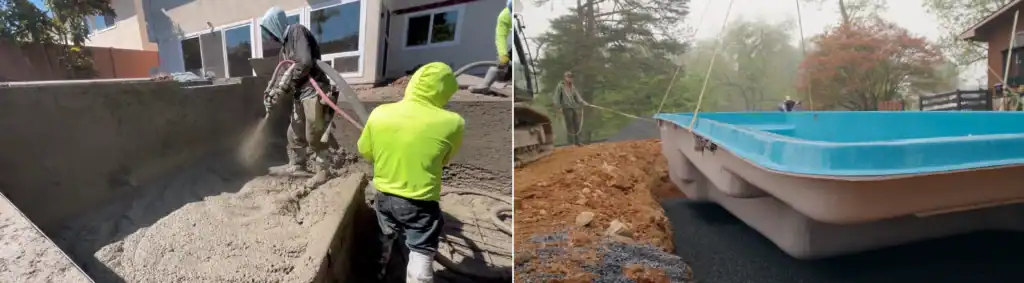
Gunite and shotcrete are both sprayed-concrete methods: a crew pneumatically sprays a concrete mix over a rebar framework shaped inside your excavated hole.
The difference between the two is when the water joins the mix. Gunite is a dry mix that meets water right at the spray nozzle, while shotcrete arrives pre-mixed and wet, ready to spray. The American Shotcrete Association treats gunite as the dry-mix branch of the same shotcrete family, which is why builders use the names almost interchangeably.
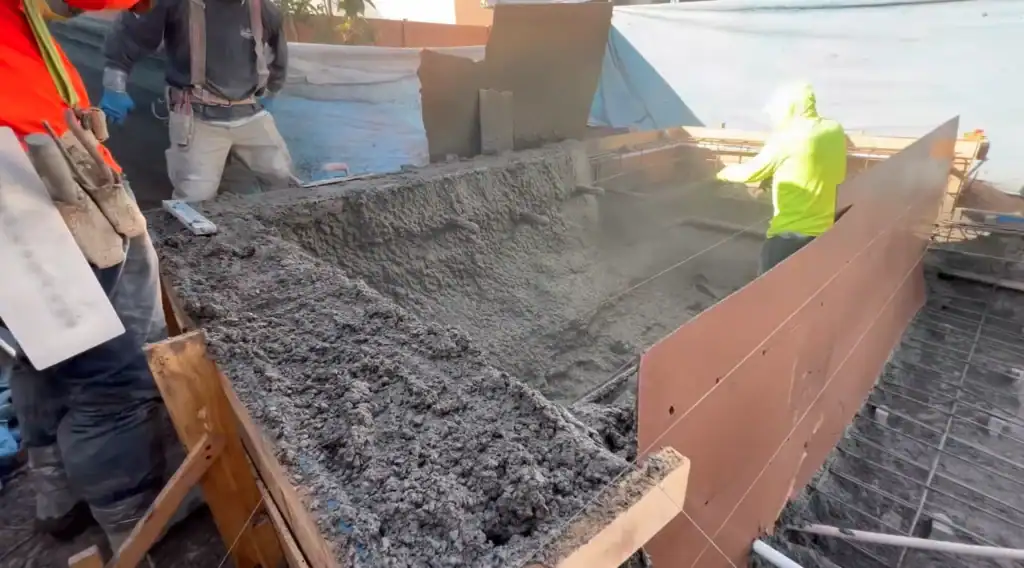
Either way, the result is the same kind of pool: a rigid concrete structure, built by hand on site over several weeks, finished with a coat of plaster, and cured before it ever holds water. A shotcrete pool is genuinely custom. If you want to increase the costs of building a pool and add a grotto, a vanishing edge, or a freeform lagoon with an island, sprayed concrete can build it.
A fiberglass pool takes the opposite path: The shell is molded in a factory as one continuous piece, cured under controlled conditions, and delivered to your yard as a finished pool. Weeks of on-site construction become days of installation.
Want to see what those finished shapes look like? Browse the full lineup of fiberglass pool models from small to large.
How construction method decides winter survival
Construction method matters most when the ground starts moving, and in most of the country, it moves every winter.
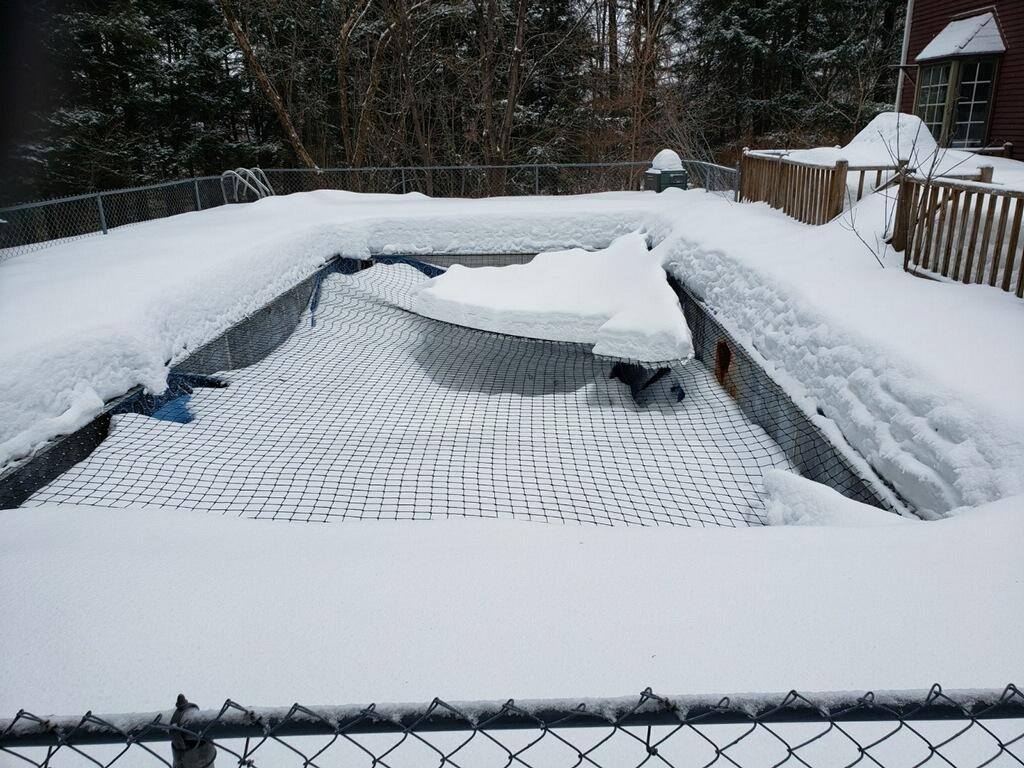
Frost heave is the slow swell of soil as the moisture inside it freezes. Freeze/thaw cycles repeat that swell-and-settle pattern all season long. Your pool shell sits in that shifting ground for decades, and its construction determines how it responds.
Fiberglass flexes while concrete cracks. A one-piece fiberglass shell has enough give to ride ground movement without damage, the way a dock flexes with waves instead of fighting them. A gunite shell is rigid by design, so when the soil pushes hard enough, the structure can develop cracks that need patching or structural repair.
Of course, proper installation is essential for both types pools. A crushed-stone base, the recommended bedding under a fiberglass shell, plus perimeter drainage to manage groundwater, protects any pool from the worst of frost movement. Reputable gunite builders engineer for frost lines too. But the difference comes down to the material, not the installer: fiberglass forgives ground movement that concrete punishes.
That’s why the durability conversation in cold and mixed climates so often ends at construction method, before anyone even mentions surfaces. For the deeper cold-climate breakdown, see how fiberglass compares to concrete pools across the full ownership picture.
The surface story: porous plaster vs. non-porous gel coat
Run your hand along a pool wall, and you’ll feel the second big difference.
A gunite pool’s plaster finish is porous and slightly rough. Those microscopic pores give algae a place to anchor, which means more brushing, more chlorine, and periodic acid washing, a chemical stripping of the surface layer to remove stains and buildup. The rough texture is also famously hard on kids’ feet, knees, and hands during pool play.
A fiberglass shell wears a gel coat, a smooth, non-porous factory finish. Algae has nowhere to grab. Owners typically use fewer chemicals, brush less, and skip acid washing entirely – which is healthier for not only the person maintaining the pool, but the whole family.
The surfaces also handle heat differently. Fiberglass holds warmth better than concrete, so your heater works less for the same swim season. The US Department of Energy notes that pool heating costs vary widely with equipment and habits, and the shell material is one of the levers you control at purchase time, not something you can change later.
What does that mean in dollars? Annual maintenance runs roughly $350–$400 for fiberglass vs. $1,000+ for vinyl and $2,000+ for concrete pools, counting chemicals, cleaning, and routine surface care. Over a decade, the surface you chose quietly becomes one of the biggest line items in the comparison.
What “concrete pool resurfacing” actually involves
Ask any longtime gunite owner about resurfacing and you’ll hear a project story, because concrete pool resurfacing is an entire renovation, not a touch-up.
Plaster is a wear surface. Water chemistry, sunlight, and time slowly etch and thin it, and roughly every decade the pool needs the finish redone. A typical resurfacing cycle looks like this:
- Drain the pool completely.
- Chip or grind away the failing plaster layer.
- Repair any cracks exposed underneath.
- Apply the new plaster, quartz, or pebble finish.
- Cure, refill, and rebalance the water chemistry from scratch.
The concrete pool is out of commission for the duration, and the expense lands every cycle, then lands again a decade later. Budgeting for a gunite pool honestly means penciling in resurfacing for as long as you own it.
Fiberglass owners never schedule that project. The gel coat is engineered to last the life of the shell, which is a big part of why fiberglass pools typically last 25+ years, with many lasting 30–50 years with proper care. Here’s the full picture of how long fiberglass pools last and what “proper care” actually involves.
One honest note in the other direction: a well-maintained gunite structure can also serve for decades. The difference isn’t whether the pool survives. It’s how much scheduled renovation it takes to keep the water inviting.
What each pool costs to own, not just to build
Sticker price starts the conversation, but a pool is a decades-long relationship. Total cost of ownership tells the truer story, which we break down in our 15-year look at both types of pools.
On the fiberglass side, the numbers are refreshingly concrete (pun intended). Shells start at $12,500, and total owner-builder projects typically run $30,000–$50,000 depending on size, site conditions, and add-ons like heaters and covers. That path saves $10,000–$20,000+ vs. a comparable full-service installation, because you’re buying manufacturer-direct and coordinating the project yourself with expert guidance.
Prefer hands-off? A coordinated installation through a vetted installer network is the second path, and both are laid out with real numbers in this fiberglass pool installation cost breakdown.
Gunite pricing is harder to pin down, and that’s not an accident. Every sprayed-concrete pool is a custom construction project, so quotes swing with design complexity, local labor, and material costs. Custom geometry is genuinely valuable if you want it, and you pay for it in both the build and the timeline, since gunite construction typically takes weeks to months on site.
Then the ownership years stack up:
| Cost factor | Fiberglass | Gunite |
|---|---|---|
| Annual maintenance | Roughly $350–$400/yr | $2,000+/yr |
| Surface renewal | None scheduled; gel coat lasts the shell’s life | Acid washing plus resurfacing roughly every decade |
| Heating efficiency | Holds heat well; heater works less | Loses heat faster through concrete |
| Winter risk | Flexes with freeze–thaw movement | Rigid; can crack under frost heave |
A decade of those differences adds up to real money, often enough to fund the heater, the cover, and a lot of pizza nights around the new pool.
Which pool is right for your family?
There’s no universal winner here, just a right fit for how you want to own a pool.
A gunite or shotcrete pool is right for you if:
- Your design is fully custom: unusual geometry, a vanishing edge, integrated boulders or grottos
- You’re comfortable budgeting for resurfacing cycles and higher annual upkeep
- Your timeline can absorb weeks to months of on-site construction
A fiberglass pool is right for you if:
- You want low scheduled maintenance and no resurfacing projects, ever
- You live where freeze–thaw winters punish rigid structures
- You’d rather swim this season than supervise a construction site
- Keeping $10,000–$20,000+ vs. full-service matters to your family’s budget
Fiberglass does mean choosing from molded shapes and sizes rather than sketching a freeform lagoon. With around 40 models from an 8′ x 10′ plunge pool to a 16′ x 42′ pool with a built-in tanning ledge, most families find a shell that fits both the yard and the vision.
Check out all the models in Pool Brokers USA’s lineup of fiberglass pools that are built to last and bring dreams to life for families in 17 US states.
Frequently asked questions
What’s the difference between gunite and shotcrete?
They’re two versions of the same sprayed-concrete method. Gunite uses a dry concrete mix that meets water at the spray nozzle, while shotcrete arrives wet and pre-mixed. Both produce the same kind of rigid, plaster-finished concrete pool, so builders often use the names interchangeably.
Do fiberglass pools last longer than gunite pools?
Fiberglass pools typically last 25+ years, with many lasting 30–50 years with proper care, and the gel coat surface never needs replastering. A well-built gunite structure can also last decades, but only with acid washing and resurfacing roughly every ten years to renew its plaster finish.
Is gunite or fiberglass better for cold climates?
Fiberglass has the edge where winters are most severe. The one-piece shell flexes with freeze–thaw ground movement instead of cracking, while rigid concrete can crack under frost heave. Either pool benefits from a crushed-stone base and perimeter drainage engineered for local soil and frost lines.
How often does a gunite pool need resurfacing?
Roughly every decade, though water chemistry and climate can stretch or shrink that window. Resurfacing means draining the pool, removing the worn plaster, repairing cracks, and applying a new finish. It’s a recurring renovation expense that belongs in any honest gunite budget.
Is a gunite pool cheaper than fiberglass?
Usually not. Gunite pools are custom construction projects, and quotes vary widely with design and labor. Fiberglass shells start at $12,500, with total owner-builder projects typically running $30,000–$50,000, and the lower annual upkeep of roughly $350–$400 vs. $2,000+ for concrete widens the gap over time.
Can a fiberglass pool be customized like a gunite pool?
Not to the same degree, and that’s the honest trade-off. Fiberglass comes in molded shapes and sizes, so fully custom geometry belongs to gunite. Within the catalog, though, you’ll find tanning ledges, beach entries, spa options, and six gel coat colors across small, medium, and large models.
The bottom line on fiberglass vs. gunite pools
The fiberglass vs gunite pool choice really is a construction-method choice. Sprayed concrete buys unlimited shape at the price of a porous surface, resurfacing every decade or so, and $2,000+ in annual upkeep. A molded fiberglass shell trades some design freedom for a non-porous gel coat, freeze–thaw flexibility, 25+ year typical lifespan, and roughly $350–$400 a year in maintenance.
Both are real pools that host real cannonball contests. The question is which ownership experience you want for the next few decades: scheduled renovations or Saturday swims.
If the fiberglass path sounds like your family, the next step is simple. Request a free quote and we’ll walk you through models, delivery to your area, and honest total project numbers, so you can compare your real options with nothing hidden.
Latest Posts
What Does a Fiberglass Pool Cost in Arkansas? Your Complete Guide
Florida Pool Installation Costs: Your Guide to Affordable Backyard Bliss
Protecting Your Backyard Oasis: Are In-Ground Pools Safe in Tornado Country?
Adding an Inground Pool in Hurricane-Prone Areas: Is It a Safe Investment for Your Family?
Adding a Pool to Your New Home Builds: A Builder’s Guide to Value and Efficiency
Ohio Pool Installation Guide: Costs, Timing, and What Homeowners Need to Know
Kentucky Pool Permit Process: Steps to Avoid Common Rejections
Georgia Pool Permit Requirements: Step-by-Step Guide for a Smooth Installation
Delaware Pool Permit Guide: What Homeowners Need to Know Before You Install
Alabama Pool Permits and Building Codes: Your Complete Compliance Guide
Visit Our Blog
Share This Post
(opens in a new tab)
(opens in a new tab)
(opens in a new tab)