

April 23, 2026
/
Getting a permit for your Alabama pool installation isn’t just a legal formality: it protects your investment, your family, and your ability to sell your home in the future. But if you’ve started looking into what’s required, you’ve probably noticed something quickly: Alabama doesn’t run on a single statewide pool permit system.
In Alabama, pool permits are issued at the local level — by your county building department, your city building office, or both. That means what you need in Jefferson County looks different from what’s required in Baldwin County, and requirements in an incorporated city like Huntsville or Auburn may differ from unincorporated areas outside of city limits. This guide breaks down how the system works, what Alabama’s building code framework requires, and how to find the right permit office for your project — whether you’re working with a licensed contractor, hiring a general contractor, or acting as your own owner-builder. Pool Brokers USA has customers in all of those buckets, and we’re happy to work with all of them. So if you’re planning a fiberglass pool installation in Alabama, this is where your planning can begin. And if you have any further questions after reading this article, contact us.
How Alabama’s Building Code System Works
Alabama administers its statewide building code through the Alabama Building Commission (ABC), which adopts and amends the International Building Code (IBC) and the International Residential Code (IRC) for use across the state. The IRC, specifically Section R326, provides the foundational framework for residential swimming pool construction: covering structural requirements, suction entrapment prevention, electrical safety, and barrier standards.
However, Alabama’s framework gives significant authority to local jurisdictions. Incorporated cities and towns typically adopt and enforce their own building codes, often modeled on the IBC/IRC with local amendments. Counties manage permitting for unincorporated areas, though the presence and scope of county building departments varies considerably across Alabama counties. In some rural areas, formal permit requirements may be limited or enforced primarily within city limits.
The practical bottom line: your permit process depends almost entirely on where your property is located. Always start with your local county building department or city building office to confirm what’s required before your project begins.
Why This Matters for Fiberglass Pool Buyers
Fiberglass pools are a popular choice in Alabama precisely because they’re well-suited to the state’s soil conditions and climate: faster to install than concrete, lower in long-term maintenance, and durable across Alabama’s warm seasons. But regardless of pool type, local permit requirements apply. A permitted installation gives you documentation that your pool was built to code, protects your homeowner’s insurance coverage, and eliminates complications when you eventually sell.
Skipping a permit (or working with a contractor who suggests skipping one) creates real risk. Unpermitted pools can trigger stop-work orders, require expensive demolition and rebuilding, and become a dealbreaker during home sales. See our full breakdown of hidden costs of fiberglass pool ownership for more on what to budget beyond the pool itself.
Who Is Required to Pull a Pool Permit in Alabama?
In most Alabama jurisdictions with active building departments, a permit is required for any new inground pool installation. The question of who pulls that permit depends on how your project is structured.
Licensed Contractor Installations
When you hire a licensed pool contractor or general contractor to manage your installation, they are typically responsible for pulling the required permits in your jurisdiction. Alabama general contractors are licensed through the Alabama Licensing Board for General Contractors (ALBGC), which requires licensure for construction projects above a certain contract value threshold. Residential projects may also fall under the Alabama Home Builders Licensure Board (AHBLB) depending on the scope of work.
Before hiring any contractor for your Alabama pool project, confirm that they hold the appropriate state license and are familiar with your county’s or city’s specific permit process. Ask directly whether they include permit fees in their contract pricing, and request copies of all permit documentation once issued.
Owner-Builder and DIY Installations
Alabama does allow owner-builders (homeowners who choose to act as their own general contractor) to pull permits for work on their own primary residence. If you’re purchasing a fiberglass pool shell directly and coordinating your own installation, this is the route you’d follow. Pool Brokers USA’s swimming pool installation services and pool ordering process are designed to support owner-builders with the documentation, specs, and guidance needed to move through permitting with confidence.
Owner-builder rules vary by jurisdiction. Some Alabama counties and cities may impose additional requirements or restrictions on owner-pulled permits for work beyond a homeowner’s principal residence. Confirm the rules in your specific jurisdiction before proceeding.
Home Builders and New Construction
If you’re a custom home builder incorporating a fiberglass pool into a new construction project, permitting is typically handled as part of the overall building permit process, though pools often require a separate pool permit in addition to the home permit. Pool Brokers USA’s builder program is designed to integrate seamlessly with new construction timelines, and our team can help coordinate documentation requirements.
What the Alabama Pool Permit Process Typically Looks Like
While the specifics vary by jurisdiction, most Alabama counties and cities with active building departments follow a broadly similar process for residential pool permits. Here’s what to expect at a general level:
- Contact your local building department. Identify whether your property falls within a city’s jurisdiction or the unincorporated county. Your county building department is the starting point for most rural and suburban properties.
- Submit a permit application. Applications typically require a site plan showing the pool’s location relative to property lines, your home, utilities, and existing structures. Setback requirements – how far the pool must sit from property lines, easements, and the house – are specified by local ordinance.
- Submit construction drawings. Your pool manufacturer or contractor will provide structural drawings. For fiberglass pools, these typically include the pool shell specs, equipment pad layout, plumbing, electrical, and bonding plan.
- Plan review and approval. The building department reviews your submission for code compliance. Review timelines vary widely – from a few days in smaller counties to several weeks in busier urban jurisdictions.
- Pay permit fees. Fees vary significantly by jurisdiction and are typically calculated based on project value or a flat fee schedule. Budget accordingly.
- Schedule inspections. Most jurisdictions require one or more inspections during installation – typically before backfill, for electrical/bonding, and a final inspection at project completion.
- Receive final certificate of occupancy or approval. Once all inspections pass, you’ll receive documentation confirming the installation meets local code requirements.
Throughout this process, keep copies of every document: permit applications, approval letters, inspection reports, and the final sign-off. These records are essential for insurance purposes and future home sales.
Alabama Pool Setback Requirements
Setback requirements define how far your pool must be positioned from your property lines, home foundation, utility easements, and other structures. In Alabama, setbacks are established at the local level and vary by jurisdiction.
Common factors that affect setback rules include your zoning classification (residential, suburban, rural), lot size, proximity to recorded easements or drainage areas, and whether your property is located within a homeowners association, or with its own additional restrictions.
Before finalizing your pool placement, pull the specific setback requirements from your county or city zoning and building departments. Your property survey and plat documents will help determine distances accurately. Placing a pool too close to a property line without confirming local setbacks is one of the most common (and most expensive) permit application errors.
Pool Barrier and Fence Requirements in Alabama
Alabama requires pool barriers as a safety measure for residential swimming pools, though the specific standards are set at the local level rather than through a single statewide pool barrier statute. Most Alabama jurisdictions base their barrier requirements on the IRC and/or the International Swimming Pool and Spa Code (ISPSC), with local amendments.
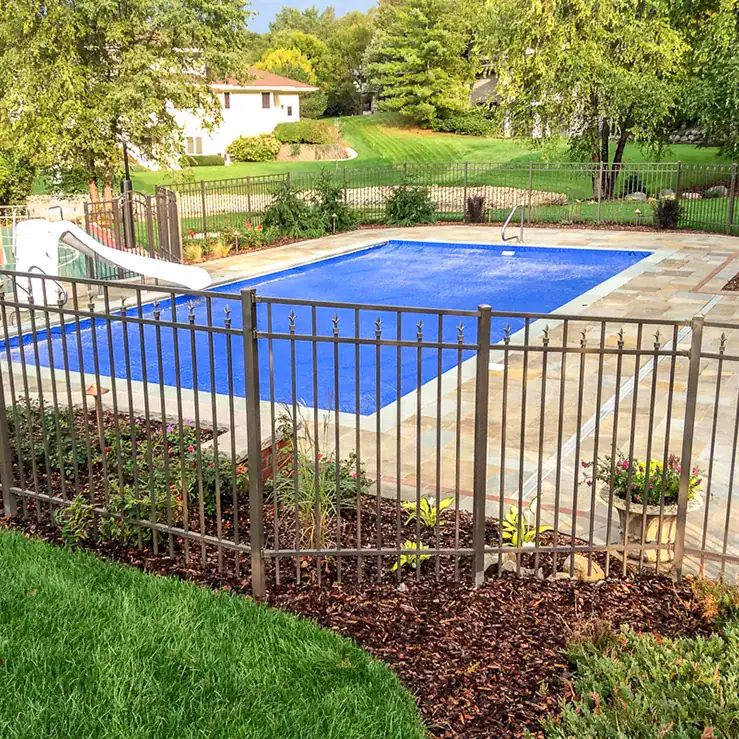
Pool barriers are designed to restrict unsupervised access to the pool area, particularly by young children. Common barrier elements addressed in local codes include perimeter fencing, gate hardware and self-latching mechanisms, barriers between the pool and the home, and requirements for doors that open directly to the pool area.
Specific dimensional requirements for fence heights, gate clearances, or barrier distances are not included in this article. Requirements vary by jurisdiction. Always confirm the exact specifications with your local building department before installation.

For families with young children, barrier compliance is about more than passing an inspection, it's important for peace of mind with little ones.
Electrical and Bonding Requirements for Alabama Pools
All residential pool installations in Alabama must comply with the National Electrical Code (NEC), specifically Article 680, which governs swimming pools, spas, and hot tubs. These requirements cover pool pump and equipment circuits, bonding of all metallic components, GFCI protection for outlets and lighting near the pool, and proper burial depths and conduit types for underground wiring.
Electrical work for pool installations in Alabama must be performed by a licensed electrical contractor. This work is inspected separately from the structural pool installation in most jurisdictions, and an electrical sign-off is typically required before the final pool permit is closed.
Do not attempt to connect or modify pool electrical systems without a licensed electrician. The risks of improperly wired pool equipment — including electric shock drowning (ESD) — are serious. Confirm with your building department whether a separate electrical permit is required in addition to your pool permit.n, it’s about peace of mind. A properly installed mesh safety cover provides an additional layer of protection when the pool is not in use and can complement your perimeter barrier system.
Alabama Contractor Licensing for Pool Installation
Alabama regulates general contractors and residential contractors through separate licensing boards, and pool installation may fall under either depending on the project scope and contract value.
Alabama Licensing Board for General Contractors (ALBGC)
The ALBGC licenses contractors performing commercial and residential construction work above a specified contract threshold. General contractors working on pool installations as part of a larger residential project, or on higher-value standalone pool projects, are typically required to hold ALBGC licensure. Verify current thresholds and requirements directly with the ALBGC online.
Alabama Home Builders Licensure Board (AHBLB)
The AHBLB licenses residential home builders and contractors in Alabama. Depending on how your pool installation is structured — particularly for new construction or projects where significant excavation, grading, or structural work is involved — contractor licensing under the AHBLB may apply. Verify requirements at hblb.alabama.gov.
Verifying Your Contractor’s License
Before signing any contract for Alabama pool installation, verify the contractor’s license status through the appropriate board’s online lookup tool. Ask for their license number, confirm it’s current and in good standing, and verify that their license covers the scope of your project. A licensed contractor should have no hesitation providing this information.
Pool Brokers USA’s installation services connect Alabama homeowners with qualified, vetted contractors experienced in fiberglass pool installation so you’re not navigating this on your own.
Special Considerations: HOAs, Covenants, and Deed Restrictions
If your property is located within a homeowners association or subject to recorded deed restrictions or covenants, you’ll need HOA approval in addition to (and sometimes before) your building permit. HOA rules can govern pool placement, enclosure requirements, equipment visibility, landscaping around the pool area, and construction hours.
HOA approval timelines vary. Some associations respond in days; others require board meetings on a set schedule. Start the HOA process early (ideally before or concurrent with your permit application) to avoid delays once your permit is approved and you’re ready to break ground.
HOA approval does not replace a building permit, and a building permit does not override HOA restrictions. Both apply independently.
How Pool Brokers USA Supports Alabama Homeowners Through the Process
Buying a fiberglass pool through Pool Brokers USA means you’re not left to figure out the permit process alone. Whether you’re working with one of our installation partners or acting as your own general contractor, we provide the technical documentation (structural drawings, pool shell specs, equipment layouts, etc.) that your local building department needs to review and approve your permit application. Explore our full Alabama service area to learn more about what we offer across the state.
Flexible purchase options — including pool-shell-only for owner-builders and fully installed packages — mean you can match your approach to your situation. And pool financing options make it easier to plan your full project budget, including permit fees, site preparation, and installation costs.
Alabama County and City Pool Permit Resources
Use this list below to find permit information for your county or city. If you don’t see your area listed here, contact your local government directly.
- Autauga County, Alabama – Permit Requirement Info
- Baldwin County, Alabama – Permit Application Checklists, Building, Planning & Zoning Information, and Building Inspection Resources
- City of Eufaula, Alabama – Permit Requirements, Building/Planning Department
- Barbour County, Alabama – County Building Permits
- City of Spanish Fort, Alabama – Swimming Pool Permit
- Blount County, Alabama – Permits Page
- City of Greeneville, Alabama – Apply for a Permit Page and Building Department
- Chambers County, Alabama – Code Enforcement
- City of Oxford, Alabama – Building Services
- City of Jacksonville, Alabama – Zoning Ordinances
- Cherokee County, Alabama – Building Permits And Inspections and Swimming Pool Application
- City of Lanett, Alabama – Application for Building Permit
- City of Athens, Alabama – Residential Swimming Pool Permit Application
- Clarke County, Alabama – Residential Swimming Pool Permit Requirements
- City of Anniston, Alabama – Zoning Information and Building Department
- City of Helfin, Alabama – Zoning Permit
- Coffee County, Alabama – Permit Information
- City of Valley, Alabama – Building Permit Application
- City of Huntsville, Alabama – Building Licenses and Permits
- City of Tuscumbia, Alabama – Building and Permits
- City of Sheffield, Alabama – Building Department and Building Permit Application
- City of Muscle Shoals, Alabama – Contact Information
- City of Talladega, Alabama – Building Inspector Forms
- City of Decatur, Alabama – Building Department, Online Permits, and Barrier Permit
- City of Enterprise, Alabama – Building Inspections
- City of Luverne, Alabama – Building Permits
- City of Cullman, Alabama – Building Inspection Department
- City of Dothan, Alabama – Swimming Pool Permit Application
- City of Selma, Alabama – Building Inspector and PDFs
- City of Demopolis, Alabama – Building Department
- City of Fort Payne, Alabama – Applications and Ordinances
- City of Gadsden, Alabama – Building Department, Permits and Fees
- City of Wetumpka, Alabama – Permits and Zoning Application
- City of Brewton, Alabama – Building Permit Application, Planning and Zoning
- City of Ozark, Alabama – Inspection Department
- City of Andalusia, Alabama – Planning and Development
- City of Rainbow, Alabama – Building Permit and Building Department
- City of Trussville, Alabama – Licenses and Permits
- City of Russellville, Alabama – Building Permit Application
- City of Fayette, Alabama – Building Permit Application
- City of Geneva, Alabama – Building Department Information
- Elmore County, Alabama – Building Reference Guide
- City of Taylor, Alabama – Residential Building Permits
- City of Scottsboro, Albama – Building Department
- City of Clanton, Alabama – Building and Zoning Department and Permit Requirements
- Houston County, Alabama – Online Building Permit Application
- Jackson County, Alabama – Zoning and Building Permits (None Needed)
- Jefferson County, Alabama – Online County Permitting Portal
- City of Boynton, Alabama – Swimming Pool Building Permit
- City of Birmingham, Alabama – Online Permit Center
- City of Hoover, Alabama – Property Development and Building Permits
- Lamar County, Alabama – Swimming Pool Guidelines
- Lauderdale County, Alabama – Permit Office
- City of Tuskegee, Alabama – Application for Building Permit
- City of Moulton, Alabama – Permit Application
- City of Clay, Alabama – Building Permits
- Lee County, Alabama – General Applications and Complete Pool Application
- City of Florence, Alabama – Residential Permits
- City of Madison, Alabama – Swimming Pool Permit Application
- City of Guntersville, Alabama – Building Department and Residential Application
- Madison County, Alabama – Web Portal and Swimming Pool and Spa Permit Information
- City of Arab, Alabama – Building Permits Department
- City of Marengo, Alabama – Building Department Permits
- City of Mobile, Alabama – Application Assistant and Inspection Services
- Mobile County, Alabama – Permits
- Montgomery County, Alabama – Building Permits and Inspections
- City of Troy, Alabama – Pool Permit Application
- Randolph County, Alabama – Zoning and Permitting Regulations
- City of Phenix, Alabama – Building Department
- Russell County, Alabama – Building Inspections and Application for Building Permit
- City of Pell, Alabama – Building Inspections and Permitting
- City of York, Alabama – Forms and Permits
- City of Livingston, Alabama – Licenses and Permits
- Shelby County, Alabama – Permits and Inspections and PDF Application
- Talladega County, Alabama – Permits, Building, and Development
- City of Jasper, Alabama – Building Inspections and Public Portal
- Tallapoosa County, Alabama – Building Department and Files, Residential Building Packet
- Tuscaloosa County, Alabama – Building & Inspections Information, Permit Questions, and Permit Process
- Walker County, Alabama – Zoning Regulations
- City of Alexander City, Alabama – Permit Portal
Please Note: This information is provided for general reference only and does not constitute official guidance. For the most accurate and up to date information on installing a pool in your locality, please check with your local government or governing authorities.
Frequently Asked Questions: Alabama Pool Permits and Building Codes
Do I need a permit to install a fiberglass pool in Alabama?
In most Alabama jurisdictions with active building departments, yes — a permit is required for any new inground pool installation, including fiberglass pools. Permit requirements are set and enforced at the local level by your county building department or city building office. Some rural areas with limited building department infrastructure may have different enforcement practices, but obtaining a permit wherever one is required is strongly recommended to protect your investment and avoid complications with insurance or home sales.
Who issues pool permits in Alabama — the state or the county?
Pool permits in Alabama are issued at the local level, not by a single state agency. Depending on your property’s location, your permit will come from your county building department (for unincorporated areas) or your city building department (within incorporated city limits). Alabama’s building code framework is administered by the Alabama Building Commission, which sets the statewide code baseline, but local jurisdictions handle permit issuance and inspections.
What documents do I need to apply for a pool permit in Alabama?
Most Alabama jurisdictions require a completed permit application, a site plan showing the pool’s location relative to property lines and structures, construction drawings (structural and equipment), electrical plans, and proof of contractor licensing if applicable. Requirements vary by county and city. Confirm the exact documentation list with your local building department before submitting.
Does Alabama have a statewide pool barrier or fence law?
Alabama does not have a single statewide pool barrier statute that applies uniformly to all residential pools. Barrier and fencing requirements are established by local jurisdictions — typically based on the International Residential Code (IRC) and/or the International Swimming Pool and Spa Code (ISPSC) with local amendments. Contact your county or city building department for the specific barrier requirements in your area.
Do Alabama pool contractors need to be licensed?
Yes. Pool installation contractors in Alabama must hold the appropriate state license for the scope of work they perform. Depending on project type and value, licensing may fall under the Alabama Licensing Board for General Contractors (ALBGC) or the Alabama Home Builders Licensure Board (AHBLB). Verify a contractor’s license status through the relevant board’s online lookup tool before signing any contract.
Can I pull my own pool permit in Alabama as a homeowner?
Alabama generally allows homeowners to pull permits as owner-builders for work on their own primary residence. If you’re acting as your own general contractor for your pool installation, you can typically apply for the permit yourself. Rules vary by jurisdiction — some counties and cities have additional requirements for owner-builder permits. Confirm the specific rules with your local building department.
How long does it take to get a pool permit approved in Alabama?
Permit review timelines vary widely across Alabama’s counties and cities. Smaller, less-busy building departments may complete plan review in a few business days. Larger urban jurisdictions (particularly in Jefferson, Madison, Mobile, and Shelby counties) may take several weeks during peak building seasons. Build permit timeline expectations into your overall project schedule, and submit your application as early as possible to avoid construction delays.
Ready to Start Planning Your Alabama Pool?
Understanding the permit process is an important first step, and you don’t have to figure it out alone! Pool Brokers USA works with Alabama homeowners to provide the documentation, installation support, and guidance needed to move through permitting with confidence. Whether you’re working with a licensed contractor or managing your own installation, we’re here to help. Browse our pool gallery to explore styles that fit Alabama backyards, and take the next step when you’re ready.
Latest Posts
How to Get a Swimming Pool Permit in Virginia: Fiberglass Homeowner’s Guide
Does a Pool Add Value at Resale? What Appraisals and Buyers Say
The Fiberglass Pool Installation Process, Step by Step
Budgeting for a Fiberglass Pool: Every Cost Beyond the Shell
Saltwater Pools: Why Fiberglass Handles Salt Better Than Concrete
Delivery Day Checklist: How to Inspect Your Fiberglass Pool Shell
How Much Time Does Pool Maintenance Really Take?
Shipping Container Pools or Fiberglass: Which Is Better?
Fiberglass vs. Natural Swimming Pools: A Practical Cost and Maintenance Comparison
Fiberglass vs. Gunite Pools: How Construction Method Shapes Lifespan and Care
Visit Our Blog
Share This Post
(opens in a new tab)
(opens in a new tab)
(opens in a new tab)