

October 21, 2026
/
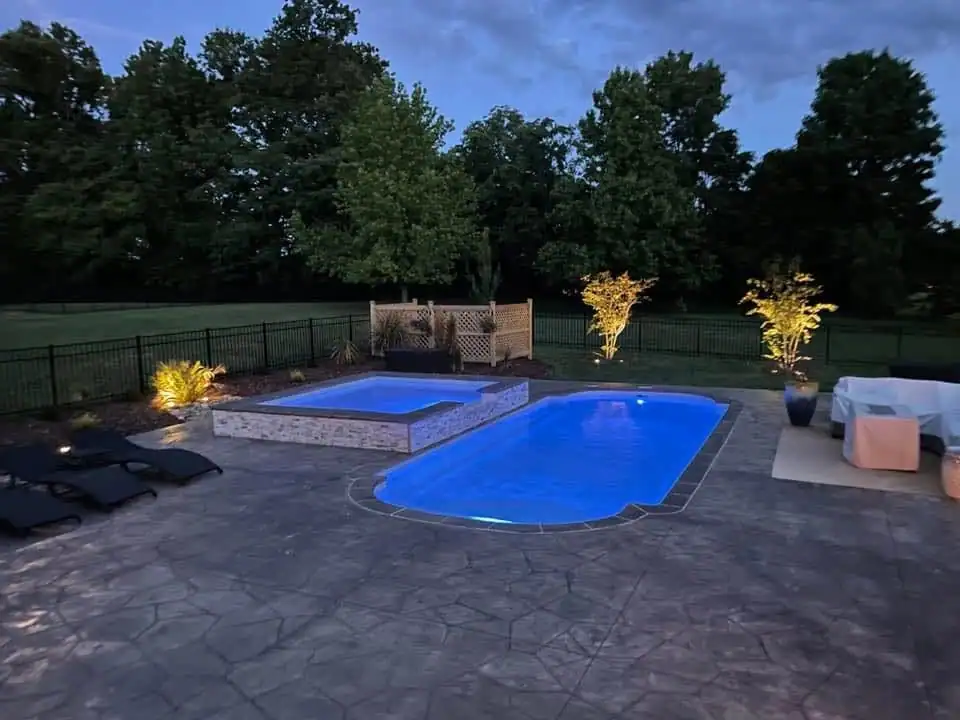
Picture a warm summer evening in your own backyard. The kids are playing water games, burgers are sizzling on the grill, and you are relaxing on a tanning ledge with cool water resting around you. Installing a swimming pool is about creating memories and building a private retreat for family, friends, and fellowship. For the average American family in Arkansas, understanding the real investment required to build that retreat is the first step toward bringing the plan to life.
Planning an in-ground pool project requires an honest look at the numbers. When researching an Arkansas pool installation cost, you will discover that fiberglass pools provide exceptional value, combining durable construction, low maintenance, and a significantly faster timeline than traditional gunite or concrete builds.
Here is what you need to know about shell pricing, site preparation, trade coordination, and the paths available to make your Arkansas backyard pool project affordable.
Understanding Arkansas Pool Installation Costs: Fiberglass vs. Other Types
The total Arkansas pool installation cost depends heavily on the pool material you select. Homeowners evaluating in-ground pool prices from Arkansas typically choose between three categories: concrete (often called gunite), vinyl liner, and factory-molded fiberglass.
Concrete pools offer design flexibility, but they demand extensive on-site construction. A concrete build in Arkansas often keeps heavy machinery in your yard for six months to a full year. Concrete is also porous. This means it requires constant chemical balancing to prevent algae, along with expensive resurfacing down the road. Vinyl liner pools have a lower upfront cost, but the thin liner is vulnerable to tears from pets or pool toys, requiring replacement throughout the pool’s life.
Fiberglass pools offer a balanced alternative for homeowners seeking long-term value. Manufactured off-site under factory-controlled conditions, a fiberglass shell features a non-porous gelcoat finish that resists algae naturally. This smooth surface reduces chemical demand and eliminates the need for future liner replacements or acid washes.
The installation process moves rapidly because the structure arrives fully cured. Instead of losing an entire summer to site disruption, your pool shell is set in place quickly. This lets you start swimming just a few weeks after delivery.
How Fiberglass Pool Shell Prices Break Down in Arkansas
When pricing a fiberglass pool, the first line item is the shell itself. Buying through a manufacturer-direct broker rather than an installer gives homeowners transparent pricing expectations.
Pool Brokers USA fiberglass pool shells start at $12,500 for our small models. Our catalog spans roughly 40 fiberglass models across three size classes with six gel coat colors available.
Mid-sized pool shells, which provide ample room for family water volleyball and deep-end swimming, sit higher on the price scale. Larger shells designed for expansive properties represent a larger initial equipment purchase.
It is vital to recognize that the shell price is only the foundation of your overall budget. While shells start at $12,500, a complete swimming pool requires excavation, plumbing, equipment, backfill, and electrical connections. Anyone shopping for a fiberglass pool cost Arkansas project must evaluate the finished installation cost rather than mistaking the raw shell price for the complete job.
Estimating Total Project Costs for Your Arkansas Backyard Oasis
Turning a bare yard into a functional backyard oasis involves several distinct trades and site requirements. To establish an accurate backyard pool cost Arkansas estimate, you must account for the mechanical and structural steps that occur after the shell is delivered.
Total owner-builder projects typically run $30,000 to $50,000 once all site work and utility connections are complete. The difference between the base shell and the finished project covers several essential phases:
- Excavation and site preparation: A machine operator digs the hole to match the specific dimensions of the shell, then spreads and compacts a level bed of crushed stone. Arkansas terrain varies widely, from the rocky soils of the Ozark and Ouachita regions to the heavy clay soils found in the Arkansas River Valley and Delta. Rocky ground may require specialized equipment to break through stone, which influences site preparation expenses.
- Crane or boom truck offloading: Once the transport truck arrives at your property, a crane or heavy boom truck lifts the one-piece shell over obstacles and sets it into the excavated bed.
- Plumbing and filtration equipment: Connecting the skimmers, return jets, main drains, and pump-and-filter system ensures smooth water circulation.
- Backfilling and water filling: Crews simultaneously add water to the interior while placing crushed stone around the perimeter. Equalizing internal and external pressure keeps the structural walls vertical and stable.
- Electrical hookups: A pool pump, sanitation system, and pool lights require dedicated circuits connected by a licensed professional.
- Perimeter concrete and decking: Pouring a concrete apron or laying pavers locks the pool coping in place and creates a safe, slip-resistant lounging area.
- Safety fencing: Arkansas safety rules require protective barriers around residential swimming pools to keep children and neighborhood pets secure.
When all phases are accounted for, an owner-builder managing these trades directly typically spends $30,000 to $50,000 for a fully finished swimming pool.
Owner-Builder vs. Coordinated Installation: Your Options in Arkansas
Arkansas homeowners have two distinct purchase paths when installing a fiberglass pool: acting as an owner-builder or opting for coordinated installation through a professional network.
The owner-builder model offers an affordable way to get a pool in Arkansas while retaining complete authority over your property. In this arrangement, you purchase the shell factory-direct. It is delivered to your site with complete engineered schematics and installation guides. You then act as your own general contractor. You hire the local excavator, arrange the gravel delivery, bring in a crane operator, and hire a licensed electrician to handle the subpanel and bonding.
According to Pool Brokers USA published direct pricing, managing the project as an owner-builder allows you to save $10,000 to $20,000 or more compared with full-service installation. These savings represent the general contractor markup that turnkey pool builders charge to manage trades on your behalf.
However, acting as an owner-builder requires time, organizational effort, and clear communication. You must vet subcontractors, verify their insurance, schedule their arrivals in the correct order, and pull the required trade permits with your local building department.
If your schedule does not allow for jobsite oversight, coordinated installation provides an alternative. In this path, the pool shell is delivered directly, but installation is handled by a vetted local contractor who manages the excavation, placement, plumbing, and backfill. While this full-service approach costs more, it shifts daily project oversight to an experienced trade specialist.
Deciding between these paths comes down to your budget and available free time. Both routes deliver the same durable, American-made fiberglass pool to your yard.
Financing Your Arkansas Pool: Making Your Backyard Dream Affordable
A swimming pool is a substantial home upgrade, and most families prefer to spread the cost over manageable monthly terms rather than paying cash upfront. Evaluating Arkansas fiberglass pool financing options early in your planning ensures your project stays aligned with household cash flow.
Pool Brokers USA has delivered more than 1,500 American-made fiberglass pools across 17 states, working alongside established lending institutions that understand swimming pool construction. When reviewing pool construction cost Arkansas estimates, looking at total project financing options helps remove the barrier of a lump-sum payment.
Dedicated home improvement lenders, such as VistaFi and HFS Financial, specialize in outdoor living loans. Unlike standard bank products that may demand extensive equity assessments, specialized pool financing offers unsecured loan packages based on credit profile and household income. These financing options feature fixed monthly payments, terms extending across multiple years, and no prepayment penalties.
Structuring your project with fixed-rate financing allows the average American family to transform an initial quote into an affordable monthly utility payment. Securing pre-approval before breaking ground clarifies your exact spending boundaries, whether you plan an owner-builder build or hire an installer.
Beyond the Build: Long-Term Value of a Fiberglass Pool in Arkansas
Evaluating the average pool cost Arkansas families incur over a decade reveals the practical advantages of fiberglass technology. The upfront purchase price tells only part of the story; ongoing operating expenses dictate the real cost of pool ownership.
Because the non-porous gelcoat finish prevents algae from taking root, fiberglass pools require noticeably fewer sanitizing chemicals than porous plaster pools. You spend less time scrubbing the walls and less money buying balancing agents, shock treatments, and algaecides. The smooth interior surface also eliminates the need for expensive structural refinishing. Concrete pools generally demand a costly re-plastering or acid wash every seven to ten years, and vinyl pools require replacement liners when punctures or sun damage occur. A fiberglass shell maintains its integrity without structural re-coating.
A swimming pool also enhances residential appeal when it comes time to sell. Real estate evaluations show that an in-ground pool adds value to a residential property, with additions typically falling in the 5-8% range. The exact return depends on local market preferences, neighborhood standards, regional climate, and how well the finished pool integrates into the surrounding landscaping. A low-maintenance fiberglass pool surrounded by clean decking presents an inviting, value-driven lifestyle upgrade for future buyers.
Before excavation machinery arrives at your property, you must secure the proper permits and understand the local zoning ordinances governing swimming pool construction in your municipality.
Arkansas does not enforce a single, uniform permit fee across all jurisdictions. Arkansas pool permit costs and administrative requirements vary widely between cities like Little Rock, Fayetteville, Fort Smith, Jonesboro, and smaller rural counties. Some regional building offices charge a flat administrative fee for residential pool construction. Others calculate permit costs based on total estimated project valuation.
Key regulatory elements you must review with your local building authority include:
- Property setbacks: Municipal zoning codes dictate how close a pool water’s edge can sit relative to rear and side property lines, existing structures, and underground utility easements.
- Permit distribution: An owner-builder can frequently pull a structural building permit directly, but mechanical, plumbing, and electrical permits usually require licensed trade contractors who hold current credentials with the state of Arkansas.
- Safety barriers and enclosures: Arkansas building codes require physical barriers around residential swimming pools. Local authorities specify barrier requirements, including fence height, self-closing and self-latching gate mechanisms, and latch placements designed to prevent unsupervised access by small children.
- Equipotential bonding: Electrical safety codes require an unbroken copper bonding wire around the perimeter of the pool to ground stray electrical currents. This critical safety step must pass inspection before any concrete deck is poured over the ground.
Always consult your local county or municipal building department before purchasing equipment or digging. Your local inspectors will provide the exact paperwork, fee schedule, and inspection timeline required for your property.
Frequently Asked Questions About Arkansas Pool Installation Costs
How much does it cost to install a fiberglass pool in Arkansas?
A total owner-builder fiberglass pool project in Arkansas typically runs between $30,000 and $50,000 for a finished build. Base pool shells start at $12,500, with remaining expenses covering excavation, crane setting, plumbing, electrical work, and concrete decking. Full-service installations through turnkey contractors generally cost $10,000 to $20,000 more due to general contractor overhead.
What is the cheapest way to get a pool in Arkansas?
The most cost-effective path to installing an inground pool is acting as an owner-builder with a factory-direct fiberglass shell. By purchasing the shell direct from a broker and hiring local excavation, plumbing, and electrical contractors yourself, you can save $10,000 to $20,000 or more compared with full-service installation companies.
Are pool financing options available for Arkansas homeowners?
Yes, financing options are widely accessible through specialized outdoor living lenders like VistaFi and HFS Financial. These lending partners offer fixed-rate loans with structured monthly payments, allowing families to fund both the shell purchase and the necessary site trades without needing massive home equity.
How does Arkansas soil affect fiberglass pool construction costs?
Arkansas geography features diverse ground conditions, ranging from heavy Delta clays to dense rock formations in the Ozark and Ouachita mountain regions. Digging through solid rock requires specialized machinery, which can increase initial excavation expenses. Fiberglass pools handle expansive clay soils exceptionally well because the flexible composite shell shifts with soil movement where rigid concrete structures might crack.
Do I need a permit to install a pool in Arkansas?
Yes, local municipal and county governments require building and electrical permits before you install an inground swimming pool. Permit costs, setback rules, and inspection steps differ across jurisdictions, so you must contact your local building department to verify regional requirements before breaking ground.
Your Next Step to an Arkansas Backyard Oasis
Building a private swimming pool is a lasting investment in your property and your family’s quality of life. From afternoon splashes with the kids to quiet weekend mornings by the water, a backyard pool creates a gathering hub that you will enjoy for decades.
Understanding the full scope of an Arkansas pool installation cost allows you to take control of your budget. By choosing an American-made fiberglass pool shell and selecting the installation path that matches your skill set and schedule, you can build a high-end outdoor living area without paying inflated dealer markups.
When you are ready to put real numbers on your project, request a free, no-obligation quote and we’ll walk you through models, delivery, and total project cost for your area.
Latest Posts
What Does a Fiberglass Pool Cost in Arkansas? Your Complete Guide
Florida Pool Installation Costs: Your Guide to Affordable Backyard Bliss
Protecting Your Backyard Oasis: Are In-Ground Pools Safe in Tornado Country?
Adding an Inground Pool in Hurricane-Prone Areas: Is It a Safe Investment for Your Family?
Adding a Pool to Your New Home Builds: A Builder’s Guide to Value and Efficiency
Ohio Pool Installation Guide: Costs, Timing, and What Homeowners Need to Know
Kentucky Pool Permit Process: Steps to Avoid Common Rejections
Georgia Pool Permit Requirements: Step-by-Step Guide for a Smooth Installation
Delaware Pool Permit Guide: What Homeowners Need to Know Before You Install
Alabama Pool Permits and Building Codes: Your Complete Compliance Guide
Visit Our Blog
Share This Post
(opens in a new tab)
(opens in a new tab)
(opens in a new tab)