

June 1, 2026
/
Getting an Arkansas pool permit is the first step toward breaking ground on your backyard project. Before any dirt moves or equipment gets ordered, your local building department needs to approve your plans. In most Arkansas jurisdictions, that requirement covers every inground pool regardless of size or type.
This guide covers the permit process from start to finish, including what you submit, who reviews it, what inspections to expect, and how requirements vary across municapilities. If you’re comparing pool options or already have a model in mind, this is the planning context you need before calling a contractor or filing an application.
Do You Need a Permit to Install a Pool in Arkansas?
Yes. Virtually every Arkansas jurisdiction requires a permit for an inground swimming pool. This covers fiberglass pools, vinyl liner pools, and concrete pools. The permit triggers a review process that confirms your project meets structural, electrical, plumbing, and safety code requirements before construction starts.
Arkansas adopted the International Residential Code (IRC) and International Building Code (IBC) as the framework for local construction standards. Most counties and cities enforce these codes with local amendments. A few rural counties operate with limited building departments, but homeowners in those areas should still verify permit requirements before starting any work. A stop-work order or forced removal after the fact costs far more than the permit. To explore pool types and sizes before you apply, see the full inground pool lineup or visit the Arkansas service area page.
For fiberglass pools specifically, the shell arrives pre-engineered and factory-built. That simplifies the structural portion of the permit review, since you’re not pouring a custom concrete shell in place. It doesn’t remove the permit requirement, but it does reduce the complexity of what the building official needs to evaluate.
Arkansas Contractor Licensing Requirements
Arkansas requires pool contractors to be licensed through the Arkansas Contractors Licensing Board (ACLB). When you hire a company to install your pool, confirming their ACLB license number is a basic step. The board’s public license search is available at aclb.arkansas.gov. If a contractor can’t produce a valid license number, that’s a problem worth taking seriously before you sign anything. For more about what full-installation service covers, see Pool Brokers USA installation services.
Some Arkansas homeowners choose to act as their own general contractor. They pull the permit themselves, coordinate the excavation, shell delivery, electrical, and plumbing subcontractors, and manage the inspection sequence. Arkansas law generally allows homeowners to apply for permits on their primary residence in that capacity, though requirements vary by county. Confirm owner-builder eligibility with your local building department before applying. The full pool ordering process page explains how Pool Brokers USA supports customers through both paths.
The owner-builder route, where you purchase the pool shell and coordinate installation yourself, is one of the ways Pool Brokers USA customers reduce total project costs. Removing the overhead layer of a full-service installer can make a meaningful difference in what you pay.
The Arkansas Pool Permit Process, Step by Step
The sequence is consistent across most jurisdictions, even if timelines and specific documentation requirements differ.
- Site plan and application. Submit a site plan showing the pool’s proposed location relative to property lines, utility easements, the home’s foundation, and any septic system. Most building departments provide a standard permit application form. Some require a scaled plot plan prepared by a licensed surveyor. Confirm your county’s specific documentation requirements before drawing anything up.
- Plan review. A building official reviews the application for code compliance. Smaller counties may complete this in a few days. Busier jurisdictions like Pulaski, Benton, and Washington counties can take four to six weeks during peak season. Revision requests reset the clock, which is why submitting a complete, accurate application the first time matters.
- Permit issuance and fees. After approval, you pay the permit fee and receive your permit. Fees vary by jurisdiction and are often calculated based on project value or pool surface area. Most Arkansas residential pool permits fall in the $150 to $600 range, though fees outside that range are possible depending on location and project scope.
- Inspections during construction. Most counties require inspections at multiple stages: a pre-backfill inspection to verify shell placement, rough electrical, rough plumbing, and a final inspection. Your permit documentation lists the required sequence. The pool cannot be filled or used until the building official signs off on the final.
- Final approval. After passing the final inspection, you receive documentation confirming the pool meets code. Keep it permanently on file. You will need it for refinancing, a home sale, or future additions to the pool area.
The inground pool installation FAQs page covers additional questions about timelines and what to expect once installation begins.
What Your Permit Application Covers
The permit review touches several areas of the installation. On the electrical side, pools require proper bonding and grounding of all metal components and equipment, along with GFCI protection for all pool-area outlets. A licensed electrician handles this scope in most cases, and it receives its own inspection stage separate from the general construction review.
Pool plumbing must comply with the Arkansas Plumbing Code. Anti-entrapment drain covers are required at the federal level under the Virginia Graeme Baker Pool and Spa Safety Act, and your building inspector will verify compliance during the plumbing rough-in stage.
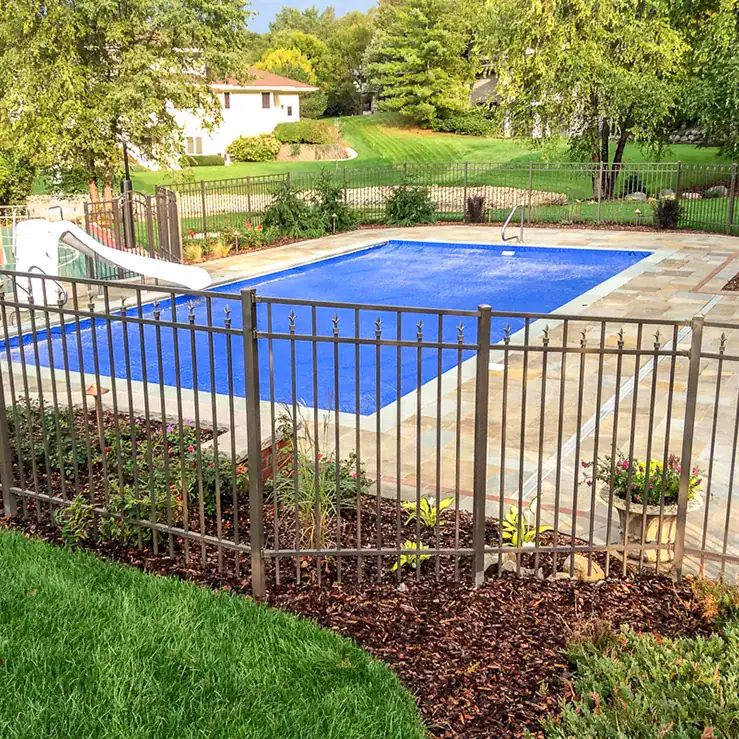
Barrier requirements will be specified by your local building department. These include gate specifications and rules about how your home’s structure can serve as part of the barrier system. Requirements vary by jurisdiction, and local amendments can change what applies to your project. Contact your county or city building department for the exact requirements before finalizing your design.
Setback requirements also vary. Most jurisdictions require minimum distances from property lines, utility easements, the home’s foundation, and any septic systems. Confirm your setbacks before you finalize the pool’s location in your yard. A mesh safety cover is worth considering at this stage as well, since some jurisdictions count a secured cover as part of the barrier compliance picture.
Arkansas Climate: Planning Your Installation Timeline
Arkansas spans climate zones 3A and 4A across most of the state, with the southern Delta region falling into zone 2A. The practical pool installation season runs from roughly March through November statewide. The southern half of the state near El Dorado, Texarkana, and the Mississippi Delta allows for some off-season groundwork in warmer winters. In northwest Arkansas, including Fayetteville, Rogers, and Bentonville in the Ozark foothills, cold snaps from December through February can complicate excavation and delay inspections.
Fiberglass pools carry a real advantage in this climate. The shell is manufactured off-site and delivered complete, so it requires no curing time. Once your permit is approved and the excavation is finished, most Arkansas fiberglass installations complete in two to three weeks. That shorter window means less exposure to weather delays and a faster path to a filled pool compared to a custom concrete build.
If you’re targeting a Memorial Day opening, submit your permit application by February or early March in high-volume counties like Pulaski, Benton, and Faulkner. That buffer accounts for the review period and contractor scheduling. Browse small pool models, medium pool models, and large pool models to get a sense of what fits your yard before starting the application.
What Does a Pool Cost in Arkansas?
A fiberglass pool shell typically ranges from the mid-$20,000s to the low-$50,000s depending on size and model. Total installed cost, covering excavation, delivery, backfill, equipment, electrical, plumbing, and decking, generally runs $45,000 to $85,000 for a mid-size pool. Larger pools or yards with difficult access or soil conditions can push costs higher.
By selling the pool shell directly to homeowners and contractors, Pool Brokers USA cuts out the overhead layer typical of a traditional full-service installer. Homeowners who act as their own general contractor see the largest savings, because that removes a markup layer from each trade involved. Pool financing is available for qualified buyers, which spreads the project into monthly payments rather than a single upfront cost.Builders and residential contractors who want to offer fiberglass pools without taking on additional operational burden can learn about the Pool Brokers USA home builder program.
Ready to see what fits your yard and budget? Pool Brokers USA works with Arkansas homeowners at every stage. Browse models, get specifications, and request a quote before you commit to anything.
Arkansas Permit Requirements, Varying by County
Arkansas has 75 counties, and what you encounter at the building department depends significantly on where your property is located. The state’s largest and most active building departments are in Pulaski County (covering Little Rock, North Little Rock, Maumelle, and Jacksonville), Benton County (Bentonville, Rogers, Siloam Springs), and Washington County (Fayetteville, Springdale). If your property is inside an incorporated city in any of these counties, you work with that city’s building department, not the county. Unincorporated parcels go through county permitting.
In smaller, rural counties like Newton, Searcy, Stone, and Izard, the building department may operate with limited staff, part-time hours, or a simplified application process. These counties have generally adopted the IRC but may have less enforcement infrastructure than their urban counterparts. The permit process in these areas is often faster, but confirming requirements in advance is still necessary.
The following resources link to building department pages, pool permit resources, and official government websites for Arkansas counties, cities, towns, and villages.
- City of Bryant, Arkansas – Planning and Development
- City of Siloam Springs, Arkansas – Permits
- City of Wynne, Arkansas – Website
- City of Little Rock, Arkansas – Forms
- Benton County, Arkansas – Residential Permits
- City of Warren, Arkansas – Building Permit Steps
- Saline County, Arkansas – County Website
- City of Hamburg, Arkansas – Application for Building Permit
- City of Russellville, Arkansas – Residential Building Permit Application (PDF)
- City of Pocahontas, Arkansas – Code Enforcement
- City of Mena, Arkansas – Website
- City of West Memphis, Arkansas – Applications and Permits
- Pulaski County, Arkansas – Planning and Development Department
- City of Hampton, Arkansas – Building Permits and Inspections
- Poinsett County, Arkansas – Website
- Lonoke County, Arkansas – County Clerk
- City of Rogers, Arkansas – Planning and Permitting Portal
- Yell County, Arkansas – Website
- City of Blytheville, Arkansas – Building Inspections and Permits
- City of Ashdown, Arkansas – Website
- City of Benton, Arkansas – Building Permits and Applications
- City of Bauxite, Arkansas – Website
- City of Dardanelle, Arkansas – Code Enforcement / Building Inspections
- City of Helena-West Helena, Arkansas – Website
- City of Van Buren, Arkansas – Building Department
- Pike County, Arkansas – Website
- City of Des Arc, Arkansas – Application for Building Permit (PDF)
- City of Harrison, Arkansas – Residential Building Permit Application
- Miller County, Arkansas – Website
- City of Mountain Home, Arkansas – Planning and Engineering Department
- Baxter County, Arkansas – Official Website
- City of Ash Flat, Arkansas – Forms and Permits
- Ashley County, Arkansas – Website
- City of Centerton, Arkansas – Department of Building Safety Swimming Pool Application
- Mississippi County, Arkansas – Website
- City of Clarendon, Arkansas – Forms and Permits
- Miller County, Arkansas – Website
- City of Forrest City, Arkansas – Code Enforcement
- City of Marshall, Arkansas – Website
- City of Pocahontas, Arkansas – Permit Process
- Sebastian County, Arkansas – Website
- City of Marion, Arkansas – Applications and Permits
- City of Fort Smith, Arkansas – Building and Development Permits
- City of Lonoke, Arkansas – Residential Building Permit Application (PDF)
- City of Cearcy, Arkansas – Permits and Inspections
- City of Lincoln, Arkansas – Website
- City of Murfreesboro, Arkansas – Building Permits
- Cross County, Arkansas – County Judge
- City of Magnolia – City Inspector
- Union County, Arkansas – Website
- City of Monticello – Licenses and Permits
- City of Wynne, Arkansas – Permit Portal
- City of Huntsville, Arkansas – Building Permit Information
- City of Lowell, Arkansas – Permits
- Craighead County, Arkansas – Floodplain Development Permit Application
- City of Conway, Arkansas – Application Portal
- City of Arkadelphia, Arkansas – Building Department
- City of Lake Village, Arkansas – Website
- Searcy County, Arkansas – Application for Building Permit (PDF)
- City of Morrilton, Arkansas – Planning Department
- Jefferson County, Arkansas – Website
- City of El Dorado, Arkansas – Codes, Permits, and Ordinances
- Sevier County, Arkansas – Ordinances
- City of Cherokee Village, Arkansas – Building Permit Procedures
- Stone County, Arkansas – Website
- City of Forrest City, Arkansas – Code Enforcement
- City of Shannon Hills, Arkansas – Building Permits and Inspections
- Woodruff County, Arkansas – Website
- Garland County, Arkansas – Applications and Permits
- City of Jonesboro, Arkansas – Online Application Portal
- Carroll County, Arkansas – Information
- Faulkner County, Arkansas – Government Website
- City of Sheridan, Arkansas – Permit Department
- Lee County, Arkansas – Website
- City of Paragould, Arkansas – Permits
- Greene County, Arkansas – Circuit Clerk
- Craighead County, Arkansas – Permits
- Hot Springs Village, Arkansas – Website
- City of Johnson, Arkansas – Downloadable Permits and Forms
- Crawford County, Arkansas – Website
- City of Pine Bluff, Arkansas – Inspection & Zoning
- Hempstead County, Arkansas – Website
- Stone County, Arkansas – Circuit and County Clerk’s Office
- Scott County, Arkansas – Website
- City of Haskell, Arkansas – Planning Commission
- City of Eureka Springs, Arkansas – Building and Safety
- Jackson County, Arkansas – Website
- Washington County, Arkansas – Permits and Regulations
- Logan County, Arkansas – Website
- City of Malvern, Arkansas – Permit Applications
- City of Piggott, Arkansas – Administration
- Little River County, Arkansas – Website
- City of Berryville, Arkansas – Building Permits
- Izard County, Arkansas – Website
- City of Gravette, Arkansas – Permits and Inspections
- City of Batesville, Arkansas – Construction Permits
- City of Hot Springs, Arkansas – Permits and Inspections
- City Hope, Arkansas – Building Applications and Forms
- City of Paragould, Arkansas – Permits Portal
- City of Monticello, Arkansas – Licenses and Permits
- Pope County, Arkansas – Website
- City of Sheridan, Arkansas – Permit Department
- Garland County, Arkansas – Planning Zoning and Development Information
- Fulton County, Arkansas – Website
- City of De Queen, Arkansas – City Permits
- City of Camden, Arkansas – Code Enforcement
- City of Ozark, Arkansas – Website
- City of Walnut Ridge, Arkansas – Applications
- Mississippi County, Arkansas – Website
- City of Clarksville, Arkansas – Public Portal
- Faulkner County, Arkansas – Website
- City of Corning, Arkansas – Planning & Zoning Commission
- Heber Springs, Arkansas – Building Permits
- Cleburne County, Arkansas – County Website
- City of Fairfield Bay, Arkansas – Applications
Frequently Asked Questions About Arkansas Pool Permits
Do I need a permit for an above-ground pool in Arkansas?
Permit requirements for above-ground pools vary by jurisdiction. Many Arkansas counties require permits for above-ground pools above a certain depth or water volume. Check with your local building department before installation, since requirements are not uniform across the state.
Can I pull a pool permit myself as a homeowner in Arkansas?
In most Arkansas counties, homeowners can apply for a building permit for construction on their primary residence without hiring a licensed contractor as the applicant. Some counties require a signed affidavit confirming owner-occupancy. Confirm eligibility with your local building department before filing.
How long does it take to get an Arkansas pool permit?
Plan review takes anywhere from a few business days in smaller counties to four to six weeks in high-volume jurisdictions during peak season. Submitting a complete application with all required drawings on the first attempt is the best way to avoid revision requests that extend the timeline.
What inspections does an inground pool require in Arkansas?
Most jurisdictions require a pre-backfill inspection, rough electrical, rough plumbing, and a final inspection at minimum. Some counties add intermediate stages. Your permit documentation will list the required inspection sequence for your specific project.
Do pool contractors in Arkansas need a license?
Yes. The Arkansas Contractors Licensing Board (ACLB) licenses swimming pool builders as a specialty trade. Verify any contractor’s current license status through the ACLB website at aclb.arkansas.gov before signing an installation contract.
Does an Arkansas pool require a fence or barrier?
Arkansas follows the International Residential Code, which requires barriers for residential pools. Your local building department specifies the exact requirements for your property, including gate standards and how the structure of your home may qualify as part of the barrier. Contact your county or city building department for the specific requirements that apply to your project.
How much does a pool permit cost in Arkansas?
Most Arkansas residential pool permits fall in the $150 to $600 range, though fees can go higher for larger projects or in jurisdictions that calculate fees based on project value. Contact your local building department for a current fee schedule before budgeting.
Get Started On Your Arkansas Pool Project
The permit process is more straightforward than it may seem. The bigger variable is choosing the right pool for your yard before you file, since your application will need to specify the pool’s dimensions, placement, and equipment. Pool Brokers USA works with Arkansas homeowners at every stage of that process. You can browse the pool gallery, compare models for your yard size, and request a quote before committing to anything.Questions about the process or about how Pool Brokers USA operates? The team is ready to help. When you’re ready to get actual numbers for your project, request a quote here.
Latest Posts
The Fiberglass Pool Installation Process, Step by Step
Budgeting for a Fiberglass Pool: Every Cost Beyond the Shell
Saltwater Pools: Why Fiberglass Handles Salt Better Than Concrete
Delivery Day Checklist: How to Inspect Your Fiberglass Pool Shell
How Much Time Does Pool Maintenance Really Take?
Shipping Container Pools or Fiberglass: Which Is Better?
Fiberglass vs. Natural Swimming Pools: A Practical Cost and Maintenance Comparison
Fiberglass vs. Gunite Pools: How Construction Method Shapes Lifespan and Care
Shell Price vs. Total Project Cost: Reading a Fiberglass Pool Quote
The Fiberglass Pool Buying Guide for First-Time Buyers
Visit Our Blog
Share This Post
(opens in a new tab)
(opens in a new tab)
(opens in a new tab)