

October 14, 2026
/
An above-ground pool costs far less on day one of pool ownership – but it typically lasts under 15 years. That adds nothing to your home’s appraised value. An in-ground fiberglass pool typically lasts 25+ years, with many lasting 30–50 years with proper care. Fiberglass pools are permanent home improvements that both buyers and appraisers value.
The cheapest pool and the best-value pool are rarely the same pool. That’s an uncomfortable sentence when you’re staring at the price gap between a weekend above-ground kit and an in-ground project.
If you’re weighing above-ground vs in-ground value for your family, this guide runs the honest numbers: what each pool costs over its whole life, what happens to each at resale, what insurance and lenders think, and when the above-ground option genuinely makes sense. By the end, the price gap will look different, in both directions.
Key Takeaways
- Above-ground pools win on upfront price but typically last under 15 years, with vinyl liners needing replacement along the way; fiberglass pools typically last 25+ years, with many lasting 30–50 with proper care.
- Appraisers generally treat above-ground pools as removable personal property worth little to nothing at resale, while a permitted in-ground pool reads as a permanent home improvement.
- Pool resale value follows permanence: buyers walk past an aging above-ground pool, but a well-kept inground fiberglass pool with decking and landscaping shows like part of the house.
- Fiberglass shells start at $12,500, with total owner-builder projects typically running $30,000–$50,000, saving $10,000–$20,000+ vs. full-service builds.
- Counted per year of service, the gap narrows dramatically: one fiberglass pool can outlast two or three above-ground pools and their liner cycles.
The upfront math: why above-ground looks like the easy win
Let’s give above-ground pools their due first. A steel- or resin-framed pool with a vinyl liner costs a fraction of any in-ground project, goes up in days, and requires no excavation. For a family testing whether they’ll even use a pool, that’s a real, rational choice.
The structure itself is the trade-off. A thin vinyl liner over a bolted frame is doing the same job as an engineered shell, with far less material. Liners fade, stretch, and puncture, and replacing them is a recurring project. Frames rust or degrade in sun and weather. That’s why the realistic service life of an above-ground pool typically lands under 15 years, often with a liner replacement or two inside that window.
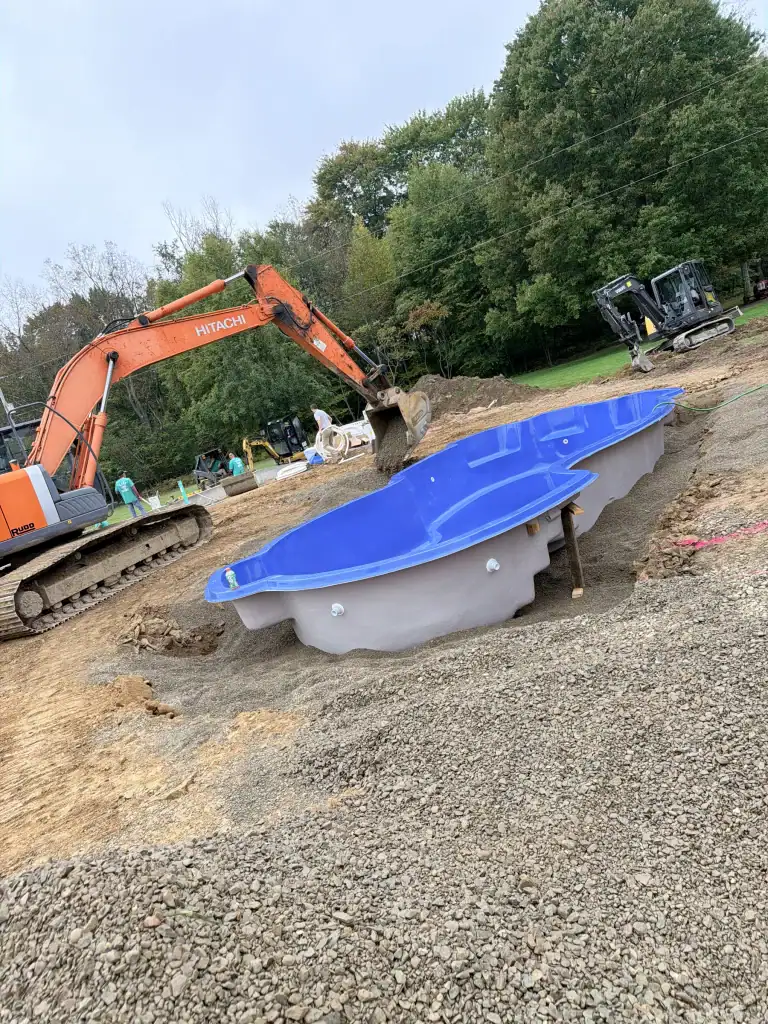
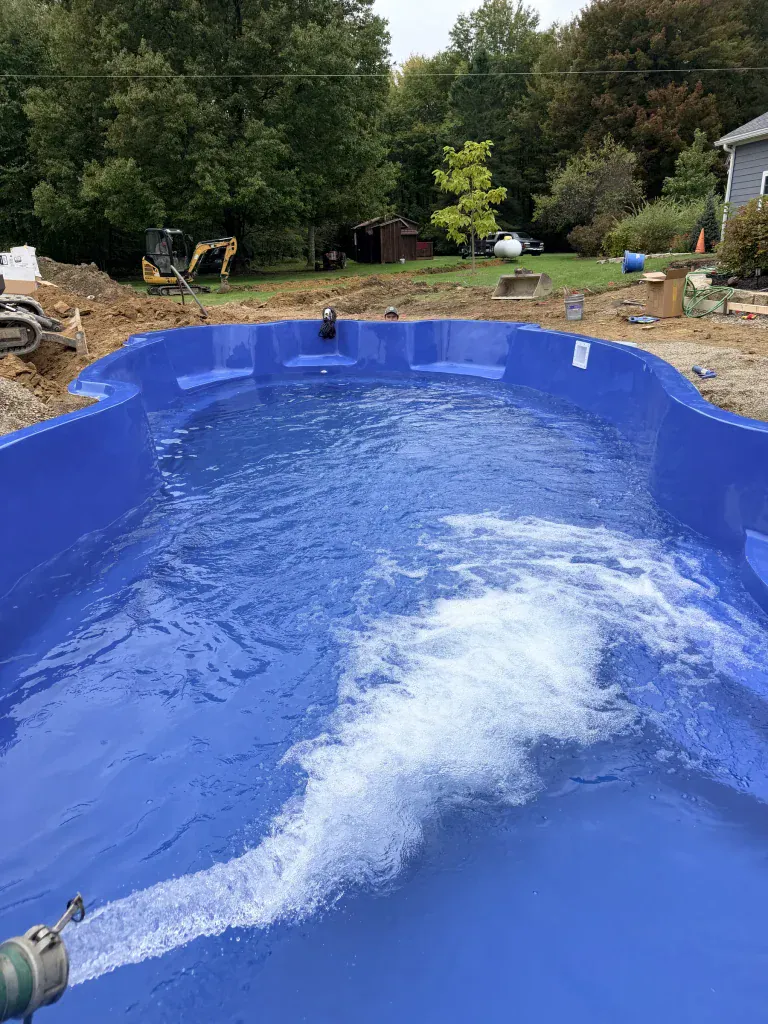
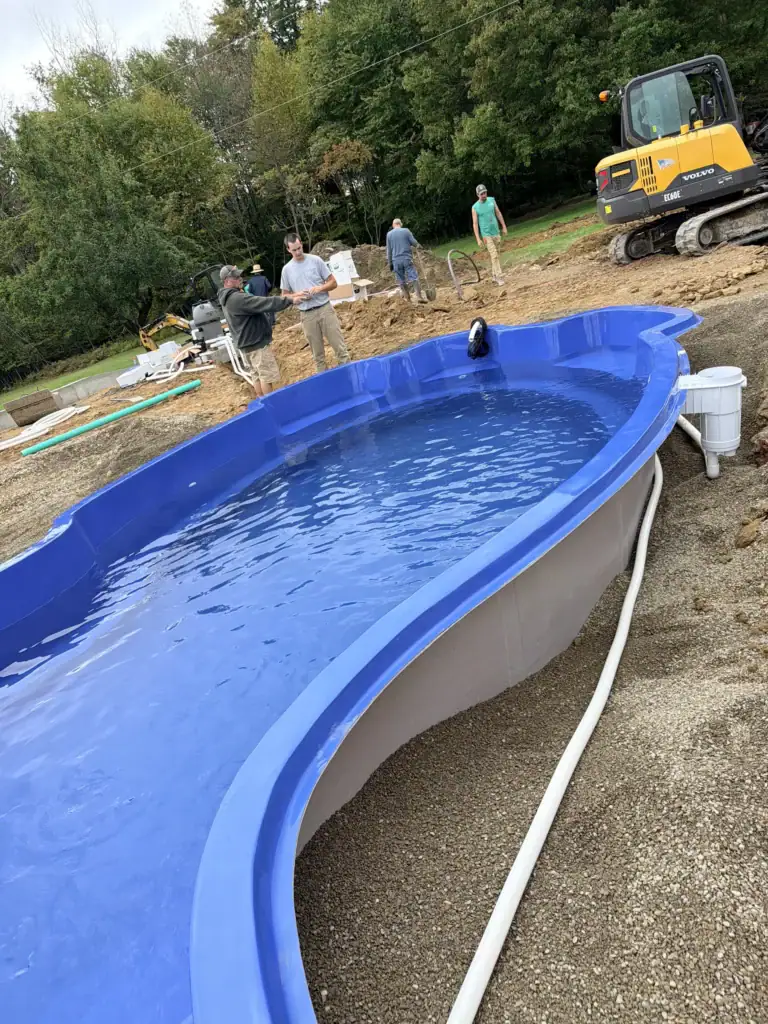
An in-ground fiberglass pool starts from a different premise: a one-piece molded shell with a non-porous gel coat, set into prepared ground, engineered to be there for decades. Nothing to bolt, nothing to re-line.
Neither choice is wrong. They’re just answering different questions: “Can we swim this summer for the least money?” vs. “What does a decade or three of family swimming actually cost?”
Lifespan changes the math: under 15 years vs. 25-plus
Stretch the timeline and the price gap starts working backward.
An above-ground pool bought today will likely be replaced, along with its liners, before your kids finish school. Run the same years forward with fiberglass: the pool that typically lasts 25+ years, with many lasting 30–50 years with proper care, is still hosting cannonball contests when the second or third above-ground would be headed to the landfill.
Maintenance follows the same pattern. The non-porous gel coat of a fiberglass shell resists algae, keeping upkeep at roughly $350–$400 a year, while vinyl-lined pools run $1,000+ a year in chemicals and care, plus liner replacements. Fiberglass also holds heat better, and the US Department of Energy notes heating is one of a pool’s biggest operating costs; an above-ground pool exposed to air on all sides sheds warmth from every direction.
Per year of swimming, the “expensive” pool becomes the cheaper one. That’s the whole case, and it doesn’t need exaggerating.
What happens at resale: improvement vs. equipment
Here’s where pool resale value gets decided, and it has less to do with water than with permanence.
An above-ground pool is personal property. It can be unbolted and removed, so appraisers typically assign it little to no value, and some buyers see an aging one as a demolition chore, a negative on the walkthrough. Lenders largely ignore it too, since it isn’t part of the real property.
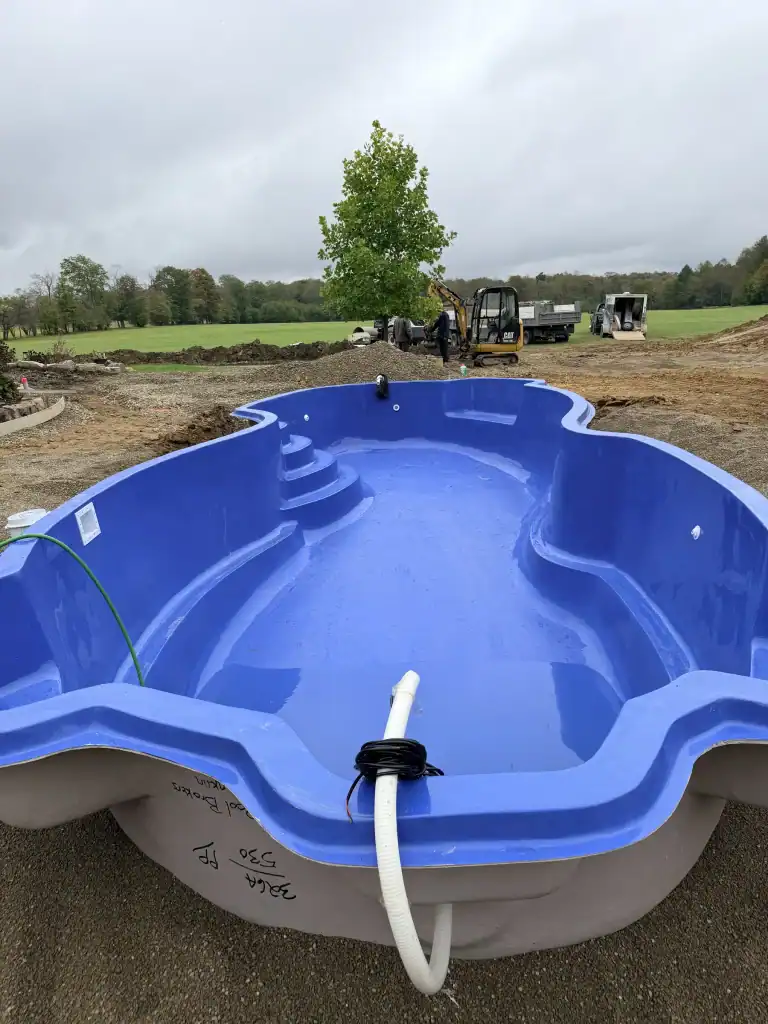
A permitted in-ground pool is a site improvement. It’s in the appraisal conversation, it anchors the landscaping and decking around it, and it shows like part of the house. How much value it adds varies honestly by market, climate, and buyer, and no honest seller promises a specific return. What’s consistent is the category: permanent improvements get considered; removable equipment doesn’t.
For the broader construction comparison beyond value, see the full breakdown of inground vs. above-ground pools.
The poolcosts nobody puts on the price tag
To compare above-ground vs in-ground value fairly, both sides need their hidden line items on the table.
Above-ground pools accumulate:
- Liner replacements every several years, plus the water to refill
- Deck or platform construction, often costing as much as the pool itself
- Higher heating costs from all-sides heat loss
- Full replacement of the structure within roughly 15 years
- Zero recovery at resale, and possible removal costs
Inground fiberglass projects include, transparently:
- The shell, from $12,500
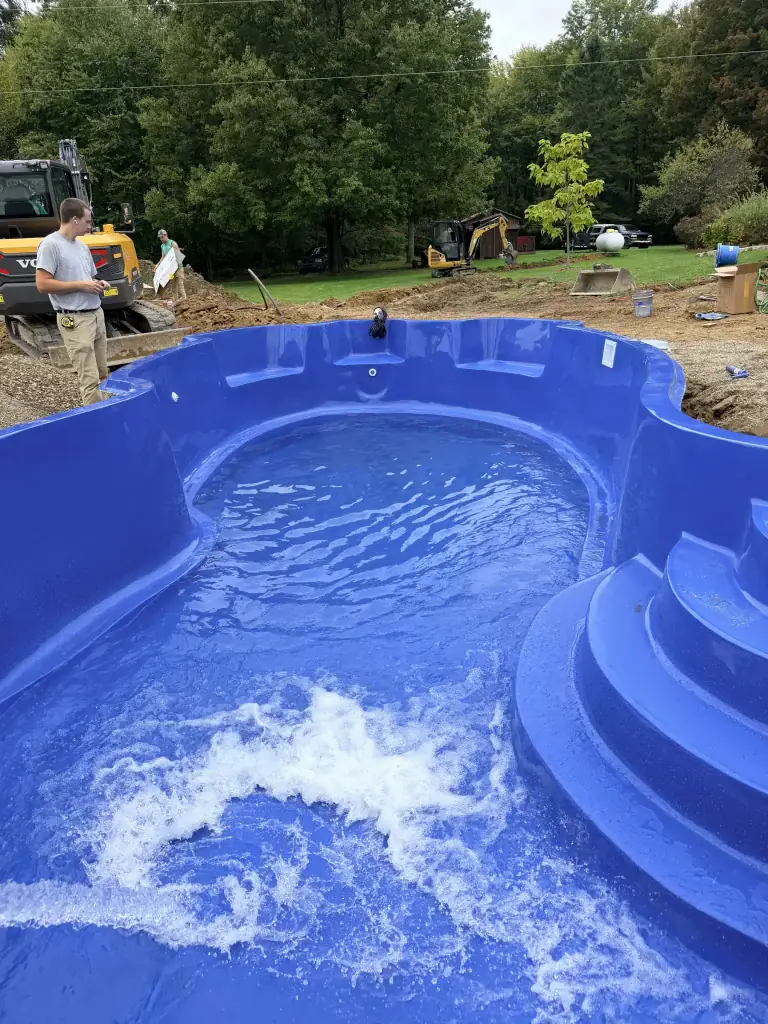
- Excavation, plumbing, electrical, permits, and decking, which is why total owner-builder projects typically run $30,000–$50,000
- Roughly $350–$400 a year in maintenance
The difference is that the fiberglass number is the whole story, itemized upfront in this fiberglass pool installation cost breakdown, while the above-ground number grows quietly, one liner and one replacement at a time.
The owner-builder path is what makes the in-ground number reachable: acting as your own general contractor saves $10,000–$20,000+ vs. a full-service build, with expert guidance, specs, and documentation behind you. Prefer hands-off? Coordinated installation through a vetted installer network is the second path, and both are real choices.
When an above-ground pool is genuinely the right call
Fairness matters more than winning a comparison, so here’s the honest list.
An above-ground pool is right for you if:
- You’re renting, or expect to move within a few years
- The budget simply doesn’t stretch to an inground project yet, even owner-builder
- You want to test the pool lifestyle before committing
- Your site can’t be excavated at reasonable cost
An inground fiberglass pool is right for you if:
- You’re in your long-term home and want the pool to outlast the mortgage
- Per-year cost and pool resale value matter more than the entry price
- You want the flush-with-the-patio look, tanning ledges, and real depth options
- You’d rather own one pool for decades than replace two or three
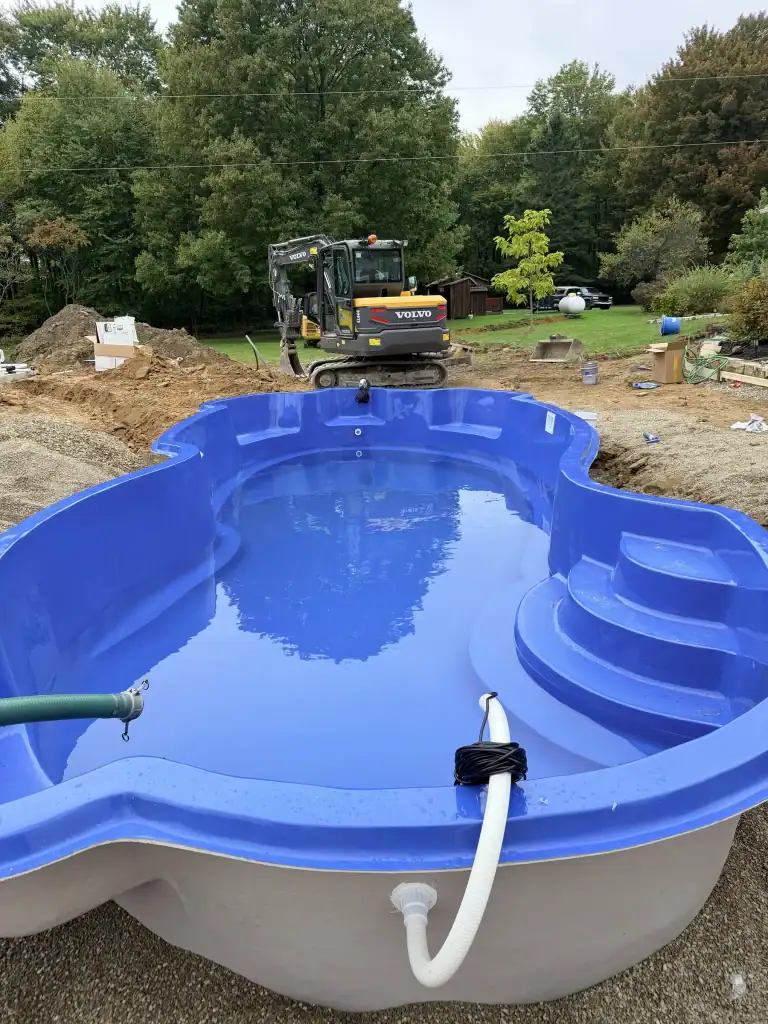
A useful middle step: price both honestly. Many families discover the owner-builder fiberglass path is closer to a decked-out above-ground setup than they assumed. Browse the range of inground fiberglass pool models, small shells start at 8′ x 10′, to see what the real comparison looks like.
Frequently asked questions
Do above-ground pools add value to your home?
Generally no. Appraisers treat above-ground pools as removable personal property, so they add little to no appraised value, and an aging one can even read as a removal expense to buyers. A permitted in-ground pool is a permanent site improvement that enters the value conversation.
How long do above-ground pools last compared to fiberglass?
Above-ground pools typically last under 15 years, with vinyl liner replacements along the way as liners fade, stretch, or puncture. Fiberglass pools typically last 25+ years, with many lasting 30–50 years with proper care, with no liner to replace.
Is an in-ground pool worth the extra cost?
Counted per year of service, usually yes. One fiberglass pool at $30,000–$50,000 total can outlast two or three above-ground pools plus their liners and decks, while costing roughly $350–$400 a year to maintain and holding its place as a permanent home improvement.
Can you convert an above-ground pool to inground?
Not really. Above-ground structures aren’t engineered for burial; soil pressure against those walls invites collapse. Going inground means starting with a product built for the ground, like a one-piece fiberglass shell set into an excavated, prepared site.
What’s the cheapest way to get an in-ground pool?
The owner-builder path: buy the shell manufacturer-direct (from $12,500) and act as your own general contractor with expert guidance, keeping the total project typically in the $30,000–$50,000 range and saving $10,000–$20,000+ vs. full-service. Licensed pros still handle electrical and often plumbing.
The bottom line on fiberglass vs above ground pools
The fiberglass vs above ground pool question is really a question about time. If you need affordable swimming right now, in a home you may leave, above-ground is a fair, honest answer, just go in knowing it’s a purchase, not an investment. If you’re building the backyard your family will use for decades, an inground fiberglass pool is the option that lasts 25+ years, costs roughly $350–$400 a year to keep, and stands as a permanent improvement when it’s time to sell.
Real value is what’s still standing, and still swimmable, in year twenty.
When you’re ready to see what the lasting option costs for your yard, request a free quote and we’ll lay out models, both purchase paths, and honest total project numbers, no pressure, just the math.
Latest Posts
15 Questions to Ask Before You Buy a Fiberglass Pool
Fiberglass vs. Above-Ground Pools: Which Adds Real Long-Term Value?
How to Get a Swimming Pool Permit in Virginia: Fiberglass Homeowner’s Guide
Does a Pool Add Value at Resale? What Appraisals and Buyers Say
The Fiberglass Pool Installation Process, Step by Step
Budgeting for a Fiberglass Pool: Every Cost Beyond the Shell
Saltwater Pools: Why Fiberglass Handles Salt Better Than Concrete
Delivery Day Checklist: How to Inspect Your Fiberglass Pool Shell
How Much Time Does Pool Maintenance Really Take?
Shipping Container Pools or Fiberglass: Which Is Better?
Visit Our Blog
Share This Post
(opens in a new tab)
(opens in a new tab)
(opens in a new tab)