

October 12, 2026
/
Does a pool add value to your home? Usually yes, but with some conditions: an inground pool commonly adds resale value in warm-climate markets where buyers expect one, and a well-chosen, low-maintenance pool with smart features can lift home value by up to roughly 8% in the right region, while in cold climates or on the wrong lot the return can be modest or even neutral. The honest answer isn’t a single percentage, it’s “it depends,” and the factors it depends on are knowable before you dig.
You’ve probably heard both extremes: “a pool adds tons of value” and “you’ll never make your money back.” Both are too simple, and neither helps you decide.
This guide replaces the myths with how value actually works: how appraisers treat pools, how buyer demand shifts by region, why pool type and condition move the number, and where the low-maintenance edge of fiberglass fits.
Key Takeaways
- A pool’s resale value is regional: strong in warm markets where buyers expect a pool, weaker in cold climates or short-season areas.
- Appraisers value a pool as one contributing feature in good condition, not a dollar-for-dollar add of what you spent.
- Pool type and condition matter: a clean, modern, low-maintenance fiberglass pool shows better and costs less to keep than a tired concrete or vinyl one.
- A well-chosen pool with desirable features can add up to roughly 8% to home value in the right market; results vary widely by location.
- Lifestyle value is the reliable return; treat resale as a bonus that’s maximized by buying smart, not as the reason to buy.
What “adds value” actually means
Before chasing a ROI percentage, separate two different questions people tend to smash together: does a pool increase your home’s market value, and does it return what you spent? They’re not the same numbers.
Market value is what a buyer will pay for your home with the pool versus without it, in your specific market, at sale time. Cost recovery is that value increase compared to your project cost. A pool can genuinely raise your home’s value and still not “pay for itself” dollar-for-dollar, and that’s normal for most home improvements, including kitchens and additions.
A pool is a lifestyle purchase that also tends to support home value under the right conditions. Buy it primarily for the years of use; structure the decision so the resale side lands as favorably as possible. The rest of this guide is about those conditions.
How appraisers treat a pool
When an appraiser assesses a home with a pool, their perspective differs from that of a homeowner or real estate agent. Their primary goal is to determine market value based on objective criteria, not emotional appeal. They use a standardized process that considers multiple factors to arrive at an impartial valuation.
Appraisers don’t add “a pool = $X” to a total property appraisal. They treat an inground pool as a contributing site improvement, weighing three things: condition, market expectations, and comparable sales.
Condition is the big difference. A clean, modern, well-maintained pool in good repair contributes value; a cracked, dated, or clearly high-maintenance pool can contribute little, or read as a looming expense to buyers.
Market expectation matters next: in neighborhoods where pools are common and expected, an appraiser has ample comparables and the pool contributes readily; where pools are rare, there’s less comp data and the contribution is harder to substantiate.
Comparable sales anchor everything, appraisers look at what similar homes with pools actually sold for nearby.
The practical takeaway: the pool that appraises well is the one that’s in great shape, fits its market, and matches the neighborhood’s expectations. Condition and fit, more than sticker price, drive the appraisal.
Region is the biggest variable
If one factor dominates pool home value, it’s geography, and it’s mostly about climate and swim season.
In warm-climate, long-season markets, the Sun Belt, much of the South and Southwest, a pool is often an expected feature. Buyers actively want one, demand is deep, and the resale contribution is strongest. In cold-climate or short-season regions, the swim window is narrower, some buyers view a pool as maintenance and liability rather than a draw, and the contribution shrinks or, on some lots, disappears.
This is exactly why national “average pool ROI” numbers mislead: they blend Orlando, Florida and Dover, Delaware into a figure that describes neither. Your regional market is the number that matters. The warm-state markets where pools deliver the strongest resale case also overlap heavily with the areas served here; browse the fiberglass pool models with your own climate and buyer pool in mind.
Pool type and condition change the number
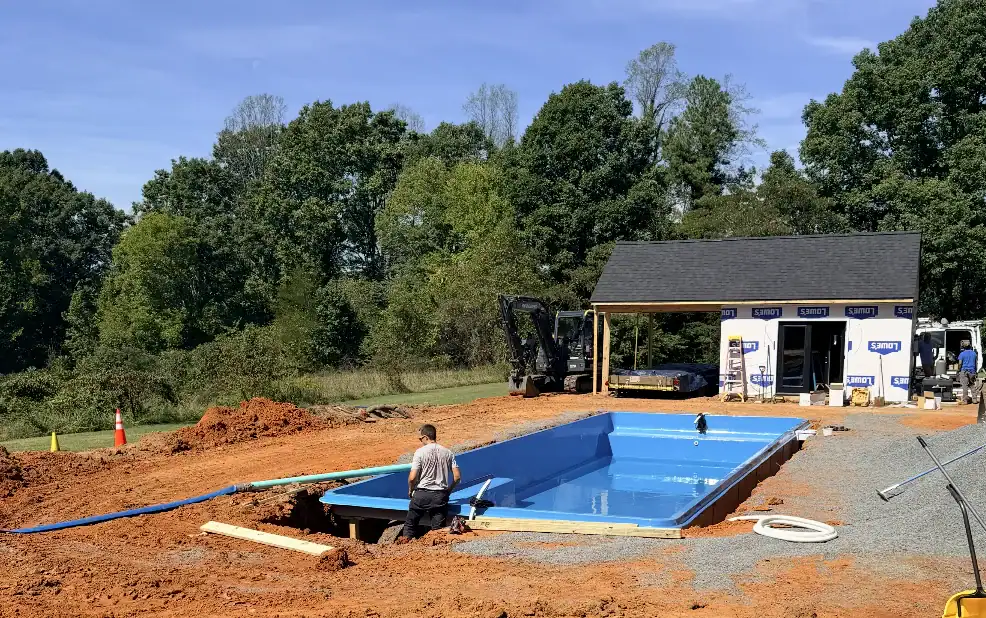
Two homes on the same street with the same-size pool can add different amounts of value, because type and condition aren’t equal. Fiberglass pools offer distinct advantages that often translate into better resale value compared to concrete or vinyl liner alternatives. Appraisers consider the maintenance, durability, and aesthetic longevity of each type.
To a buyer touring homes, a modern fiberglass pool reads as clean, smooth, and low-maintenance, a feature, not a chore. Fiberglass also carries a maintenance-cost story that resale-savvy buyers increasingly understand: roughly $350–$400/year versus $1,000+/year for vinyl and $2,000+/year for concrete. Lower upkeep and a durable surface (fiberglass pools typically last 25+ years, with many lasting 30–50 with proper care) make the pool look like an asset rather than a liability on the walk-through. The durability case is detailed in how long fiberglass pools last.
Condition matters the most. A sparkling, well-kept pool of any type helps; a neglected one hurts regardless of material. The resale-maximizing combination is a low-maintenance pool type kept in genuinely good shape, which is easier and cheaper to achieve with fiberglass than with higher-upkeep alternatives.
Fiberglass pools, with their non-porous gel coat surface, are known for being low maintenance. This feature means less chemical usage, reduced scrubbing, and fewer repair concerns over time. For an appraiser, this translates to a more attractive asset that is less likely to incur significant ongoing costs for a new homeowner. The shell’s inherent flexibility allows it to withstand ground movement and freeze-thaw cycles without cracking, a common issue with rigid concrete pools. This durability minimizes the risk of expensive structural repairs, preserving the pool’s value for longer.
Concrete pools, while offering custom shapes and depths, require more intensive maintenance, including frequent cleaning to prevent algae growth and periodic resurfacing (often every decade or so), which can be a substantial expense. These higher ongoing costs and the potential for cracking can be a depreciating factor in an appraisal. Vinyl liner pools, while initially more affordable, typically require liner replacements every several years, another significant cost that appraisers factor into their valuation. The lifespan of the liner and its vulnerability to punctures make it a less durable option in the long run.
In our experience, fiberglass pools deliver an excellent balance of durability, aesthetic appeal, and minimal upkeep, making them a strong contender for positively influencing home resale value. Their resistance to algae, quick installation time, and robust construction directly address common concerns new homeowners have about pool ownership. This practical appeal contributes positively to how appraisers assess the overall value of the property.
Features that broaden buyer appeal
Since features help, it’s worth knowing which ones tend to widen the pool of interested buyers rather than narrow it.
- A season-extending heater or heat pump, more usable months read as more value, especially in shoulder-season climates. We offer them at the time of sale.
- An attractive, well-built deck and surrounding area, because the landscape of the pool sets up a first impression as much as the pool itself.
- Low-maintenance, energy-efficient equipment, buyers increasingly price in running costs, not just the pool.
- Safety features (proper fencing, covers), expected, code-relevant, and reassuring to families. Fencing is typically always required because of permits, and we happily install covers at the same time as the pool.
- Tasteful, neutral design, broad appeal beats bold personalization at resale. Consistent maintenance can preserve the look of the pool past the deck and fencing, and we highly recommend documenting maintenance history can further support its value during an appraisal.
Bottom line: features that lower a future owner’s cost or effort, or widen who can picture themselves using the pool, protect resale value. Highly personalized or high-upkeep add-ons can do the opposite.
Most important thing to know: buy for use, bank the resale
The most reliable return on a pool is the years of use, weekends, exercise, family time. Resale value is a bonus on top.
The data supports optimism in the right circumstances and caution in the wrong ones. If you’re in a warm market, in a neighborhood where pools are expected, buying a low-maintenance pool you’ll keep in great shape, resale value is genuinely on your side. If you’re in a short-season market or an area where pools are rare, buy mainly for lifestyle and treat any resale bump as gravy, not the thesis.
Either way, the buying decisions that maximize resale, low-maintenance type, good condition, sensible features, market fit, are the same ones that maximize your own enjoyment and lower your ownership cost. Smart buying and strong resale point the same direction.
Frequently asked questions
Does a pool add value to your home?
Usually yes in warm-climate markets where buyers expect a pool, and less so in cold or short-season regions. Appraisers count a well-maintained inground pool as a contributing feature, and a modern, low-maintenance pool with desirable features can add up to roughly 8% in the right market, though results vary widely by location.
How much value does a pool add at resale?
There’s no single number; it depends on region, pool type, condition, and how well the pool fits the neighborhood. Strong markets and desirable, low-maintenance pools land at the higher end (up to ~8%); poor climate or market fit can push the contribution near zero. Local comparable sales are the truest guide.
Do pools have a good return on investment?
As pure cost recovery, a pool rarely returns 100% of its cost dollar-for-dollar, like most home improvements. Its best “ROI” combines a conditional resale contribution with years of lifestyle use. In warm markets with a low-maintenance pool in good condition, the financial return is strongest.
Does a fiberglass pool add more resale value than concrete or vinyl?
Type matters mainly through condition and upkeep. A modern fiberglass pool shows as clean and low-maintenance (~$350–$400/year vs. $1,000+ for vinyl and $2,000+ for concrete) and resists dating, which resale-savvy buyers value. A well-kept pool of any type helps; fiberglass makes “well-kept and low-cost” easier to sustain.
Does a pool hurt home value anywhere?
It can. In cold or short-season markets, or neighborhoods where pools are uncommon, some buyers see a pool as maintenance, cost, and liability, narrowing your buyer pool. A neglected or dated pool of any type also detracts. Region, condition, and market fit determine whether a pool helps or hurts.
Want to see which models buyers favor and how the numbers pencil out for your region? Browse the fiberglass pool models, then request a free quote and we’ll talk honestly about lifestyle value, ownership cost, and the resale picture where you actually live.
Latest Posts
How to Get a Swimming Pool Permit in Virginia: Fiberglass Homeowner’s Guide
Does a Pool Add Value at Resale? What Appraisals and Buyers Say
The Fiberglass Pool Installation Process, Step by Step
Budgeting for a Fiberglass Pool: Every Cost Beyond the Shell
Saltwater Pools: Why Fiberglass Handles Salt Better Than Concrete
Delivery Day Checklist: How to Inspect Your Fiberglass Pool Shell
How Much Time Does Pool Maintenance Really Take?
Shipping Container Pools or Fiberglass: Which Is Better?
Fiberglass vs. Natural Swimming Pools: A Practical Cost and Maintenance Comparison
Fiberglass vs. Gunite Pools: How Construction Method Shapes Lifespan and Care
Visit Our Blog
Share This Post
(opens in a new tab)
(opens in a new tab)
(opens in a new tab)