

July 9, 2026
/
Over a 10-year window, a fiberglass pool usually costs less to own than a vinyl liner pool, even though vinyl almost always wins on the day you sign the contract. The reason is simple. Vinyl liners wear out. Plan on replacing one roughly every 8 to 10 years at $4,000 to $7,500 a shot, and budget more for chemicals along the way. A fiberglass shell has no liner to replace and runs about $350 to $400 a year in routine chemical and electricity costs.
Your number depends on your timeline, though, and that takes a little math.
Here’s what we hear from homeowners: “The vinyl quote came in a few thousand dollars cheaper, so why would I pay more for fiberglass?” It’s a fair question, and the answer is “it depends on how long you plan to own the pool.”
Both are legitimate inground swimming pools. Vinyl is built around a replaceable part. Fiberglass is not. This guide lays both paths side by side with real numbers, so you can pick the one that fits your budget and your time horizon. If you also want concrete in the mix, our broader three-way pool comparison covers all three at a glance.
Key Takeaways
- Vinyl wins on sticker price, and fiberglass usually wins over 10 years. A vinyl liner pool typically installs for less, but liner replacements and higher chemical use close the gap and often reverse it.
- Vinyl liner replacement runs about $4,000–$7,500 every 8–10 years. Over a decade, most owners face at least one replacement cycle, sometimes with a full drain and refill on top.
- Fiberglass runs about $350–$400/yr in routine chemical and electricity costs. The non-porous gel coat resists algae, which means fewer chemicals and less scrubbing. Vinyl’s chemical bill alone tends to run more than double fiberglass.
- Pool liner lifespan is the deciding variable. A liner lasts 8–10 years on average. A fiberglass shell commonly lasts 30 or more with proper care.
- Both are valid choices. Vinyl fits shorter horizons and the lowest upfront budget. Fiberglass fits families who plan to stay 10+ years and want a predictable, low-maintenance decade.
Fiberglass vs Vinyl Liner: How the Two Pool Types Differ
The physical difference drives everything else in this comparison.
A vinyl liner pool is a frame (usually steel or polymer walls) with a vacuum-fit vinyl sheet stretched inside it. That liner is the waterproof surface your family touches. It’s also a wear part, like tires on a car. Sun, chemicals, and normal use break it down, and eventually it comes out and a new one goes in.
A fiberglass pool is a single, factory-molded shell. There’s no liner, no seams to fail, and no sheet to replace. The surface is a gel coat, a smooth, non-porous finish that resists algae and stays put for the life of the pool. This is the crux of the fiberglass vs vinyl liner decision. You’re choosing between a surface that gets replaced on a cycle and one that doesn’t.
Vinyl’s replaceable liner is exactly why the upfront price can be lower. Fiberglass’s one-piece build is exactly why it costs more to manufacture and less to maintain.
One-Piece Shells Also Install Faster
Because a fiberglass shell arrives from the factory as a finished pool, weeks of on-site construction shrink to days of installation. Vinyl pools are built in place, panel by panel, then lined, and typically take several weeks longer to complete. That won’t show up on your budget, but it matters if you want to be swimming this season instead of next.
How Long Does a Vinyl Pool Liner Last?
Pool liner lifespan averages 8 to 10 years, and that shapes this whole fiberglass vs vinyl pool comparison. Some liners stretch a little longer with careful water chemistry and a good cover. Some fail sooner from UV exposure, chemical imbalance, or a puncture.
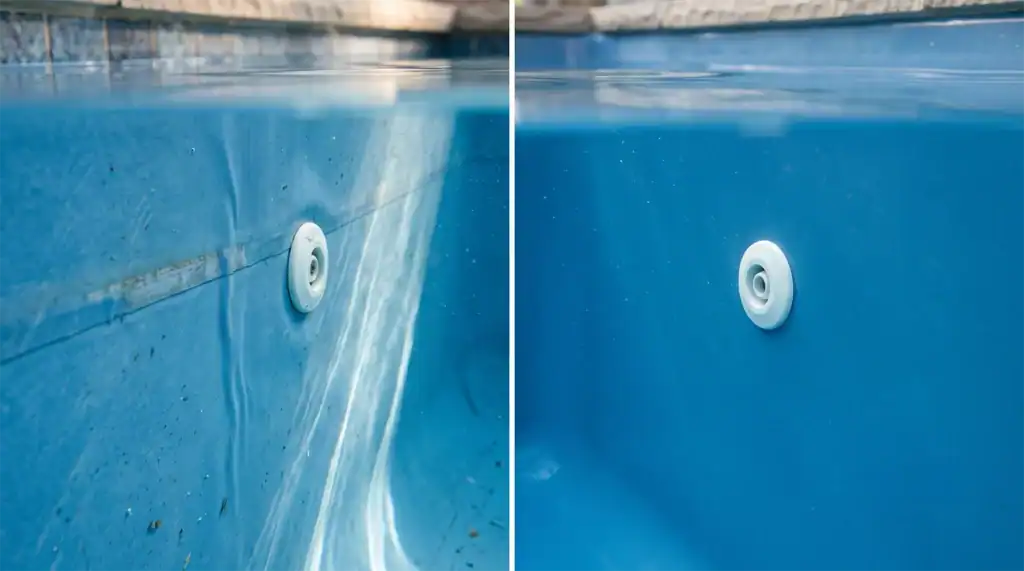
Buy a vinyl pool today, and you’ll very likely replace the liner at least once before the 10-year mark, sometimes right around it.
A family in central Ohio chose vinyl in 2015 because the quote came in about $4,000 under fiberglass. Two kids in travel sports, every dollar counted. The pool was great for years. Then around year nine, the liner faded, wrinkled at one corner, and started a slow leak near a return fitting. The replacement (liner, water to refill, and labor) landed just under $7,000. Nobody had walked them through the 10-year picture.
That’s the nature of a replaceable surface. A fiberglass shell, by contrast, lasts 30-plus years with proper care, and no liner cycle enters the math at all. If you want the full durability picture, we break it down in how long fiberglass pools last.
Vinyl Liner Replacement Cost: What a Replacement Really Includes
When people budget for a new liner, they often price the liner alone and stop there. The vinyl liner replacement cost is bigger than the sheet.
A typical replacement includes several pieces.
- The liner itself, cut and fit to your pool’s shape and depth.
- Draining and disposal of the old liner and water.
- Labor to remove trim, set the new liner, and vacuum it into place.
- Refilling the pool, which is thousands of gallons of metered water.
- Occasional wall or floor repairs found once the old liner is out, which can add cost.
Add it up and national cost guides put most replacements in the $4,000 to $7,500 range. For a mid-size inground pool, $5,000 to $7,500 is common. Over 10 years, most owners face one cycle. Over 20 years, it’s two, sometimes three. A fiberglass shell carries none of these line items, because there’s nothing to pull out and replace.
There’s also downtime. A liner replacement takes your pool offline for days during swim season, often the very stretch of summer you bought the pool for.
Is Vinyl Pool Maintenance Really Comparable to Fiberglass?
Some in the vinyl industry point out that week-to-week upkeep (testing, sanitizer, running the pump) isn’t wildly different between the two surfaces. They’ll also note that a vinyl pool’s frame can last 40 years or more with liner refreshes along the way.
Routine maintenance is closer than some fiberglass marketing suggests. Where the two genuinely part ways is chemicals and the replacement cycle. Fiberglass has a non-porous gel coat. Vinyl has a softer surface with seams that give algae more to grab onto, and the chemical bill reflects it. HomeGuide’s cost data puts annual chemical spend around $175 for fiberglass, $400 for vinyl, and $750 for concrete. That’s a real, recurring gap, but it’s not the biggest factor.
Even if you grant that weekly upkeep is a wash, a vinyl pool still carries a liner replacement roughly every 8 to 10 years, and a fiberglass pool doesn’t. Vinyl and fiberglass are closer on chores than on chemistry, and closer on chemistry than on replacement. The replacement cycle is where the money is.
10-Year Cost Comparison: Fiberglass vs Vinyl Pool

The table below isolates the ownership costs over 10 years (the recurring and replacement spending) because that’s where fiberglass vs vinyl pool decisions are usually won or lost. Install cost is its own conversation, and we cover it in the fiberglass pool cost guide.
These figures are illustrative ranges meant to show the shape of the decision, not a quote. Your real numbers depend on size, region, water rates, and how you use the pool. The fiberglass maintenance figure reflects routine chemicals and electricity for a hands-on owner. Add a weekly cleaning service and any pool costs more, but fiberglass sits at the low end of every credible range.
| 10-Year Ownership Cost | Vinyl Liner Pool | Fiberglass Pool |
| Liner replacement (1 cycle) | ~$4,000–$7,500 | $0 (no liner) |
| Routine chemicals & electricity | ~$700/yr → ~$7,000 | ~$350–$400/yr → ~$3,500–$4,000 |
| Surface repairs / patching | Occasional, variable | Rare |
| 10-year recurring subtotal | ~$11,000–$14,500 | ~$3,500–$4,000 |
Even before you touch the install price, the recurring side of the ledger favors fiberglass by roughly $7,000 to $11,000 over the decade in this illustration. One avoided liner cycle plus a lighter chemical bill. That gap erases vinyl’s upfront savings. For the line-item detail behind these numbers, see our breakdown of the cost of maintaining a pool.
Why Fiberglass Maintenance Runs Lower
The maintenance gap comes down to chemistry. The gel coat surface is non-porous, so algae has nowhere to take hold. That means fewer chemicals, less brushing, and a filter that works less hard. Concrete runs higher still on chemicals (roughly four times fiberglass), which is why we compare that path separately in fiberglass vs concrete pool.
Ready to see the crossover point for your budget? A quick conversation is enough to sketch your 10-year numbers. Request a quote and we’ll walk the numbers with you, no pressure, just the worksheet.
How Manufacturer-Direct Pricing Changes the Fiberglass vs Vinyl Math
The usual fiberglass-vs-vinyl comparison assumes you buy either pool the same way, through a full-service company that bundles the shell, excavation, and installation into one marked-up price. On that basis, fiberglass usually installs for more than vinyl.
But that’s not the only way to buy a fiberglass pool. With a manufacturer-direct, owner-builder approach, you purchase the shell directly and coordinate the installation yourself, or choose a fully installed option, instead of paying a full-service company’s overhead. Pool Brokers USA shells start at $12,500, with financing available from as little as $3,000 down. That single change in how you buy can save $10,000 to $20,000 versus a comparable contractor-built pool. You’re the project coordinator, not the excavator. And you’re not on your own. You get specs, guidance, and support at every step. Our pool ordering process walks through exactly how that works, and our cheapest inground pool FAQ covers the pricing model in more detail.
Once you remove the middleman markup, fiberglass’s upfront premium over vinyl shrinks, and in some cases disappears. Now you’re looking at a pool that can be competitive to install and cheaper to own over the decade. Standard cost comparisons rarely account for the buying model.
Fiberglass vs Vinyl Pool Resale Value
Cost isn’t only what you spend. It’s also what the pool is worth when you sell. Buyers touring a home with a backyard pool ask two questions. Does it look well kept, and will it cost them money soon?
A fiberglass pool with a decade of low, predictable upkeep and no looming liner bill reads as “ready to enjoy.” A vinyl pool with a liner nearing the end of its lifespan can read as “here comes a $6,000 project,” and buyers price that in. Think about buying a home where the inspection flags a vinyl liner at year nine. That can easily turn into a few thousand dollars off the asking price. A fiberglass shell doesn’t carry that clock, and it’s a real factor over a 10-year hold, especially if a sale might land right when a liner is due.
Which Pool Is Right for You?
Both surfaces are legitimate, and the best choice depends on your situation.
A vinyl liner pool is right for you if:
- You want the lowest possible upfront price and can plan for a liner replacement down the road.
- Your time horizon is shorter. Say you expect to move within 5 to 8 years, before a second liner cycle hits.
- You like the option to change the liner pattern later for a fresh look, or you want a highly custom shape that fiberglass molds don’t offer.
A fiberglass pool is right for you if:
- You plan to stay 10+ years and want a predictable, low-maintenance decade with no replacement cycle.
- Lower chemical use and easier upkeep matter to you.
- You want faster installation and a surface that’s easy on kids’ feet.
- You live in a cold climate, where a properly bedded fiberglass shell flexes with freeze-thaw movement instead of cracking.
If you’re also weighing concrete, the trade-offs shift again. More customization, but the highest upkeep of the three. Our fiberglass vs concrete pool comparison lays that one out with the same even-handed numbers.
Is Vinyl or Fiberglass Better for Cold Climates?
If you live anywhere with freezing winters, even states like Ohio, Virginia, or the Carolinas that cycle between freezing and thawing through the season, the surface question gets one more layer. A one-piece fiberglass shell flexes slightly with the ground as it freezes and thaws, which helps it resist the cracking that rigid materials can suffer. The keys are proper installation on a crushed-stone base with perimeter drainage, plus normal winterization. That means blowing out the lines, adding a mesh safety cover that protects kids and pets through the off-season, and following the layered-protection guidance from the CPSC’s Pool Safely program. Vinyl pools winterize successfully too. The difference over the long run is fiberglass’s lower upkeep and the absence of a liner cycle.
The Bottom Line on Fiberglass vs Vinyl Pool Ownership
Vinyl liner pools win the first day. Fiberglass pools tend to win the decade. The difference is one wear part (a liner that lasts 8 to 10 years and costs $4,000 to $7,500 to replace) plus a heavier chemical bill along the way. A fiberglass shell removes that cycle entirely and runs about $350 to $400 a year in routine chemicals and electricity.
If you’re staying put and thinking in decades, and especially if you buy manufacturer-direct and skip the full-service markup, the fiberglass vs vinyl pool math almost always favors fiberglass on a 10-year horizon. The real question isn’t which pool is cheaper. It’s “cheaper over how long?” If you’re budget-first and short-horizon, vinyl may be exactly right.
Get Your 10-Year Numbers
The averages favor fiberglass. Your numbers might too. Request a free quote and we’ll fill in the table above for your actual yard, including shell price, installation path (owner-builder or fully installed), and a monthly payment through our financing options if that helps. Every quote comes with a full breakdown. No hidden costs, no pushy sales tactics, no surprises.
Not ready yet? See what other families built in the pool gallery, or walk through the pool ordering process to see how simple manufacturer-direct really is.
A 10-year decision is really about ten summers of cannonballs, birthday parties, and slow Saturday afternoons in your own backyard. Choose the version you’ll still be glad about in year nine, when a vinyl liner would have been due for replacement and a fiberglass shell is still going strong.
Latest Posts
The Fiberglass Pool Installation Process, Step by Step
Budgeting for a Fiberglass Pool: Every Cost Beyond the Shell
Saltwater Pools: Why Fiberglass Handles Salt Better Than Concrete
Delivery Day Checklist: How to Inspect Your Fiberglass Pool Shell
How Much Time Does Pool Maintenance Really Take?
Shipping Container Pools or Fiberglass: Which Is Better?
Fiberglass vs. Natural Swimming Pools: A Practical Cost and Maintenance Comparison
Fiberglass vs. Gunite Pools: How Construction Method Shapes Lifespan and Care
Shell Price vs. Total Project Cost: Reading a Fiberglass Pool Quote
The Fiberglass Pool Buying Guide for First-Time Buyers
Visit Our Blog
Share This Post
(opens in a new tab)
(opens in a new tab)
(opens in a new tab)