
July 9, 2026
/
Installing a pool in clay soil is entirely possible, but clay’s tendency to swell when wet and shrink when dry means your excavation, drainage, and backfill plan matter more than they would in sandy or loamy ground. Skip that planning, and you risk a shell that shifts, cracks in the surrounding deck, or a yard that never quite drains right. Get it right, and clay’s density can actually work in your favor once the water is managed.
If you’ve ever watched a driveway crack in a dry summer or a gate stop closing after a wet spring, you’ve already seen expansive clay at work. That same ground movement happens beneath a pool site, just out of sight. This guide covers what’s happening underground, which of Pool Brokers USA’s 17 service states deal with it most, and exactly how to plan your excavation, drainage, and backfill so your fiberglass shell stays level and true for decades.
Not sure what’s under your yard yet? Our guide on preparing your yard for pool installation covers the grading and site-assessment basics to start with, before a shovel ever touches the ground.
Key Takeaways
- Expansive clay shrinks and swells with moisture, and montmorillonite-rich clay can generate enough pressure to shift an improperly backfilled shell.
- A one-piece fiberglass shell flexes with ground movement better than rigid concrete, but that advantage only holds if the site has real drainage engineered in first.
- Crushed stone (not native clay) is the backfill material for a fiberglass shell in expansive soil. Compaction and lift thickness matter as much as the material itself.
- Some jurisdictions require a geotechnical evaluation before permitting a pool on expansive soil. That review, along with drainage design, is one of the pieces of the project best left to a licensed professional.
Does Clay Soil Affect Fiberglass Pool Installation?
Yes. Clay particles are flat and microscopic, which lets them pack tightly and absorb water like a sponge. When a clay-heavy site gets saturated, the ground beneath and around your pool can swell upward. When it dries out the following season, that same ground shrinks and pulls away.
Each individual shift is small. The problem is that it repeats, season after season, for as long as the pool sits in the ground. A site plan that ignores this cycle sets a pool up for slow, cumulative stress instead of a one-time installation event.
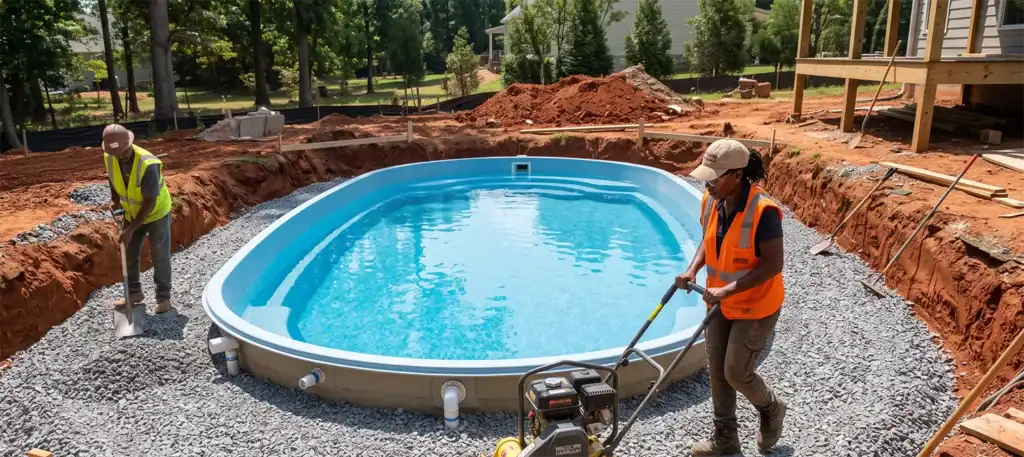
A fiberglass pool shell is built to handle ground movement better than concrete. Fiberglass flexes. Concrete cracks. That’s why fiberglass performs well in cold-climate installations prone to frost heave, and the same flexibility helps it ride out the slower, moisture-driven movement of expansive clay.
Flexibility helps, but it’s a margin of safety, not a reason to skip site prep.
Clay-related movement is just one of the durability questions fiberglass owners ask. Our breakdown of common fiberglass pool problems covers the full picture, from spider cracks to hydrostatic pressure, so you know what’s normal wear and what’s worth a call to a professional.
What Makes Clay Soil “Expansive”?
“Expansive soil” and “clay soil” get used interchangeably, but what actually matters is the specific clay mineral in your ground. Geotechnical engineers measure this with the plasticity index (PI), and soils with a PI above 20 are generally classified as expansive.
The mineral most often responsible is montmorillonite, a clay that can swell to several times its dry volume. The swelling pressure it generates goes well beyond what a poured concrete deck or pool wall was designed to resist. Other clay types common in the Southeast (like the red clays of the Piedmont) swell less aggressively but still shift enough to matter over the life of a pool.
You don’t need to become a soil scientist, but you do need to know whether your site’s clay is the aggressive, high-swelling kind or the milder, more common kind. That single fact changes how much drainage engineering an expansive soil pool installation needs.
Where Expansive Clay Shows Up in Pool Brokers USA’s Service Area
Clay isn’t evenly distributed. It concentrates in a few well-documented geological bands that happen to run directly through several states in Pool Brokers USA’s 17-state delivery area.
Mississippi and the Yazoo Clay belt. This heavily expansive clay formation runs in a broad band across central Mississippi, with outcrops reaching into western Alabama and Louisiana. It’s one of the most cited expansive-soil formations in the Southeast, and Mississippi’s pool permit guide is a good next stop if a geotechnical evaluation ends up on your permit checklist.
Alabama’s Black Belt (Blackland Prairie). This historic soil region, named for its dark, clay-rich topsoil, runs across the state’s midsection and is known for shrink-swell behavior that has long affected local building practices.
The Piedmont region (Georgia, the Carolinas, Virginia). This band of residual clay forms from weathered crystalline bedrock and produces the familiar red clay found across much of the Southeast’s upland areas. It swells less aggressively than Yazoo or Black Belt clay, but it’s dense and slow-draining. Builders in the region almost always have a story about it.
Every yard is different, even within these states. But if you’re in one of them, checking your specific site is worth the hour it takes. The USDA Web Soil Survey is a free federal tool that maps soil types down to the parcel level.
How to Tell If Your Yard Has Clay Soil
Your yard is already giving you clues. These four field signs won’t replace a lab test, but they’ll tell you whether clay is worth investigating further.
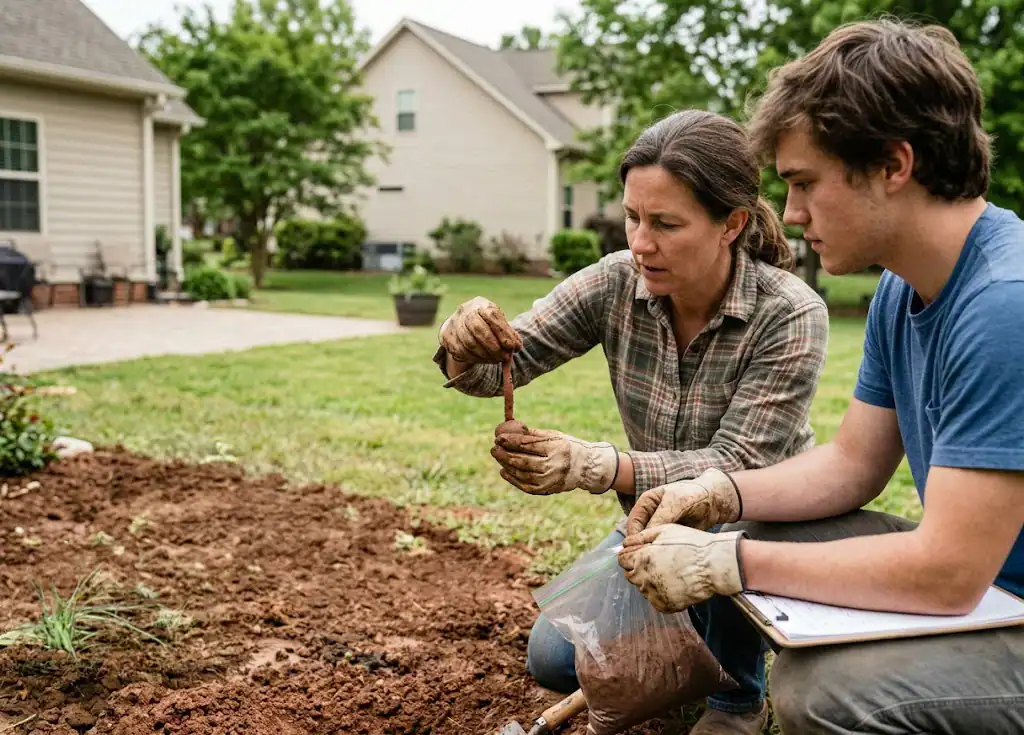
The Squeeze Test
Grab a fist-sized clump of soil from about six inches down. Wet it, and squeeze it in your hand. If it holds its shape, feels slick, and you can roll it into a ribbon between your thumb and finger, you’re holding clay. Sandy soil crumbles apart immediately. Loam holds a loose shape but breaks with light pressure.
Standing Water After Rain
If puddles sit in your yard for 24 hours or longer after a storm, you likely have a clay layer slowing the drainage. Sandy and loamy soils absorb surface water within a few hours.
Dry-Season Cracks
Walk your yard in late summer. If you see wide cracks in bare soil, especially around garden beds or along the foundation, that’s clay shrinking as it dries. The wider the cracks, the more expansive the clay.
Foundation and Driveway Damage Nearby
Step cracks in your foundation walls, a driveway slab that’s lifted on one side, or doors and windows that stick seasonally are all signs that your lot sits on expansive clay. If your house is experiencing it, your pool site will too.
Any two of these signs together are a strong signal. The next step is confirming with the USDA Web Soil Survey, which takes about ten minutes and costs nothing.
How to Use the USDA Web Soil Survey for Your Pool Site
You don’t need to hire a geotechnical engineer just to find out whether your yard sits on clay. The USDA Web Soil Survey is free, and it only takes about ten minutes.
- Go to websoilsurvey.nrcs.usda.gov and click “Start WSS.”
- Type your address into the Quick Navigation panel on the left and click “View.”
- Once the aerial photo loads, use the “AOI Rectangle” tool to draw a box around your backyard.
- Click the “Soil Data Explorer” tab, then “Soil Properties and Qualities,” then open the “Soil Physical Properties” folder and select “Linear Extensibility (Shrink-Swell).”
- Click “View Rating.” The map will color-code your parcel by shrink-swell potential. Anything rated “high” or “very high” means montmorillonite-type clay is likely present, and your project will benefit from a formal geotechnical evaluation before you finalize drainage and backfill plans.
This doesn’t replace a professional soil test, but it tells you whether one is worth the $500 to $2,000 investment before you commit to a project timeline.
How to Excavate and Drain a Pool Site with Clay Soil
Clay’s biggest excavation challenge has nothing to do with digging through it. It’s what happens to the hole afterward. Clay is naturally slow-draining, so an excavated pit can hold rainwater for days, turning into a soupy trench right when you need stable, compactable ground.
Mike, an owner-builder in central Alabama, scheduled excavation for a Tuesday. A weekend storm left three inches of standing water in the hole by the time his crew arrived. Rather than backfill over wet clay, he pumped the pit, let it air out for two days, and brought in a perimeter drain before excavation resumed. Those two lost days saved him from a shell that would have sat on soft, unstable ground.
The lesson applies everywhere clay is involved. Plan excavation and drainage as one step, not two.
Before you excavate, make sure you’ve confirmed these items.
- The site’s grade slopes away from the pool area, not toward it.
- A perimeter drain (French drain) route is planned around the shell footprint.
- Excavation timing avoids the wettest weeks of your region’s rainy season where possible.
- A geotechnical evaluation has been done if local code requires one for expansive soil, or if your Web Soil Survey results show a high-PI clay.
- Your excavation contractor has clay-specific experience. Heavier, wetter spoil changes equipment needs and disposal logistics.
See how your pool comes together to understand where site prep and drainage planning fit into the overall order-to-installation timeline.
Best Backfill Material for a Fiberglass Pool in Clay Soil
Once the shell is set, what goes around it matters just as much as what came out of the hole. Native clay is the wrong choice for backfill around a fiberglass shell, regardless of whether it’s expansive. It holds water against the shell wall, compacts unevenly, and can transmit swelling pressure directly onto the pool.
| Backfill material | Drainage behavior | Fit for clay-soil sites |
| Crushed stone (3/4″ clean) | Excellent. Water passes through freely. | Correct choice. Standard for fiberglass shells. |
| Pea gravel | Good, but can migrate and settle over time. | Acceptable with proper containment. |
| Native clay | Poor. Holds water, uneven compaction. | Not recommended around the shell. |
| Sand (unwashed) | Variable. Can trap fines. | Not recommended in clay-heavy sites. |
Crushed stone works because it does two things clay can’t. It drains instantly, and it compacts predictably in thin, even lifts. Backfill goes in six-inch lifts, each compacted before the next is added. Done right, pool drainage in clay-heavy ground stops being a liability and becomes just another spec on the build sheet.
This is where the crushed-stone base and perimeter drainage combination does double duty. Pool Brokers USA documents the same specs for cold-climate freeze-thaw installations. The engineering that helps a shell ride out frost heave also helps it ride out clay’s shrink-swell cycle. One drainage system solving two different soil problems. Homeowners in Virginia and the Carolinas who deal with both cold winters and Piedmont clay get two protections from one investment.
Long-Term Drainage Management for Clay-Soil Pools
Getting the site dry enough to backfill is the first job. Keeping water managed around the pool for the life of the shell is the second, and it’s the piece owner-builders most often underestimate.
After installation, keep the system working. Grade surface water away from the pool, route gutter downspouts and irrigation lines well clear of the backfill zone, and inspect the perimeter drain outlet every spring for clogging or settling. Standing water near the pool deck after storms is usually the first sign a drain needs attention. Clay doesn’t forgive a drainage system that was installed correctly once and then ignored.
One thing homeowners often miss is large trees within 15 to 20 feet of the pool. Tree roots draw moisture from the soil unevenly. In clay-heavy ground, that can dry out one side of the backfill zone while the other stays wet. The pool itself may be fine, but the deck edge tilts or the coping develops a hairline crack. If you have mature trees near the planned pool site, talk to your excavation contractor about whether root barriers make sense, or whether the tree needs to come out before construction starts.
Clay Soil and Your Pool Deck
The pool shell usually isn’t the thing that cracks. In most residential installations, a fiberglass shell sits deep enough that the bottom of the pool rests below the “active zone,” the top few feet of soil where seasonal moisture changes cause the most movement. The shell rides out those shifts because fiberglass flexes.
Your deck, though, sits right on top of the active zone. And concrete slabs on expansive clay are where the damage actually shows up, pushed upward by wet-season swelling or settling unevenly as the clay dries and pulls away underneath.
Two things protect a pool deck on a clay site.
Isolation joints between the deck slab and the pool coping. The coping (the cap that sits on the pool’s edge) and the surrounding deck need to move independently. A full-depth isolation joint lets each surface shift without cracking the other. Leave it out, and swelling clay pushes the deck slab into the coping. Something breaks.
A wider crushed-stone collar around the shell. Extend the crushed-stone backfill a foot or two past the shell footprint, underneath where the deck concrete will pour. That gives the slab a stable, draining base instead of sitting directly on reactive clay. The material is the same stone already going around the shell, just extended outward. The added cost is minimal compared to tearing up and re-pouring a cracked deck two years after installation.
If you’re planning a paver deck instead of poured concrete, you have a built-in advantage. Pavers flex with small ground movements rather than cracking, which makes them a natural fit for clay-heavy sites.
How Much Extra Does Clay Soil Add to Pool Installation Cost?
Clay-specific site work adds real cost to a project, and pretending otherwise doesn’t help anyone plan. These are the line items that change on a clay-heavy lot compared to a sandy or loamy site.
- Geotechnical evaluation: $500 to $2,000, depending on your area and the number of bore samples. Some jurisdictions require it before issuing a permit on expansive soil. Even where it’s optional, it’s cheap insurance on a project this size.
- Dewatering (sump pump, well points): $500 to $1,500 for the equipment rental and labor to keep the pit dry during excavation and backfill. Costs go up if the water table is high or the rainy season is in full swing.
- Perimeter drain (French drain): $1,500 to $3,500 installed around the shell footprint. This isn’t optional on a clay site. It’s the single most important piece of the drainage system.
- Additional crushed stone: Clay sites sometimes need a deeper crushed-stone base beneath the shell (12 inches instead of the standard 6 to 8) to create a more stable bearing surface. Budget an extra $500 to $1,000 for the additional material and hauling.
All in, clay-specific extras typically add $3,000 to $8,000 to a project.
For total project context, shells start at $12,500 and total owner-builder projects typically run $30,000 to $50,000 depending on size, site, and add-ons. (Our fiberglass pool installation cost breakdown covers the full picture beyond clay-specific extras.) A clay-heavy lot lands toward the higher end of that range. Even with those extras, owner-builders still typically save $10,000 to $20,000 or more compared to full-service pool companies.
Can You Owner-Build a Pool on Clay Soil?
Pool Brokers USA offers two paths to get your fiberglass shell in the ground. Owner-builder means you coordinate excavation, drainage, and trades yourself with our specs and documentation. Fully coordinated installation means our installer network handles that coordination for you. Clay soil works with either path, but it does shift how much of the work you’ll want to hand off.
Our owner-builder installation guide covers the general process in depth. On a clay-heavy lot specifically, acting as your own general contractor means personally managing dewatering schedules, backfill compaction, and drainage design decisions that have real consequences if they’re rushed. That’s realistic for an organized homeowner willing to make the calls and be on-site for excavation. Just know that a clay-heavy lot is a tougher first project than sandy or loamy ground.
Some local building departments require a geotechnical evaluation or an engineer-stamped drainage plan before issuing a pool permit on expansive soil. Check with your permitting office in week one. It’s far cheaper to learn that requirement early than to discover it after excavation is scheduled.
Ready to put real numbers on a clay-soil project? Request a free, no-obligation quote, and mention your soil type so we can flag any site-specific drainage or excavation considerations before you finalize your plans.
Frequently Asked Questions
Can You Install a Fiberglass Pool in Clay Soil?
Yes. Fiberglass shells handle clay well when the site includes proper drainage, crushed-stone backfill, and compaction. The shell’s flexibility gives it an advantage over rigid materials, but that advantage depends on the site prep being done correctly.
Are There Long-Term Risks for a Clay Soil Pool?
Clay soil on its own is harmless to a fiberglass shell. The risk comes from water trapped against the shell by poor drainage or native-clay backfill, which can create uneven pressure as the clay swells and shrinks with the seasons. A properly designed perimeter drain and crushed-stone backfill remove most of that risk.
Do I Need a Soil Test Before Installing a Pool in Clay Soil?
It’s worth checking. The free USDA Web Soil Survey tool can tell you your site’s general soil classification in a few minutes, and some local building departments require a formal geotechnical evaluation before permitting a pool on expansive soil. Check with your permitting office early in your planning process.
How Much Extra Does Clay Soil Add to Pool Installation Cost?
Plan for an additional $3,000 to $8,000 in clay-specific site work. That includes a possible geotechnical evaluation ($500 to $2,000), dewatering during excavation ($500 to $1,500), perimeter drainage ($1,500 to $3,500), and potentially a deeper crushed-stone base ($500 to $1,000). The exact total depends on your soil’s severity, your local code requirements, and the season you break ground.
Can I Use the Owner-Builder Model If I Have Clay Soil?
Yes. Clay soil works with the owner-builder path. It does mean you’ll be coordinating more specialized site work (dewatering, perimeter drains, potentially a geotechnical report) alongside the standard excavation and backfill. Pool Brokers USA provides the specs and documentation either way. If you’d rather hand off that coordination, our fully installed option handles it for you.
Will Clay Soil Crack My Pool Deck?
It can, if the deck is poured directly on expansive clay with no isolation joint between the slab and the pool coping. The fix is straightforward. Use a full-depth isolation joint so the deck and coping can move independently, and extend the crushed-stone backfill zone under the first ring of the deck slab. Paver decks are another good option for clay sites because individual pavers flex with small ground movements instead of cracking.
Final Thoughts on Building in Clay
Installing a pool in clay soil changes your project’s planning, not its feasibility. A fiberglass shell’s flexibility already gives you an edge over rigid pool materials when the ground shifts with the seasons, and the same crushed-stone base and perimeter drainage that protect a shell from freeze-thaw movement do the job for shrink-swell clay too.
Get the site work right, and the payoff isn’t just a level pool. It’s a backyard that hosts birthdays, cannonball contests, and quiet evening swims for decades instead of repair calls.
Whether you’re coordinating the project yourself as an owner-builder or working with our installer network for a fully coordinated build, the plan is the same. Manage the water, protect the shell, and let fiberglass do what it does best. Request your free quote today and tell us about your soil so we can help you plan the site work before you break ground.
Latest Posts
The Fiberglass Pool Installation Process, Step by Step
Budgeting for a Fiberglass Pool: Every Cost Beyond the Shell
Saltwater Pools: Why Fiberglass Handles Salt Better Than Concrete
Delivery Day Checklist: How to Inspect Your Fiberglass Pool Shell
How Much Time Does Pool Maintenance Really Take?
Shipping Container Pools or Fiberglass: Which Is Better?
Fiberglass vs. Natural Swimming Pools: A Practical Cost and Maintenance Comparison
Fiberglass vs. Gunite Pools: How Construction Method Shapes Lifespan and Care
Shell Price vs. Total Project Cost: Reading a Fiberglass Pool Quote
The Fiberglass Pool Buying Guide for First-Time Buyers
Visit Our Blog
Share This Post
(opens in a new tab)
(opens in a new tab)
(opens in a new tab)