

August 26, 2026
/
The container pool is having a moment, and it’s easy to see why. A repurposed steel box turned into a plunge pool makes a great sixty-second video, and “delivered in one piece” sounds refreshingly simple.
And let’s be honest, a container pool looks very cool. They’re a novelty, environmentally conscious, and easy addition to modest backyards. But when you look at the lifespan of a small pool, a fiberglass shell definitely wins on lifespan — 25+ years typical, with many pools lasting 30–50 years with proper care. Choosing fiberglass means corrosion-free ownership, true inground integration, and resale credibility. For most compact yards, the fiberglass shell is the stronger long-term buy.
Because here’s the thing: a small fiberglass pool is also delivered in one piece, and it was engineered from day one to hold water for decades. If you’re comparing these two compact options, this guide walks through what a container pool really is, how the two hold up over time, what each truly costs installed, and which one your future home buyer will call an asset. You’ll leave knowing exactly which questions to ask either seller.
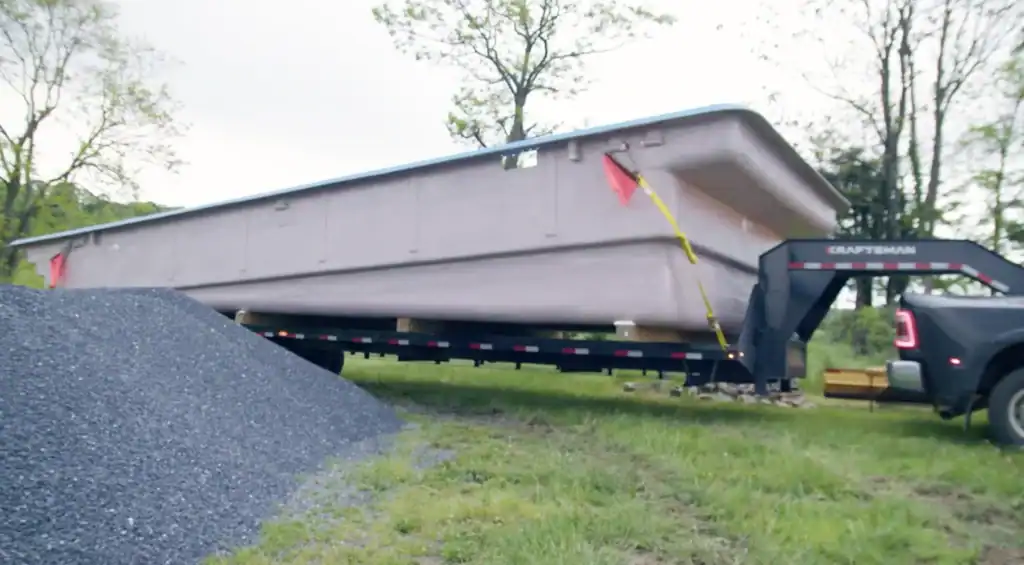
Key Takeaways
- A shipping container pool is a repurposed steel cargo box fitted with a liner or coating; a fiberglass pool is a purpose-molded shell with a non-porous gel coat engineered for decades in the ground.
- Steel + water = ongoing corrosion management for container pools, while fiberglass typically lasts 25+ years, with many pools lasting 30–50 years with proper care.
- Viral container pool cost figures usually exclude the crane, foundation, utilities, decking, and stairs; installed totals land far closer to a real pool project than the videos suggest.
- Fiberglass shells start at $12,500, with total owner-builder projects typically running $30,000–$50,000, and small models start at 8′ x 10′.
- An inground fiberglass pool reads as a permanent home improvement at resale; a container pool usually reads as removable equipment.
What is a shipping container pool, really?
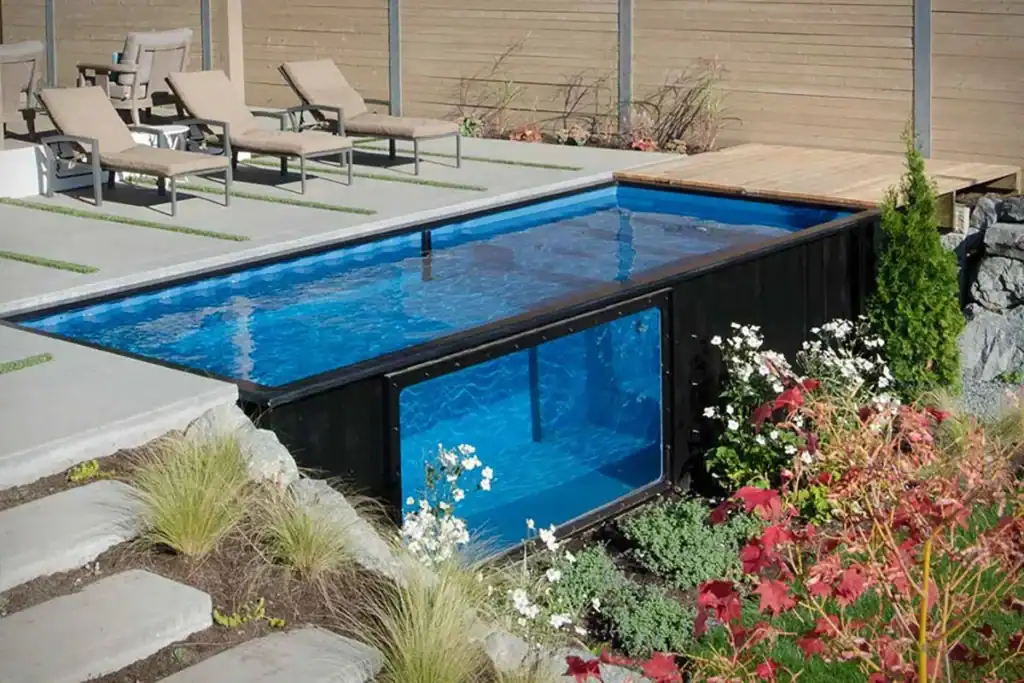
A shipping container pool is exactly what the name promises: a used or new steel cargo container, typically 8′ wide and 20′ or 40′ long, cut, reinforced, and fitted with a waterproof liner or coating, plus plumbing and a filtration package. It’s one branch of the broader modular pool trend, where the pool arrives as a prefabricated unit instead of being built on site.
Most container pools sit fully above ground or partially buried, with the steel walls showing. That’s part of the aesthetic, and for an industrial-styled patio it can genuinely work.
A fiberglass pool takes the same “arrives as one piece” idea and applies it to a purpose-built product. The shell is molded in a factory as a single unit with a smooth, non-porous gel coat, then set into an excavated, prepared hole. It was never anything but a pool.
That difference, repurposed box vs. purpose-built shell, drives almost everything else in this comparison. Both are compact, and both arrive on a truck. Only one was engineered around water chemistry, swimmer comfort, and decades of soil contact.
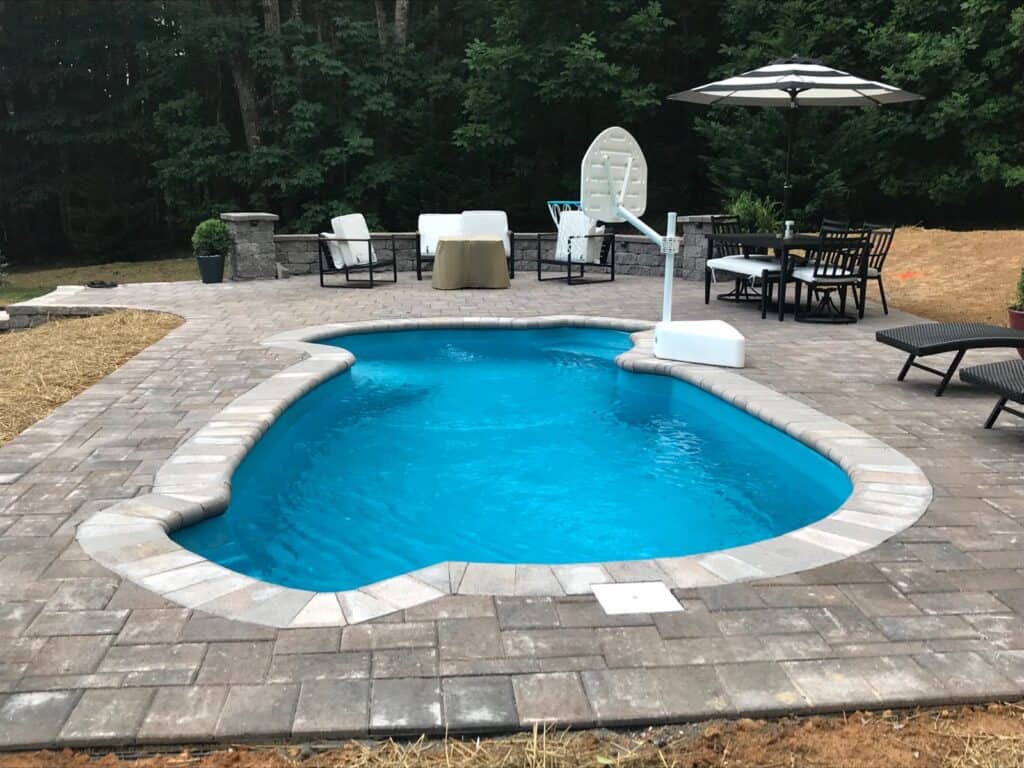
If compact is your constraint, consider that small fiberglass pools start at 8′ x 10′, which is a smaller footprint than a 20′ container, with seating and even optional therapy jets built in.
Lifespan: engineered shell vs. repurposed steel
Prolonged water exposure is hard on every type of surface, and it’s especially hard on steel. Shipping containers are built to keep cargo dry for ocean crossings, not to hold chlorinated water for 20 years. Once a container becomes a pool, the liner or coating becomes the only thing standing between water and metal.
That means the honest maintenance picture includes liner or coating renewal, vigilance at cut edges and welds, and rust management wherever the coating wears. None of that is outrageous; it’s just what steel does around water, and container pool owners inherit the schedule.
Fiberglass works differently in water. The composite shell doesn’t rust, and the gel coat surface is engineered to last the life of the pool, which is why fiberglass pools typically last 25+ years, with many lasting 30–50 years with proper care. There’s no liner to replace and no coating cycle to budget. Because of the non-porous surface in fiberglass pools, algae can’t grip. A lined steel pool behaves more like a vinyl pool, where the liner drives both the chemical routine and the eventual replacement bill.
This guide we made for our customers covers the full durability picture of the models we offer: how long fiberglass pools last.
Container pool cost is where social media and reality part ways. The number in the caption is usually the unit, not the pool in your yard.
A realistic installed budget for a container pool adds:
- Crane or heavy equipment to place a multi-ton steel box
- An engineered slab or foundation to carry that weight
- Electrical (and often gas) runs by licensed pros
- Decking, stairs, or a platform, because the walls are 8’+ tall
- Fencing and barriers to meet local safety codes, the same rules covered by the CPSC’s Pool Safely program
- Permits, which most municipalities require for any pool that holds serious water
Stack those up and the installed total lands much closer to a conventional pool project than the videos suggest, without delivering an inground look or an inground lifespan.
Fiberglass pricing is public and complete. Shells start at $12,500, and total owner-builder projects typically run $30,000–$50,000 depending on size, site, and add-ons, saving $10,000–$20,000+ vs. a full-service build. Every line item, excavation, plumbing, electrical, permits, decking, is spelled out in this fiberglass pool installation cost breakdown, so you can compare a real total against a real total.
The point isn’t that container pools are a scam. It’s that both options cost real money, and only one of them ends with a permanent inground pool.
The backyard test: placement, comfort, and how it lives
Picture both pool options: five years in, on an ordinary Tuesday evening.
The container pool sits above grade, steel walls visible, reached by stairs or a deck platform. Swimmers share a straight 8′-wide lane. The industrial look either still delights you or it doesn’t; either way, it can’t be softened into the landscape the way an inground pool can.
The fiberglass pool sits flush with your patio. Kids step in from the deck, there’s a bench seat along the wall to lounge against, and the Sand or Caribbean gel coat reads like part of the backyard, not an industrial structure parked in it. Models like the Florida (9′ x 18′) build wrap-around seating into a footprint smaller than any container.
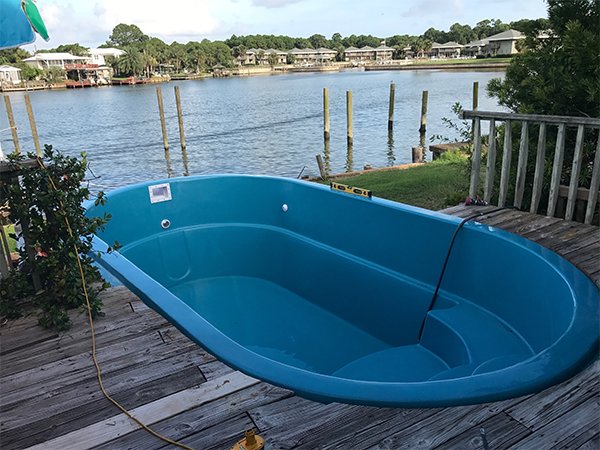
Comfort details compound: the gel coat is smooth on feet, the shell holds heat better than steel, and shapes include tanning ledges and curved steps rather than one rectangular box. Purpose-built shows up in the small stuff.
Container pools do keep one real placement advantage: where excavation is genuinely impossible, an above-grade pool may be the only option. If that’s your yard, it’s a fair reason to look at one, with clarity about future issues with the steel.
Resale and permanence: which one counts as a real pool?
Ask a real estate agent the difference, and you’ll get a version of this: an in-ground pool is a home improvement; a pool you could crane out next week is equipment.
Because a container pool is removable and reads as above-ground, buyers and appraisers tend to treat it like an above-ground pool, valued near zero at resale, sometimes even a negative if the next owner doesn’t want it. An inground fiberglass pool, professionally installed and permitted, presents as a permanent feature of the property, with the landscaping, decking, and family appeal that buyers are looking for in their home purchase.
Insurance and code treatment follow the same logic. Any pool that holds meaningful water needs barriers, permits, and liability coverage; a permanent inground installation is the well-worn path your insurer and inspector already understand.
Which compact pool fits your yard?
Both options exist for the same reason: not every yard, or budget, wants a 16′ x 40′ pool. This list can help you weight the pros and cons.
A shipping container pool is right for you if:
- You love the industrial above-ground look
- Excavation is truly impossible or prohibited on your site
- You’re comfortable managing coatings, liners, and rust on a steel structure
- You view it as a 10-year feature, not a 30-year investment
A compact inground pool in fiberglass is right for you if:
- You want a permanent, flush-with-the-patio pool that adds to your home
- Decades-long lifespan with roughly $350–$400/yr upkeep beats novelty
- Seating, tanning ledges, and smooth gel coat matter for daily use
- Resale credibility matters, now or someday
The bottom line on shipping container pool vs fiberglass
The shipping container pool vs fiberglass question comes down to what you’re actually buying. A container pool is a striking, above-grade steel feature with an honest maintenance story of liners, coatings, and rust, and little to offer at resale. A small fiberglass pool is a purpose-engineered compact inground pool: 25+ year typical lifespan, roughly $350–$400 a year in upkeep, shells from $12,500 with total projects typically $30,000–$50,000, and a permanent place in both your patio and your home’s value.
Novelty fades faster than gel coat. If your compact yard deserves a real pool, request a free quote and we’ll match you with small models sized for your space, with honest installed numbers for your area.
Frequently asked questions
Are shipping container pools cheaper than fiberglass pools?
Only at the sticker. Once you add the crane, foundation, electrical, decking, stairs, fencing, and permits, an installed container pool lands much closer to a conventional project. Fiberglass shells start at $12,500, with total owner-builder projects typically running $30,000–$50,000, and end as a permanent inground pool.
How long do shipping container pools last?
Expect a service life governed by the liner or coating protecting the steel, with rust management as an ongoing chore, especially at cut edges and welds. A fiberglass pool typically lasts 25+ years, with many lasting 30–50 years with proper care, and its shell can’t rust.
Can a shipping container pool be installed inground?
Partially burying a container is possible but works against the product: soil contact accelerates corrosion and adds engineering cost. Containers make the most sense above grade. If you want a true inground pool in a compact footprint, a small fiberglass shell is built for exactly that.
Do container pools add value to your home?
Rarely. Because they’re removable and read as above-ground structures, appraisers and buyers generally treat them like equipment rather than home improvements. A permitted inground fiberglass pool presents as a permanent feature that buyers can see themselves living around.
Latest Posts
The Fiberglass Pool Installation Process, Step by Step
Budgeting for a Fiberglass Pool: Every Cost Beyond the Shell
Saltwater Pools: Why Fiberglass Handles Salt Better Than Concrete
Delivery Day Checklist: How to Inspect Your Fiberglass Pool Shell
How Much Time Does Pool Maintenance Really Take?
Shipping Container Pools or Fiberglass: Which Is Better?
Fiberglass vs. Natural Swimming Pools: A Practical Cost and Maintenance Comparison
Fiberglass vs. Gunite Pools: How Construction Method Shapes Lifespan and Care
Shell Price vs. Total Project Cost: Reading a Fiberglass Pool Quote
The Fiberglass Pool Buying Guide for First-Time Buyers
Visit Our Blog
Share This Post
(opens in a new tab)
(opens in a new tab)
(opens in a new tab)