

October 15, 2026
/
What size pool should you get? For most families, the answer comes from four key aspects, not from the biggest shell that fits: your usable yard space after setbacks, how your family will actually use the water, your total project budget, and how much pool you want to maintain.
Small fiberglass pools start at 8′ x 10′, large models run 35′ and beyond, and there’s always those medium pools in between. The right choice is the one your yard, budget, and Saturday afternoons all agree on.
Pool size is the one choice you can’t revise later. Gel coat color, heaters, decking, all of it can evolve over time. The hole in the ground is forever.
So let’s get it right the first time. This guide walks through the four questions that decide your size, what small, medium, and large fiberglass pools each do best, and a decision matrix that turns your answers into a shortlist.
Key Takeaways
- Pool size is decided by four inputs: usable yard space after setbacks, how your family will use the pool, total project budget, and maintenance appetite.
- Small fiberglass pools start at 8′ x 10′ and fit tight lots and plunge-and-lounge use; large models like the 14′ x 35′ Birmingham handle laps, games, and crowds.
- Bigger pools cost more everywhere, not just at purchase: more excavation, more decking, more water to heat, filter, and treat.
- Measure usable space, not lot size; setbacks, easements, septic systems, and equipment access can shrink a big yard to a medium pool footprint.
- Fiberglass shells start at $12,500, with total owner-builder projects typically running $30,000–$50,000; size is the single biggest lever inside that range.
The four questions that decide your pool size
Skip the showroom daydreaming for a moment and answer these in order. They do the whole job.
1. How much usable space does your yard actually have?
This number is not the size of your lot! It’s the actual usable size where your pool can go in the ground. Every municipality’s jurisdiction imposes setbacks from property lines, and many yards lose more space to easements, septic fields, slopes, and mature trees. The excavator also needs a path in, and the shell needs a crane or spotting path on delivery day.

A practical starting move: sketch your yard, subtract your local setbacks on every side, and mark anything that can’t move. The rectangle that’s left is your real canvas, and it’s usually smaller than your eyes tell you.
2. How will your family actually use your pool?
Be honest about the daily reality, not the fantasy party. Toddlers splashing on a tanning ledge, teenagers playing volleyball, an adult swimming laps before work, and neighbors floating on a Sunday are four different pools:
- Cooling off and lounging works beautifully in a small pool, especially ones with ledges.
- Family play (games, cannonballs, several swimmers at once) wants medium space and a mix of depths.
- Lap swimming needs length, so a large pool makes for the best swim experience.
- Entertaining crowds calls for more area and wide entry steps.
- Full relaxation in hot tubs and spas means additional room is necessary surrounding the pool.
3. What’s your total project budget?
Size is the biggest cost decision in pool buying. Fiberglass shells start at $12,500, and total owner-builder projects typically run $30,000–$50,000; where you land in that range tracks the shell’s size more than any other choice.
A bigger pool also means a bigger hole, more crushed stone, more decking around a longer perimeter, and a larger fence run. See how each line item scales in our fiberglass pool installation cost guide.
4. How much pool do you want to take care of?
Every square foot of water needs filtering, treating, and covering, and every gallon needs heating if you want a longer swim season. And when the pool season is over, care includes covering it for the winter.
Fiberglass keeps these burdens low; its non-porous gel coat resists algae and keeps annual maintenance around $350–$400 versus $1,000+ for vinyl and $2,000+ for concrete. But within fiberglass, a smaller pool is still less to clean, heat, and cover than a larger one.
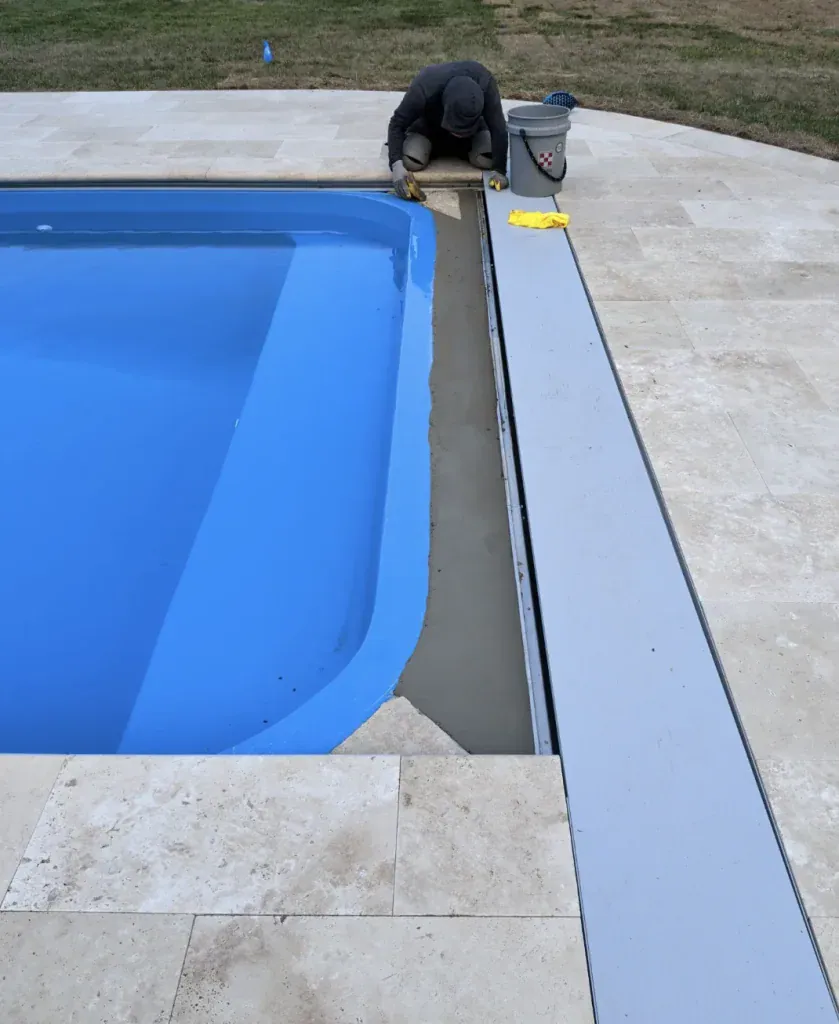
Once you’ve answered all four questions here, you’re ready to shop by category.
See which pool fits your backyard across the small, medium, and large collections.
Small fiberglass pools: more than most people expect
Small pools start at 8′ x 10′ (the Destin), and the category has quietly become one of the most popular in the lineup, not as a consolation prize, but as a deliberate choice.
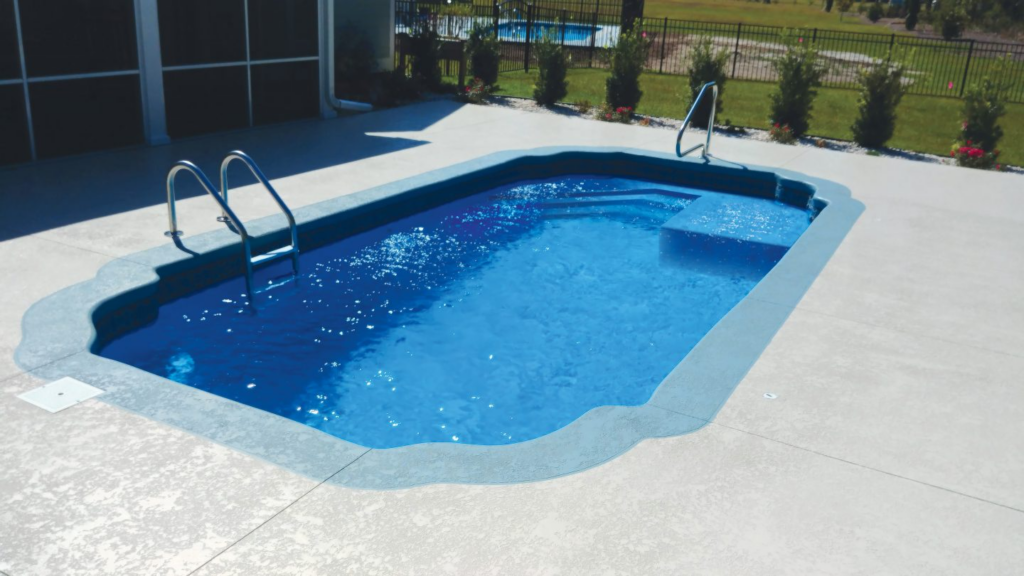
A small pool is right for you if your usable space is tight, your use is cooling off and lounging rather than laps and games, or you’d rather spend the savings on the experience around the pool: decking, shade, a heater that stretches the season. Several small models, including the Destin, Margaritaville, Ontario, and Chesapeake, offer therapy jets, which turns a compact pool into part spa.
Small pools also carry the friendliest numbers in the catalog, from the shell price through excavation, decking, fencing, and lifetime heating costs. Browse the full range of small fiberglass inground pools to see what fits an intimate footprint.
Medium fiberglass pools: the family default
Medium pools are the middle of the bell curve for a reason: enough length for real swimming, enough shallow area for kids, and a footprint that fits most suburban backyards without swallowing them.

Choose a medium pool if you have a growing family with mixed swimmers, want fun floaties without giving up open swimming room, and your usable yard sits comfortably in the middle of its range after setbacks. Many medium models pair a shallow play end with a deeper end, covering the toddler years and the teenager years with one shell.
Explore the medium fiberglass pools collection to compare layouts.
Large fiberglass pools: for swimmers and crowds
Large pools earn their keep in two situations: serious swimming and serious entertaining. The Birmingham, at 14′ x 35′ with depths from 3’8″ to 5’8″, gives you room for cannonball contests, volleyball games, and quiet Tuesday-evening floats in the same footprint.

Choose large if you swim for exercise, host often, have the yard to spare, and the budget to carry both the higher project cost and the higher operating costs that come with more gallons of water.
One honest word of caution about bigger pools: a large pool in a modest yard can crowd out everything else — patio, lawn, and landscaping around a pool are where much of its life happens.
See the large fiberglass pool models to compare dimensions against your sketch.
The pool size decision matrix
Put your four answers from into one view. Find the row that sounds like your household; the right column is your starting category.
| Your situation | Yard reality | Primary use | Size to consider |
|---|---|---|---|
| Tight urban or small suburban lot | Limited space after setbacks | Cooling off, lounging, spa-style relaxing | Small (from 8′ x 10′) |
| Young family, standard suburban yard | Comfortable mid-size canvas | Play, floats, first swim lessons | Small–Medium |
| Mixed-age family, room to spare | Generous usable space | Games plus real swimming | Medium |
| Fitness swimmer | Long, clear run available | Laps before work | Large (30’+ length) |
| Frequent entertainers | Large yard, easy access | Crowds, cookouts, weekend gatherings | Medium–Large |
| Budget-first buyers | Any | Maximize experience per dollar | Small–Medium plus add-ons |
Two tie-breaker rules when you’re between categories:
- When the yard and the wishlist disagree, the yard wins. An oversized pool in an undersized yard is a permanent regret.
- When budget is the tension, size down and spend the difference on what extends use: a heater for more months, a cover for safety and warmth, better decking for the people who never get in the water.
The bottom line on choosing your pool size
So, what size pool should you get? The one your usable yard accommodates, your family will actually use weekly, your total budget carries without strain, and your maintenance appetite can keep up with. Answer those four honestly and the small, medium, or large question mostly answers itself, and the decision matrix above turns it into a shortlist.
The next step is putting real dimensions against your real yard. Request your free, no-obligation quote and we’ll help you compare specific models in your size category, with shell and total project numbers side by side for your site.
Frequently asked questions
What size pool should I get for a family of four?
A medium fiberglass pool is the usual sweet spot for a family of four: enough shallow area for younger kids, enough open water for games and improving swimmers, and a footprint most suburban yards hold comfortably after setbacks. Size down if your usable yard is tight; size up mainly for lap swimming or frequent hosting.
What is the smallest inground fiberglass pool?
Small fiberglass pools start at 8′ x 10′, the Destin model. Pools in this class suit tight lots, plunge-and-relax use, and buyers who want the lowest total project and operating costs; several small models also offer therapy jets for a spa-like experience.
How do I know what pool size fits my backyard?
Measure usable space, not lot size. Subtract your local setback requirements on every side, then mark easements, septic systems, slopes, and trees that can’t move. Leave room for decking around the pool and equipment access during installation. The remaining rectangle, not the whole yard, is what your pool must fit.
Does a bigger pool cost more to maintain?
Yes, on every line. More gallons mean more chemicals, more filtering, more heating, and a larger cover; more perimeter means more decking and fencing. Fiberglass keeps the baseline low, roughly $350–$400 per year versus $1,000+ for vinyl and $2,000+ for concrete, but within any material, size scales the bill.
How much does pool size change the total price?
Size is the biggest lever inside the typical range. Fiberglass shells start at $12,500, and complete owner-builder projects typically run $30,000–$50,000; a larger shell raises the shell price and everything attached to it, excavation, base stone, decking, and fencing, which is how projects travel from the bottom of that range toward the top.
Latest Posts
Is a Pool a Good Investment?
Small, Medium, or Large: How to Choose the Right Fiberglass Pool Size
15 Questions to Ask Before You Buy a Fiberglass Pool
Fiberglass vs. Above-Ground Pools: Which Adds Real Long-Term Value?
How to Get a Swimming Pool Permit in Virginia: Fiberglass Homeowner’s Guide
Does a Pool Add Value at Resale? What Appraisals and Buyers Say
The Fiberglass Pool Installation Process, Step by Step
Budgeting for a Fiberglass Pool: Every Cost Beyond the Shell
Saltwater Pools: Why Fiberglass Handles Salt Better Than Concrete
Delivery Day Checklist: How to Inspect Your Fiberglass Pool Shell
Visit Our Blog
Share This Post
(opens in a new tab)
(opens in a new tab)
(opens in a new tab)