

November 5, 2026
/
Fiberglass pool manufacturers all sell the same promise: a molded shell that lasts decades. But shells can be very different from one another. What matters for a fiberglass pool shell are the parts you can’t see: the lamination schedule (how many reinforcing layers, and of what), the resin system (whether a vinyl-ester barrier protects against blistering), the gel coat’s UV and chemical durability, the warranty’s fine print, and where the shell is actually made.
Here’s the uncomfortable truth of shell shopping: you will never personally witness your pool being laminated. Every buyer is trusting someone’s word about what’s inside the fiberglass.
So the skill isn’t reading spec sheets like an engineer; it’s asking the questions that separate manufacturers who welcome scrutiny from ones who deflect it.
Below: what actually makes one shell better than another, why “best fiberglass pool brands” lists miss the point, what made-in-USA sourcing genuinely buys you, and the checklist that does the vetting for you.
Key Takeaways
- Shell quality is set by things you can’t see: lamination layers, resin systems (especially vinyl-ester barrier coats against blistering), and gel coat durability.
- Ranked “best brands” lists aren’t really worth evaluating; a pool shell manufacturer’s willingness to explain its construction and publish its warranty is a stronger one.
- Warranty transparency is a quality proxy: manufacturers confident in their laminate put long structural coverage in writing and hand it over before you buy.
- A “Made in USA” pool shortens freight, simplifies warranty service, and keeps accountability on this continent, real advantages beyond the label.
- The vetting checklist below turns invisible quality into 7 concrete questions any honest manufacturer answers easily.
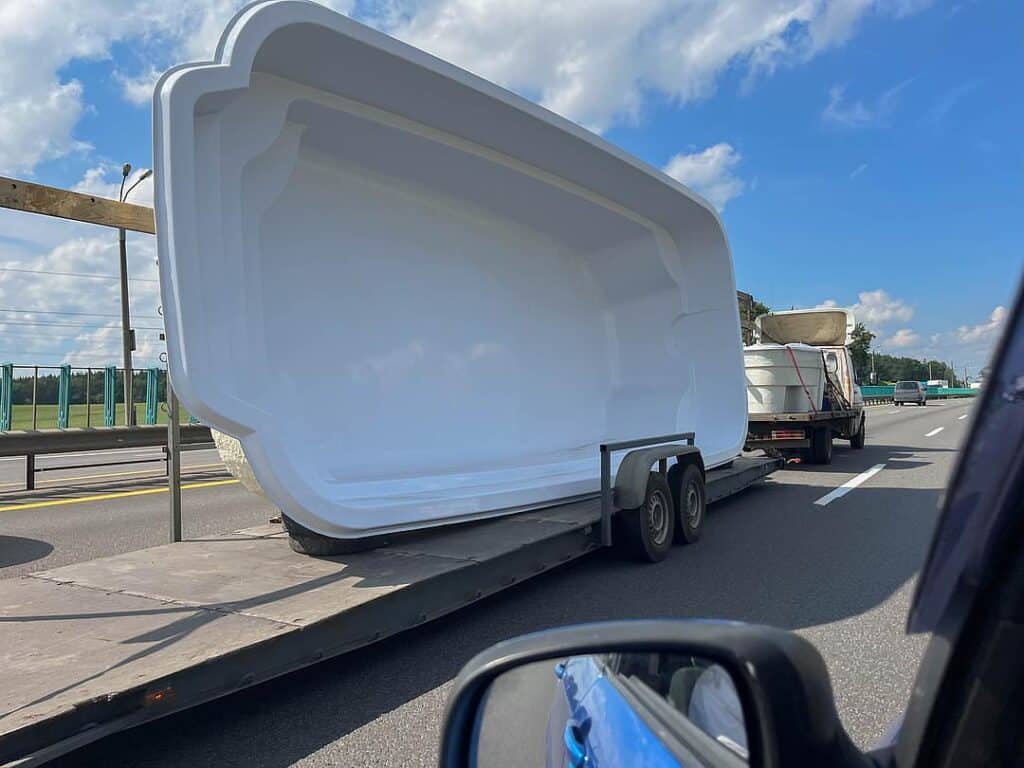
Why manufacturer choice matters more than the brand ads
The fiberglass pool industry has a quiet quality spread. Two shells that look identical at delivery, same shape, same color, same shine can age very differently because their build quality diverged in the factory years before either showed a symptom.
A well-built shell rides out decades: fiberglass pools typically last 25+ years, with many lasting 30–50 with proper care. A poorly built shell will tell on itself early: through gel coat blisters, premature fading, or laminate flaws – all happening usually right after the cheap warranty runs out.
Manufacturer behavior is the thing to watch for here: the good ones explain their construction without being cornered, publish warranties without being asked, and have a track record you can count.
Inside the shell: lamination and resin systems explained
A fiberglass shell is built in layers, and each layer has a job. Understanding the stack, even loosely, turns you into a dramatically better question-asker.
The gel coat is the finish layer: the smooth, non-porous surface you swim against. Behind it sits the barrier coat, and this is the layer to ask about by name: quality manufacturers use a vinyl-ester resin barrier here, because vinyl ester resists water penetration and the osmotic blistering that cheaper polyester-only laminates can develop.
Then come the structural layers: chopped and woven fiberglass reinforcement built up to the engineered thickness, sometimes with core materials (honeycomb or ceramic-type cores in premium builds) that add stiffness in high-stress zones.
You don’t need to memorize composite chemistry; the industry’s trade body, the American Composites Manufacturers Association, exists for all those specifics.
You need exactly two questions:
- “Is there a vinyl-ester barrier coat behind the gel coat?” The right answer is an easy, specific yes.
- “Can you describe your lamination schedule?” You’re not grading the answer’s engineering; you’re grading whether it’s confident and concrete, or vague and defensive.
Manufacturers who build well love these questions, and you’ll love feeling assured by their expertise.
The gel coat question: colors that last
The gel coat does double duty, swim surface and permanent finish, so its quality shows up twice: underfoot every day, and in photographs ten years apart.
Ask how the gel coat is applied (controlled factory conditions matter), what UV stabilization it carries, and how the color layer handles years of sun and sanitizer.
Color technology varies between makers, and so does honesty about it; a manufacturer who says “here’s how our finish weathers, and here’s the surface warranty behind it” is handling the question the right way.
Warranty transparency as a quality signal
Here’s the most efficient vetting trick in the industry: skip the brochure and ask for the warranty documents first.
A manufacturer’s warranty is its engineering confidence, in writing. Long structural coverage with clear definitions says the maker expects its laminate to survive decades. Heavy proration, vague “lifetime” language, or, the classic red flag, no published written warranty at all, says the opposite, whatever the salesperson’s smile says.
Check 4 things quickly: the structural term and how it’s defined, the separate surface/gel coat term, what installation specs the coverage requires, and whether the warranty transfers at resale.
Then notice the meta-signal: did they hand the documents over immediately, or did you have to ask twice? Transparency under a small request predicts honesty under a big claim.
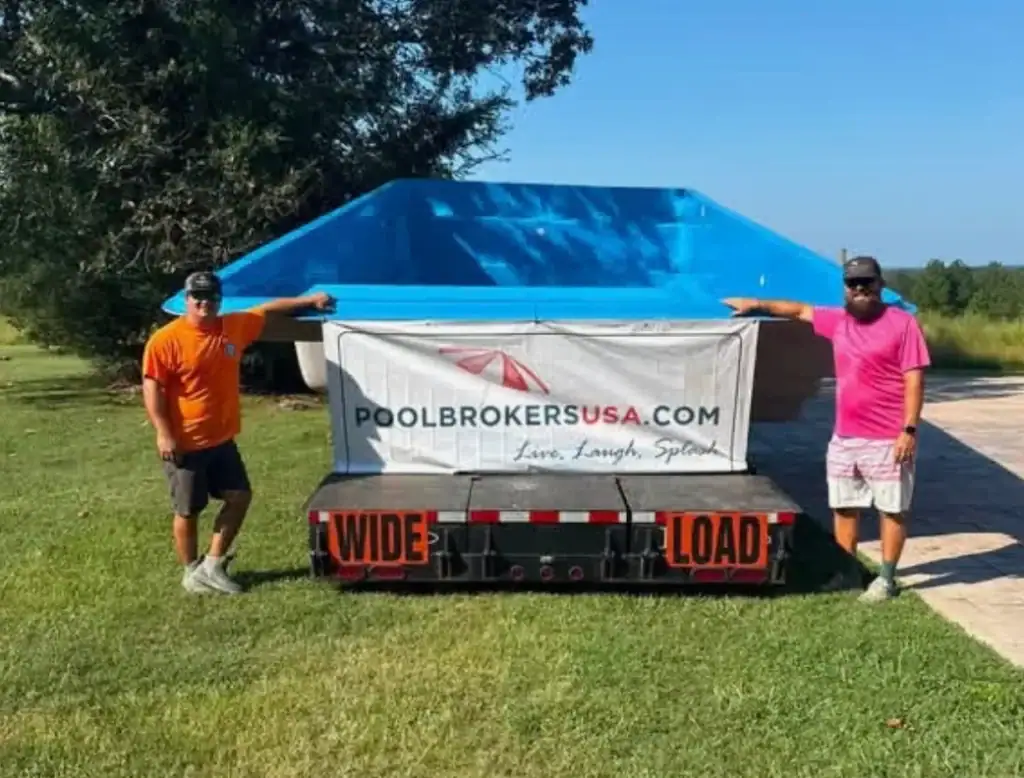
Made in USA: what domestic sourcing actually buys you
All of our pool shells are made in Kentucky, right in the USA. Many pools promise they are “American-made” – here’s what that actually means for buyers.
- Shorter, safer freight. A shell is an oversized load; fewer miles means fewer handling risks and saner delivery windows.
- Reachable accountability. When a warranty question arises in year 12, a domestic manufacturer is a phone call and a truck ride away, not an ocean away.
- Verifiable standards. Domestic production is simply easier to check: you can ask where the factory is and get a real answer, sometimes even a visit.
The vetting checklist: seven questions for any manufacturer
Print this list. It works on any pool shell manufacturer, including ours:
- Is there a vinyl-ester barrier coat behind the gel coat? (Blister protection; wants a specific yes.)
- Describe your lamination schedule. (Grading confidence and concreteness, not chemistry.)
- How is the gel coat UV-stabilized, and what’s the surface warranty? (Colorfastness with coverage to match.)
- May I see the full written warranty, structural and surface, today? (The transparency test.)
- Where are your shells manufactured? (A real place, ideally domestic.)
- How long have you been producing shells, and how many are in the ground? (Track record outlives marketing.)
- Who handles warranty service in my area, and how are claims filed? (Coverage is only as good as its process.)
Score the answers less on jargon and more on posture: specific, unhurried, documented answers are the product of a manufacturer with nothing to hide. Browse our fiberglass pool models with the checklist beside you, and we’ll answer all seven on the spot.
Frequently asked questions
How do I choose between fiberglass pool manufacturers?
Vet behavior, not brochures: ask about the vinyl-ester barrier coat, the lamination schedule, gel coat UV durability, and the full written warranty, and confirm where shells are made and how many are in service. Honest manufacturers answer all of it specifically and without friction.
What makes one pool shell better than another?
The invisible layers: a vinyl-ester barrier coat that resists osmotic blistering, a properly built structural laminate at engineered thickness, and a UV-stable gel coat, all applied under controlled factory conditions. Weak shells cut costs in exactly those places because buyers can’t see them.
Does made in USA matter for a fiberglass pool?
It delivers real, practical advantages: shorter oversized-load freight, easier warranty service, and verifiable production standards. It isn’t a substitute for construction quality, but combined with a strong laminate and transparent warranty, domestic sourcing is a meaningful plus.
What warranty should a fiberglass pool manufacturer offer?
Two coverages in writing: a long structural warranty with clearly defined terms, and a separate surface/gel coat warranty whose length matches the durability claims. The delivery matters as much as the duration; a maker who hands over documents before you ask is showing you how claims will go later.
The bottom line on choosing a fiberglass pool manufacturer
Fiberglass pool manufacturers separate into two groups the moment you start asking real questions: those who explain their barrier coats, lamination, gel coat durability, and warranties in plain language with documents attached, and those who steer you back to the brochure. The seven-question checklist above finds the difference in one conversation, no lab required, and made-in-USA sourcing plus a countable track record seals the case.
We’re happy to be vetted; it’s the buying process we’d want ourselves. Request a free quote and ask us anything on the list, construction, sourcing, warranty documents, and how American-made shells reach your state, answered specifically, in writing, before you commit a dollar.
Latest Posts
Adding a Pool to a New-Construction Home: How to Time It Right
How to Choose a Fiberglass Pool Manufacturer You Can Trust
Installing a Fiberglass Pool on a Slope: Retaining Walls and Grading
High Water Table? How to Install a Fiberglass Pool Safely
From Order to First Swim: A Realistic Fiberglass Pool Timeline
Does a Pool Raise Your Homeowners Insurance? What to Expect
Installing a Fiberglass Pool in Rocky Soil: Excavation Realities
Fiberglass Pool Costs in Mississippi: Your Guide to Value and Savings
What Does a Fiberglass Pool Cost in Arkansas? Your Complete Guide
Florida Pool Installation Costs: Your Guide to Affordable Backyard Bliss
Visit Our Blog
Share This Post
(opens in a new tab)
(opens in a new tab)
(opens in a new tab)