

There is a stretch every fall when the air turns crisp, the water turns cold, and a pool that was the center of the summer goes quiet for months. It does not have to. The right inground pool heaters can add weeks to each end of your swim season, and with the right setup, let your family swim comfortably nearly year-round.
This guide walks through the four main pool heater options for a fiberglass pool, the two accessories that make any of them less expensive to run, and how to match a heater to your climate, fuel access, and budget. No single option is “best.” The right one depends on how you swim and where you live, and by the end you will know which direction fits your backyard.
Key Takeaways
- Four heater types cover almost every backyard: electric heat pumps and heater/chillers, gas heaters, solar heaters, and wood stove heaters.
- Match the heater to your habits: fast weekend heat points to gas; the lowest operating cost points to solar or a heat pump; true year-round temperature control points to an electric heater/chiller.
- A thermal pool blanket is the first add-on to consider with any heater. It retains heat and lowers the energy your heater has to spend.
- Fiberglass works in your favor. A fiberglass shell holds heat better than concrete, so your heater runs less to reach the same temperature.
- Operating cost depends on your local energy rates, pool size, climate, and target temperature more than on the brand of equipment.
How a Pool Heater Extends Your Swim Season
A pool heater does one job well: it holds your water at a comfortable temperature when the weather will not. That job sounds simple, but it is the difference between a pool you use three months a year and one your family swims in from early spring into late fall, with some setups reaching closer to year-round.
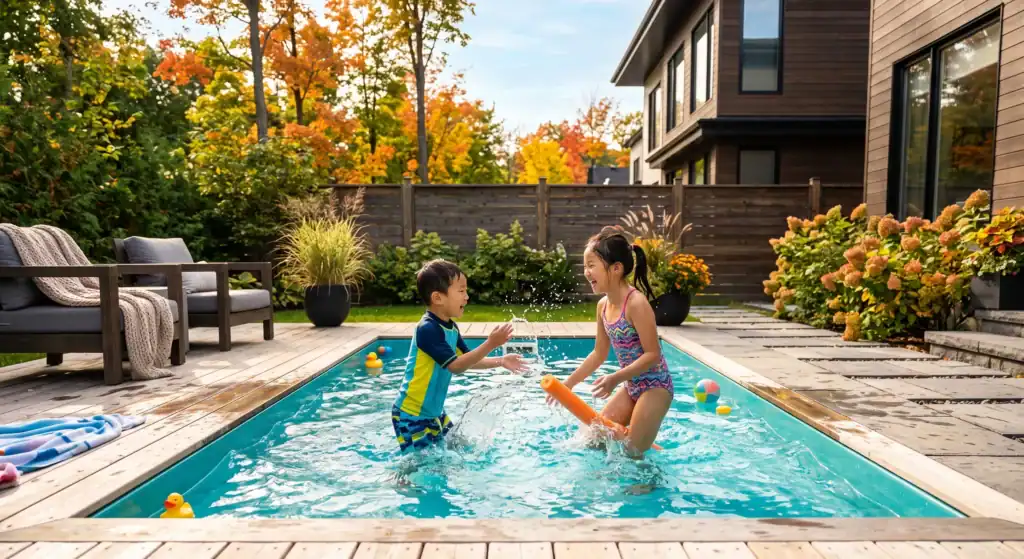
How far you can stretch the season comes down to three things: the heater you choose, the climate you live in, and how well your pool holds the heat it already has. That last point is where fiberglass quietly earns its keep. A non-porous fiberglass shell is more thermally efficient than concrete, so it loses heat more slowly and your heater works less to maintain the temperature you want. Pair that natural efficiency with the right heater, and you spend less to swim longer.
The four heater types below all reach the same goal by different routes. Here is how each one works, who it fits, and what it costs you in trade-offs.
Electric Heat Pumps and Heater/Chillers: Year-Round Temperature Control
Electric pool heat pumps are one of the most efficient ways to warm an inground pool. Instead of generating heat by burning fuel, a heat pump pulls warmth from the surrounding air and transfers it into your water, which is why it uses energy so efficiently in mild and warm conditions.
The standout version is the electric heater/chiller. It both heats the water on cool days and cools it during a hot summer stretch, giving you four-season temperature control from a single unit. For families who want to set a comfortable temperature and keep it there, this is the most hands-off, year-round option.
The trade-offs are honest ones. Heat pumps warm the water more gradually than gas, so they reward owners who keep the pool at a steady temperature rather than heating it from cold on a whim. Their operating cost tracks your local electricity rates, and the upfront price runs higher than a basic gas unit. For steady, season-long comfort, many owners find the efficiency pays that back over time.
Gas Pool Heaters: Fast, On-Demand Heat
When you want the water warm quickly, gas pool heaters are the fastest path. Available in natural gas and propane, a gas heater burns fuel to raise the water temperature rapidly and works regardless of how cold the air outside is. That makes gas the go-to for spontaneous weekend swims, holiday gatherings, and short cold snaps when you want heat now, not in a few hours.
Natural gas is usually the more economical fuel to run if a line already reaches your property. Propane costs more per unit of heat but is the practical choice when natural gas is not available, since it runs from an on-site tank.
The trade-off is operating cost. Gas delivers speed, and speed uses fuel, so a gas heater is generally the most expensive of the four to run hour for hour. Gas units also need professional installation and a fuel line or tank, plus regular servicing. If you value rapid, on-demand heat over the lowest possible energy bill, gas earns its place. Not sure whether gas or a heat pump fits you better? Our gas vs. electric pool heater breakdown compares them side by side.
Solar Pool Heaters: The Lowest Operating Cost
Solar heaters use roof or ground-mounted collectors to capture the sun’s energy and warm your water directly. Once the system is installed, the fuel is free, which gives solar the lowest operating cost of any heater here and makes it a natural fit for sunny climates and energy-conscious homeowners.
The catch is in the physics. Solar performance depends on sunlight, so heating is slower and tapers off on cloudy days and through the short, low-sun days of winter. Upfront installation costs more than a basic heater, and you need suitable space and sun exposure for the collectors.
Think of solar as a long-term investment rather than instant warmth. In the right climate, paired with a thermal blanket to hold the heat it gathers, it can deliver a comfortable swim season at the lowest ongoing cost of any option on this list.
Wood Stove Heaters: A Renewable-Fuel Alternative
For rural and off-grid properties, wood stove heaters offer a more traditional route. A wood-fueled stove heats the water using a renewable fuel source, which appeals to homeowners who have a steady wood supply and prefer not to rely on gas or the electrical grid.
Wood stove heaters are simple to operate but hands-on. They need regular tending and maintenance, and your real cost depends entirely on the local price and availability of wood. In regions where wood is plentiful and inexpensive, this can be a practical, self-reliant way to warm a pool. For most suburban backyards, one of the three options above will be a better fit.
Pool Enclosures and Thermal Blankets: Stretch Every Heater Further
Two additions make any heater work harder for you, and one of them should be on almost every owner’s list.
A thermal pool blanket is the first accessory to consider with any heater. It floats on the surface and traps heat overnight and whenever the pool sits unused, which is exactly when pools shed the most warmth. Because it cuts the energy your heater has to replace, a blanket lowers operating cost no matter which heater you run. It is the single most cost-effective companion to a pool heater. A pool cover or thermal blanket pays for itself in retained heat.
A pool enclosure or pool house is the all-weather upgrade. Enclosing the pool lets you swim regardless of the weather outside, adds privacy for entertaining, and can add value to your home. It is a significant investment, but for dedicated swimmers who want the longest possible season, the convenience can be worth it.
Comparing Inground Pool Heaters at a Glance
| Heater type | How it works | Best for | Trade-offs | Relative operating cost |
|---|---|---|---|---|
| Electric heat pump / heater/chiller | Transfers heat from the air; chiller version also cools | Year-round, hands-off temperature control | Slower heat-up; higher upfront cost | Low to moderate, very efficient |
| Gas (natural gas or propane) | Burns fuel for rapid, on-demand heat | Fast weekend heat, cold snaps | Needs fuel line or tank; professional service | Highest, you pay for speed |
| Solar | Collectors capture the sun’s energy | Sunny climates, lowest ongoing cost | Weather-dependent; slower; needs space | Lowest after install |
| Wood stove | Wood-fueled stove heats the water | Rural, off-grid properties with wood | Hands-on; cost depends on wood supply | Varies with local wood prices |
How to Choose the Right Pool Heater
The four options can feel like a lot of choices, so reduce it to three questions about how you actually swim.
- Want the fastest heat-up for spur-of-the-moment swims? Gas. Nothing warms cold water faster.
- Want the lowest operating cost over the years? Solar in a sunny climate, or an electric heat pump, with a thermal blanket either way.
- Want to set a temperature once and enjoy four-season comfort? An electric heater/chiller.
After that, weigh your fuel access (is natural gas at the property?), your climate (how much sun, how cold the winters), and your budget across both upfront and operating costs. The honest answer is that the right heater is the one that matches your habits, not the one with the biggest specifications.
What you spend to run it depends more on your local energy rates, pool size, target temperature, and climate than on any single feature, which is why a thermal blanket and a thermally efficient fiberglass inground pool help every setup. When you are weighing equipment against the total project, pool financing options can fold a heater into a single, predictable monthly payment.
Frequently Asked Questions
Can a pool heater let me swim year-round? In many climates, yes, or very close to it. An electric heater/chiller gives the most consistent four-season control, and pairing any heater with a thermal blanket or a pool enclosure extends the season further. How close you get to true year-round swimming depends on your local winters.
Which costs less to run, a gas or electric pool heater? An electric heat pump is usually less expensive to operate because it moves heat rather than burning fuel, while gas costs more per hour but heats far faster. Gas wins on speed; electric wins on ongoing cost. Your local fuel and electricity rates decide the final gap.
How much does it cost to heat an inground pool? It depends on your pool size, target temperature, climate, and local energy rates more than on the equipment brand. Solar costs the least to run after installation, heat pumps are highly efficient, and gas costs the most per hour. A thermal blanket lowers the cost of every option.
What size heater does my fiberglass pool need? Heater sizing depends on your pool’s water volume, how fast you want it to warm, and your climate. A larger pool or a colder region needs more heating capacity. The best approach is to size the heater to your specific model and goals rather than a rule of thumb, which is something we can help you work out.
Do fiberglass pools hold heat better than concrete? Yes. A non-porous fiberglass shell is more thermally efficient than concrete, so it loses heat more slowly. That means your heater runs less to hold the same temperature, lowering your operating cost over a season.
Is a thermal pool blanket worth it? For most owners, yes. A blanket traps the heat your pool would otherwise lose overnight and while sitting idle, reducing how hard your heater has to work. It is the most cost-effective accessory you can pair with any inground pool heater.
Find the Right Heater for Your Backyard
The right inground pool heaters turn a three-month pool into a backyard your family uses for most of the year. Gas brings fast heat, solar brings the lowest running cost, an electric heater/chiller brings year-round control, and a thermal blanket makes any of them less expensive to run, especially on an efficient fiberglass shell.
When you are ready to put real numbers on your project, request a free, no-obligation quote and we will help you match a pool heater to your climate, your habits, and your budget, then walk you through total project cost for your area.
Latest Posts
What Does a Fiberglass Pool Cost in Arkansas? Your Complete Guide
Florida Pool Installation Costs: Your Guide to Affordable Backyard Bliss
Protecting Your Backyard Oasis: Are In-Ground Pools Safe in Tornado Country?
Adding an Inground Pool in Hurricane-Prone Areas: Is It a Safe Investment for Your Family?
Adding a Pool to Your New Home Builds: A Builder’s Guide to Value and Efficiency
Ohio Pool Installation Guide: Costs, Timing, and What Homeowners Need to Know
Kentucky Pool Permit Process: Steps to Avoid Common Rejections
Georgia Pool Permit Requirements: Step-by-Step Guide for a Smooth Installation
Delaware Pool Permit Guide: What Homeowners Need to Know Before You Install
Alabama Pool Permits and Building Codes: Your Complete Compliance Guide
Visit Our Blog
Share This Post
(opens in a new tab)
(opens in a new tab)
(opens in a new tab)