

July 8, 2026
/
Hot tub maintenance comes down to three jobs on a predictable rhythm: balance the water chemistry, keep the filter clean, and refresh the water itself on schedule. Do those on the daily, weekly, monthly, and annual routines laid out below, and your spa stays clear, safe, and ready for tonight’s soak with about 10 minutes of real work a week.
If you already own a pool, you’re ahead of the game; the chemistry logic is the same one from our fiberglass pool maintenance guide, just concentrated. A hot tub holds a few hundred gallons instead of tens of thousands, runs 30 degrees hotter, and seats the same number of people, so everything that happens in pool water happens here faster. Smaller water, bigger swings, quicker fixes.
This guide covers the whole job: the exact step-by-step chemical process, every routine by frequency, eco-friendly techniques that cut chemical and energy use, and the troubleshooting moves for the days the water misbehaves.
Key Takeaways
- Hot tub maintenance has three pillars: water chemistry (pH 7.2–7.8, sanitizer always present), filtration (rinse weekly, deep-clean monthly, replace yearly or so), and a full drain-and-refill every 3–4 months.
- The weekly chemical routine takes about 10 minutes: test, adjust alkalinity first, then pH, then sanitizer, then shock after heavy use.
- Heat is the difference-maker: at 100°F+, a small water volume reacts fast, so small, frequent corrections beat big, rare ones.
- Eco-friendly upgrades are real: a well-fitted insulated cover, mineral or ozone systems that reduce sanitizer demand, and showering before soaking all shrink chemical and energy use.
- Consistent care protects the investment; neglect shows up as cloudy water, odors, scale, and shortened equipment life.
Why hot tub maintenance is different from pool care
A hot tub is a pool pushed to extremes. The water is hotter, which speeds up chemical reactions and burns off sanitizer faster. The volume is smaller, so one soak adds proportionally far more body oils, lotion, and detergent residue than a swim adds to a pool. And the jets aerate constantly, which raises pH all on its own.
The practical consequence: hot tub water changes character in hours, not days. That sounds like bad news, but it cuts both ways; problems appear fast, and corrections work fast. The owners who struggle are the ones who treat the spa like furniture and test it monthly. The owners who never struggle spend two minutes with a test strip a few times a week.
One more difference worth taking seriously: temperature. Water at 100–104°F is a comfortable place for people and, if sanitizer lapses, for bacteria. The CDC’s hot tub water safety guidance is blunt about keeping sanitizer levels continuous, and it’s the one non-negotiable in everything that follows.
The step-by-step water chemistry process (and the chemicals involved)
Here’s the full hot tub chemical maintenance sequence. Run it completely after every refill, and in abbreviated form (test, then adjust whatever moved) two to three times a week.
- Test the water. Dip a test strip or use a liquid kit. You’re reading four numbers: total alkalinity (target 80–120 ppm), pH (7.2–7.8, ideally near 7.4–7.6), sanitizer (chlorine 1–3 ppm or bromine 3–5 ppm), and calcium hardness (roughly 150–250 ppm).
- Adjust total alkalinity first. Alkalinity is pH’s shock absorber; set it before touching anything else. Raise it with an alkalinity increaser (sodium bicarbonate, ordinary baking soda’s spa-grade twin). Lower it with a pH/alkalinity decreaser (dry acid).
- Then set pH. Low pH corrodes metal parts and stings eyes; high pH clouds water, forms scale, and cripples your sanitizer. Use pH increaser or decreaser in small doses; jets on, wait 20–30 minutes, retest.
- Sanitize. Chlorine granules or bromine tablets are the workhorses. Chlorine acts faster and costs less; bromine stays stable at high temperatures and re-activates when you shock, which is why many spa owners prefer it. Pick one system and stay with it; they’re not mixable.
- Shock weekly and after heavy use. Shock (a concentrated oxidizer, either chlorine-based or non-chlorine MPS) burns off the oils, sweat, and combined chloramines that regular sanitizer can’t keep up with. Run it with the cover open for a while so the oxidized gunk can gas off.
- Mind calcium hardness at refill. Soft water etches surfaces and foams; hard water scales the heater. Test your fill water and adjust once per water change; it barely drifts between refills.
Two habits make all of this easier. Add chemicals to the water with the jets running, one chemical at a time, with 20+ minutes between different products. And store everything dry, sealed, and out of the sun; hot tub chemicals lose strength fast in a humid shed.
Your hot tub maintenance schedule: daily, weekly, monthly, and annual
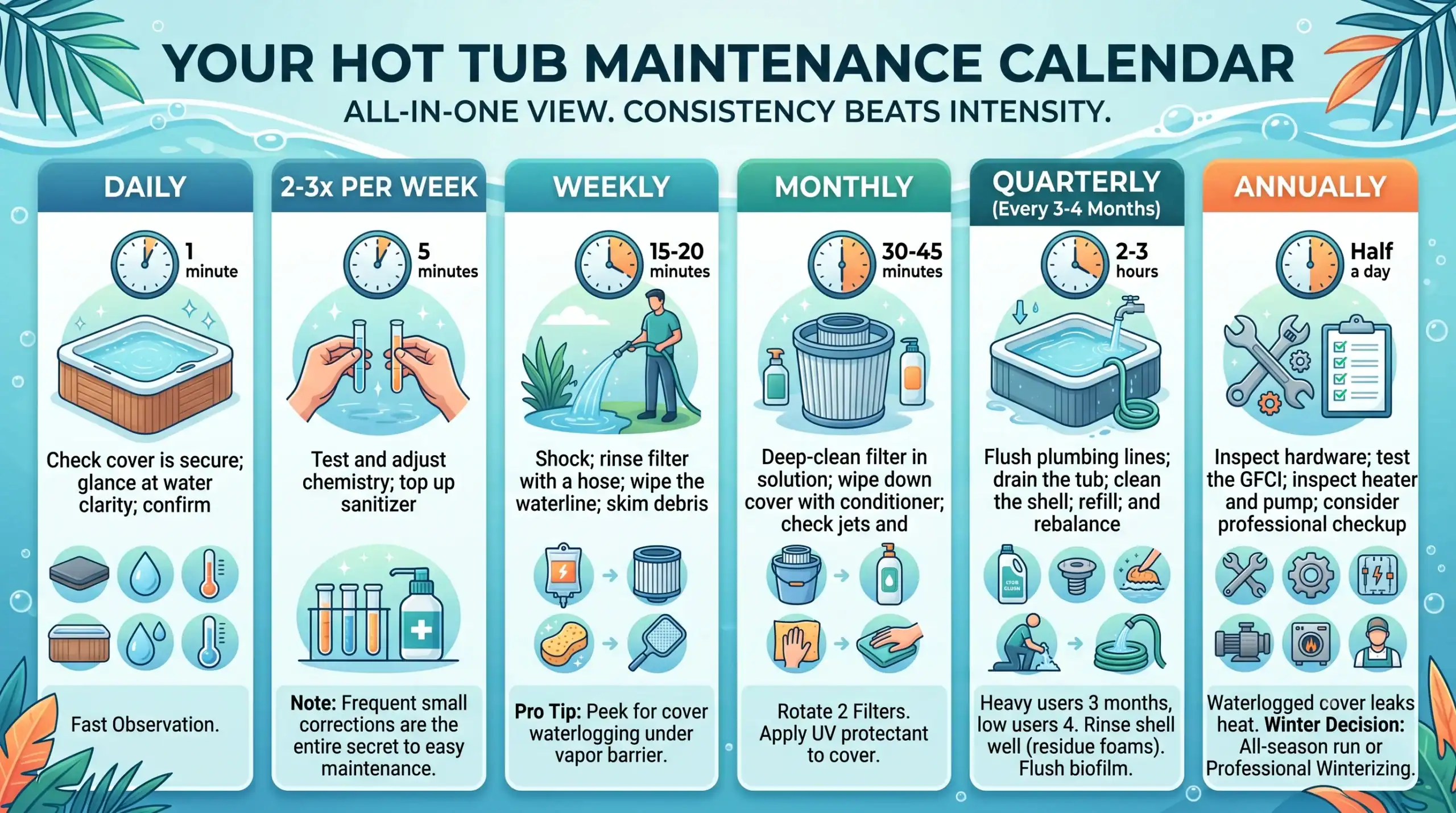
Consistency beats intensity. Here’s the whole calendar in one view, with details below.
| Frequency | Tasks | Time |
|---|---|---|
| Daily | Check cover is secure; glance at water clarity; confirm temperature | 1 minute |
| 2–3x per week | Test and adjust chemistry; top up sanitizer | 5 minutes |
| Weekly | Shock; rinse filter with a hose; wipe the waterline; skim debris | 15–20 minutes |
| Monthly | Deep-clean filter in cleaning solution; wipe down cover with conditioner; check jets and equipment | 30–45 minutes |
| Every 3–4 months | Flush the plumbing lines, drain, clean the shell, refill, and rebalance | 2–3 hours |
| Annually | Inspect hardware, test the GFCI, inspect heater and pump; consider a professional checkup | Half a day |
Daily and every-few-days habits
The daily job is observation: is the cover on and latched, does the water look clear, is the temperature where you left it? Thirty seconds. The real workhorse is the two-to-three-times-weekly test-and-adjust from the chemistry section above; frequent small corrections are the entire secret to easy hot tub water maintenance.
Weekly hot tub maintenance
Once a week, shock the water, pull the filter and rinse it thoroughly with a garden hose, and wipe the waterline with a spa-safe cleaner or a dedicated scum sponge to remove the oil film before it hardens. Skim out any leaves or debris. This is also the natural moment to peek under the cover’s vapor barrier for waterlogging, the first sign a cover is dying.
Monthly deep care
Monthly hot tub cleaning goes deeper. Give the filter a real bath: soak it overnight in hot tub filter cleaning solution (or a filter-cleaner soak per the product label), rinse well, and let it dry before reinstalling. Rotating two filters, one in service and one drying, extends both their lives. Wipe the cover inside and out and treat the top with a UV protectant. Run your hand over the jets and check for stiffness or clogging.
Quarterly: the drain and refill
Every 3–4 months, the water itself retires. Dissolved solids accumulate with every soak and every chemical dose until no amount of balancing keeps the water crisp. The full hot tub cleaning process at drain time: run a line-flush product through the plumbing to purge biofilm hiding in the pipes, drain the tub, clean the shell with a non-abrasive spa cleaner, rinse thoroughly (residue foams), refill through the filter well, and run the full chemistry sequence on the fresh water.
Heavy users should lean toward three months; a two-person household soaking weekly can stretch toward four.
Annual and seasonal care
Once a year, walk the whole system: tighten any weeping fittings, test the GFCI breaker (press the test button; it should trip), inspect the pump and heater for noise or corrosion, and examine the cover honestly; a waterlogged cover leaks heat every hour of the year. If your spa runs through freezing winters, decide each fall between running it all season (wonderful, with the energy measures below) or professionally winterizing it; a half-drained, half-winterized hot tub in a hard freeze is how plumbing cracks. Our hot tubs and backyard accessories guide covers the cold-weather gear that makes year-round soaking practical.
Eco-friendly hot tub maintenance: lower energy, fewer chemicals
Green hot tub care is mostly genuine efficiency, and it pairs naturally with the eco-friendly pool practices many owners already run on the big pool.
Start with the cover, because heat is the money. Heating is the overwhelming majority of a hot tub’s operating cost, and an insulated, well-fitted, non-waterlogged cover is the single most effective efficiency device you can own. Add a floating thermal blanket under the cover and you cut evaporation, which is the main way heat escapes. The Department of Energy’s energy-saving guidance applies squarely here: insulate, seal, and don’t heat what you’re not using.
Manage temperature like a thermostat, not a switch. Keeping the tub a few degrees lower between soaks, and using your model’s economy or sleep modes on workdays and vacations, trims energy without ever giving you a cold soak. Heating on off-peak utility hours helps where your electric plan rewards it. A wind fence or landscaping screen around an exposed spa reduces convective heat loss too.
Cut the chemical load at the source. The greenest chemical is the one you never need. A quick shower before soaking removes the lotions, deodorant, and detergents that consume most of your sanitizer. A scum ball or sponge collects body oils before they become chloramine demand. Supplemental systems, mineral cartridges, ozone, or UV, continuously assist sanitation so you can run your chlorine or bromine at the low end of its range. Saltwater conversion systems generate chlorine from salt, smoothing out dosing (note that salt water hot tub maintenance still means testing; salt systems change how sanitizer is made, not whether you monitor it).
Reuse what you can. When you drain, that few hundred gallons can water trees and lawns if you let the sanitizer dissipate first: stop adding chlorine or bromine a few days before draining, confirm near-zero sanitizer with a test strip, and skip reuse entirely if you run a saltwater system (salt and most ornamental plants don’t mix). Cleaning the shell with diluted white vinegar instead of harsh cleansers keeps the rinse water benign as well.
Troubleshooting: fast fixes for the four classic problems
Even well-kept spas have moods. Match the symptom, apply the fix, and retest the next day.
- Cloudy water. Usually early-stage sanitizer shortage or a tired filter. Test and correct chemistry, shock, and rinse the filter. If the water is more than three months old, this is your drain-and-refill notice.
- Foam. Body products and detergent residue, agitated by jets. A defoamer knocks it down cosmetically; a shock treatment plus a scum sponge addresses the cause. Chronic foam usually means it’s time for fresh water.
- Chemical or musty odor. A strong “chlorine” smell is actually chloramines, spent sanitizer, which means the tub needs shock, not less chlorine. A musty smell points at biofilm in the lines; run a line flush at your next drain.
- Green or tinted water. Algae (sanitizer lapsed) or dissolved metals from fill water. Shock hard and rebalance for algae; use a metal sequestrant at refill if your source water runs metallic.
A note on budget while we’re being practical: hot tub upkeep is genuinely modest. For most owners it’s a couple of test strips a week, a monthly rhythm of inexpensive chemicals, and a few filters a year, plus the heating economies above that you control. It’s among the cheapest parts of backyard ownership to do well and among the most expensive to neglect, because neglect eventually bills you in pump seals, heater elements, and shell repairs.
Frequently asked questions
How often should you drain and refill a hot tub?
Every 3–4 months for typical use. Dissolved solids from soaks and chemical doses build until the water resists balancing no matter what you add. Heavy use pushes toward three months; light use stretches toward four. Always flush the plumbing lines with a line-cleaning product before draining so biofilm leaves with the old water.
What chemicals do you need for hot tub maintenance?
Six cover nearly everything: a sanitizer (chlorine granules or bromine tablets), shock (chlorine-based or non-chlorine MPS), pH increaser, pH decreaser (which also lowers alkalinity), alkalinity increaser, and calcium hardness increaser for soft fill water. Add test strips, a line flush for drain days, and optionally a defoamer and metal sequestrant.
How much work is hot tub maintenance, really?
About 10 minutes a week, honestly. Testing and adjusting two to three times weekly takes a couple of minutes each pass, the weekly shock-and-filter-rinse adds ten more, and the monthly deep-clean is under an hour. The quarterly drain and refill is the only half-day job on the calendar.
Is a hot tub harder to maintain than a pool?
Not harder, just faster-moving. A spa’s small, hot, jetted water changes chemistry quicker than a pool’s, so it rewards frequent small corrections instead of weekly overhauls. Pool owners usually find the transition easy: the same rules from fiberglass pool maintenance apply, concentrated into a few hundred gallons.
Can you maintain a hot tub without harsh chemicals?
You can meaningfully reduce them, though never to zero; continuous sanitation is a safety requirement. Mineral, ozone, and UV systems let you run sanitizer at the low end of its range, showering before soaks cuts chemical demand at the source, and vinegar handles most surface cleaning. “Chemical-free” marketing that means “no sanitizer at all” is a hot tub folliculitis story waiting to happen.
What temperature should a hot tub be kept at?
Most owners soak at 100–102°F, with 104°F the widely recognized safe maximum for healthy adults. Between soaks, dropping a few degrees, or using economy mode, saves energy without much reheat time. Families with young children should run cooler and keep soaks shorter, per CDC guidance.
Keep the soak effortless
Hot tub maintenance rewards rhythm over heroics: test and touch up a few times a week, shock and rinse the filter weekly, deep-clean monthly, and give the water a fresh start every season. Layer in the eco-friendly moves, a serious cover, supplemental sanitation, pre-soak showers, and the tub gets cheaper and greener to run at the same time. Ten minutes a week buys you water that’s always ready when the evening finally slows down.
And if your backyard plans are still taking shape, a spa pairs beautifully with a fiberglass pool; browse our hot tubs, spas, and accessories to see what fits, or request your free, no-obligation quote to plan the whole backyard, pool, spa, and all, in one conversation.
Latest Posts
The Fiberglass Pool Installation Process, Step by Step
Budgeting for a Fiberglass Pool: Every Cost Beyond the Shell
Saltwater Pools: Why Fiberglass Handles Salt Better Than Concrete
Delivery Day Checklist: How to Inspect Your Fiberglass Pool Shell
How Much Time Does Pool Maintenance Really Take?
Shipping Container Pools or Fiberglass: Which Is Better?
Fiberglass vs. Natural Swimming Pools: A Practical Cost and Maintenance Comparison
Fiberglass vs. Gunite Pools: How Construction Method Shapes Lifespan and Care
Shell Price vs. Total Project Cost: Reading a Fiberglass Pool Quote
The Fiberglass Pool Buying Guide for First-Time Buyers
Visit Our Blog
Share This Post
(opens in a new tab)
(opens in a new tab)
(opens in a new tab)